
Please enable javascript in your browser to view this site!

Sexual Health Blogs

Crushin P***y, Marry a Man: What The Lonely Island Taught Me About Sex and Gender  

Crushin P***y, Marry a Man: What The Lonely Island Taught Me About Sex and Gender  

Maybe it’s just my obsession with these subjects, but I couldn’t help but notice how the trio’s albums are absolutely saturated with humor that plays with male identity, misogyny, and queerness. In fact, this music may be partially responsible for inspiring my obsession. The Lonely Island introduced me to the concept of docking for the first time; they made my nine-year-old brain seriously question why men didn’t wear condoms 24/7; they gave me space to laugh-along to “grown up humor” while simultaneously realizing how little I knew about sex and how much there was to learn. These popular comedy albums shaped how I (and probably countless others) understood the cultural landscape of sexuality and gender I was growing into. So, what was that landscape they portrayed? Well, like most media does, The Lonely Island’s music often upholds cultural assumptions that can be harmful and inaccurate. There are plenty of problematic ideas on gender and sexuality reflected in their work, and plenty of old tropes regurgitated for laughs
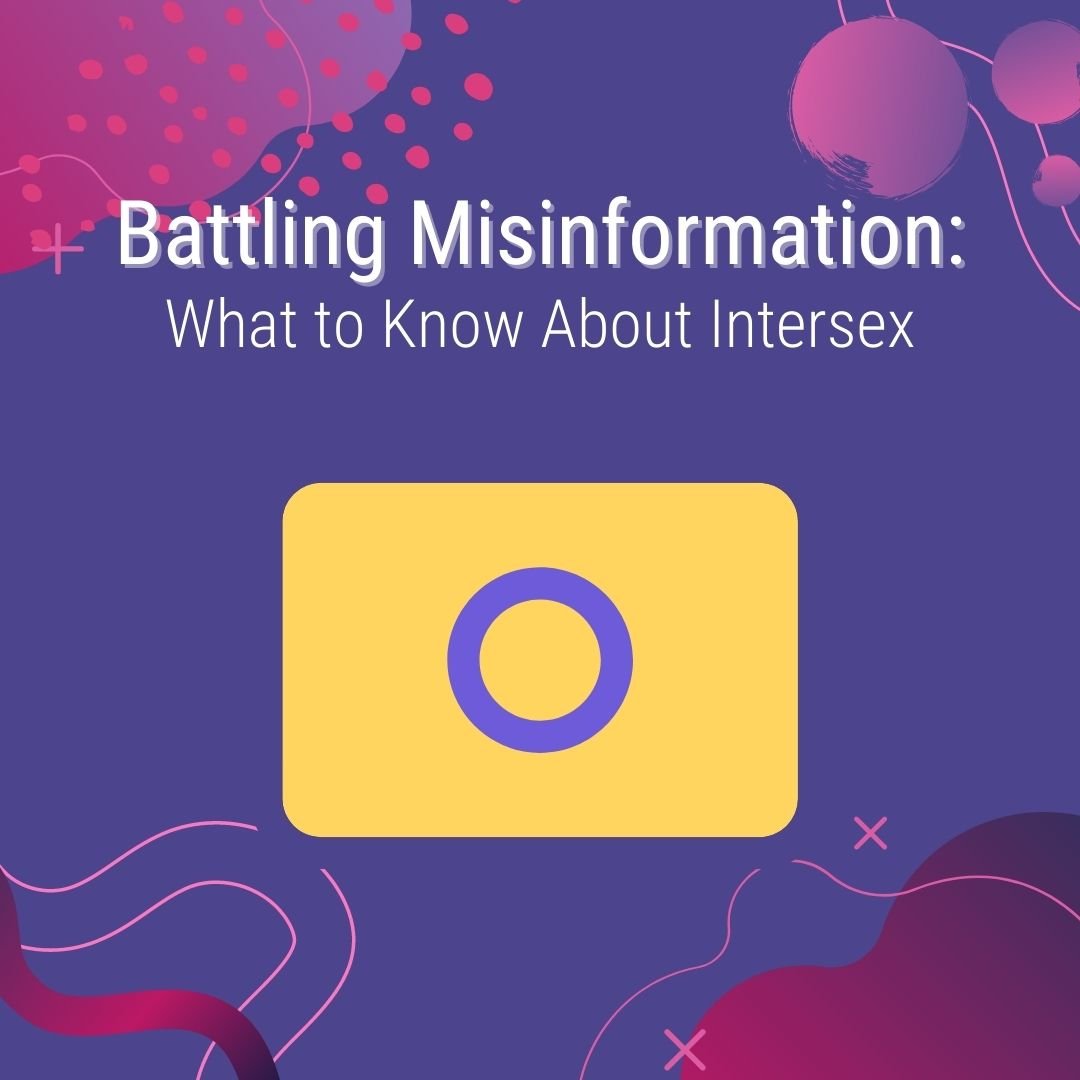
Battling Misinformation: What to Know About Intersex

Battling Misinformation: What to Know About Intersex

We have seen a great deal of movement in the LGBTQIA+ community in recognition and acceptance. Whilst there is progress, a group that is often ignored or told misinformation about is intersex individuals. Intersex can be defined as an “umbrella term to refer to people who carry variations in their reproductive and sexual anatomy that differs from what’s traditionally considered male or female. An intersex person can appear to have one kind of genitalia on the outside, and another internally.” With so much ignorance and false information spread about intersex individuals, they are at harm by the medical system and uneducated individuals. 

Tantric Eye Gazing

Tantric Eye Gazing

Tantra, a 3,000-5,000-year-old philosophy with bases in Hinduism and Buddhism, allows one to deeply connect with their own energy with the ultimate goal of achieving spiritual enlightenment. Practices such as meditation, mantra repetition, and rituals are typically used to access this deep, energetic connection. More recently, though, tantra-based yoga and sex practices have become popularized in the Western world. This 1900s interpretation of tantra aims to increase the spiritual aspect of sex, making sex a more holistic and self-aware activity. For those wanting to explore the spiritual side of their sex life, tantra might be a good place to start.

Specifically, tantric eye gazing offers the opportunity to connect with oneself and/or their partner(s) through focused vision. Right off the bat, though, it’s important to make the distinction between gazing and staring. While staring can be penetrative and forceful, gazing is gentler and always consensual. As the eyes are the most expressive facial features, they can allow for a deeper understanding of your partners’ desires and emotions. Moreover, visual attention reflects the stimulus most relevant to the viewer’s intentions. This means that tantric eye gazing can not only make the viewee feel seen, but can also invite the viewer to play a more active role in understanding and pursuing their desires. In this way, tantric eye gazing can be a mutually beneficial partner activity. 

A Peek Inside SHA's Hedonism SAR

A Peek Inside SHA's Hedonism SAR

On December 8th and 9th of this year, 28 students and six facilitators from the Sexual Health Alliance gathered at Hedonism II, a beach-side resort in Negril, Jamaica to discuss all manners of human sexuality. Some of the students were there as part of their first steps into future careers—as sex therapists, sexuality counselors, sexuality coaches or consultants, and more—while others, already established in those careers, were there to enrich their practice and grow their skillset. The common goal of all participants—students and facilitators alike—was to critically examine, reflect on, and reassess their embedded sexual attitudes, ranging from the easily negotiable to the deeply ingrained.

In terms of locale, Hedonism—a clothing-optional resort often frequented by swingers and others of sexually adventurous lifestyles and mindsets—might seem to be an odd choice for a professional training. This particular training, however, was a Sexual Attitude Reassessment (SAR), designed for the purpose of prompting sexuality professionals to identify and explore the boundaries of their comfort zones so that they might bring less bias, judgment, and other such noise into their professional practice. The classroom discussions—focusing on critical reflection and discussion on practices such as BDSM, transgender pornography, consensual nonconsent, and more—provided opportunities to confront our biases in collaborative dialogue with others, re-evaluating and perhaps even re-establishing our own personal limits. Outside of the classroom, the atmosphere of Hedonism provided an immersive, experiential component to the SAR that simply could not be replicated within a classroom. (The sunsets were pretty, too.)

What Does it Mean to be AASECT Certified?

What Does it Mean to be AASECT Certified?

You may be surprised to learn that mental health professionals receive little education or training in human sexuality. Sexuality may be included in coursework about domestic violence and compulsive behavior, meaning the information may be sex-negative without sex-positive education to balance it out. Sex therapy training ensures that professionals get information from both sides to better help their clients. Working with a certified sex therapist offers the ability not just to decrease unwanted behaviors but also to increase sexual satisfaction.

Earning AASECT sex therapy certification requires 90 hours of sex education across multiple core knowledge areas such as research methods, gender identity, kink, ethical non-monogamy, sexual orientation, and relationships and communication, among others. This education is paired with 60 hours of training that teaches how to provide sex therapy to clients, 30 of which must be completed in person. An important component of this training is a sexual attitude reassessment or SAR, which helps the sex therapist identify biases about sexuality that might change how they interact with their clients. Although counselors or therapists without sex therapy training may feel qualified to help with sexual issues, their abilities might be limited due to biases they don’t recognize because they haven’t attended a SAR.

Do You Goon, Boo? Gooning Described

Recently while doing some “research” for a future piece on sissification, I kept running across a term I hadn’t heard before: “gooning.” One small internet search sent me down a rabbit hole of fascinating articles, reddit posts, and, well, pornography. So, if you haven’t heard of gooning, want to understand more about it, or even if you’re a dedicated gooner who loves to goon to blog posts about human sexuality, stick around so I can fill you in (no pun intended?) on this fascinating topic.

Gooning is part activity, part kink, and for some, part lifestyle. In its simplest form, to goon is to edge repeatedly with the goal of reaching a hypnotic state of mindless sexual ecstasy, or as some call it a “goon state.” Although you can goon for as long or as short of a period as you’d like, people tend to dedicate at least several hours to a gooning session and some have claimed to go for as long as 40 hours straight. Most of the time gooning involves extended porn viewership, and unsurprisingly gooning overlaps and connects with many other kinky interests. Gooning seems to currently occupy a bit of an awkward middleground when it comes to kink popularity.

Mutual Masturbation for Couples Closeness and Manifestation 

Mutual Masturbation for Couples Closeness and Manifestation 

Masturbation is a topic typically seen as taboo and reserved for “alone time” behind closed doors. People often feel shameful after masturbation because they've been told the activity is dirty or unclean. According to Web MD, in the past, masturbation was mistakenly thought to cause things like blindness, poor sexual function, sexual perversion, and mental health issues. Another common misconception is that only cis hetero men engage in the activity because they have a higher sex drive than people of other genders and sexual orientations. This is simply not the case. The reality is that most people engage in masturbation, and there’s nothing shameful or dirty about the act. Masturbation --whether alone or with a partner -- can have benefits such as relaxed muscles, improved sleep, a release of endorphins, and reduced stress.

More than this, masturbation is not something that needs to only exist in the privacy of your room behind closed doors. Ashley D. Sweet, M.A., LPC, LMHC, CCRC, sheds light on the benefits of freeing the act of masturbation, emphasizing how it can be thrilling to "share with someone else something you may have learned is culturally forbidden." Mutual masturbation is a practice in which two or more individuals engage in masturbation together, whether they’re in the same room or doing so virtually.

Tips for Feeling More Comfortable in a Sex Shop

Tips for Feeling More Comfortable in a Sex Shop

While it’s perfectly normal to want to explore sexual fantasies or get more in touch with your body, it’s also normal to feel intimidated and overwhelmed while shopping in a sex shop. Even though 44% of women between the ages of 18 and 60 have used a sex toy, 23% of adults have used a sex toy during sex, and 27% of the entire American population own over five sex toys, shopping for them can be uncomfortable to say the least. Sex shops have much more to offer than only sex toys, so SHA has compiled a list of ten tips for feeling more comfortable in that environment. 

  1. Do your research. There are many sex stores all over, but not all are considered equal. First, make sure you feel comfortable in the area. Whether you’d rather travel a bit further to avoid interactions with people you might know, or stay closer to home in an area familiar to you, being comfortable in the overall environment is important for internal peace of mind. Secondly, use websites like Yelp to ensure the store you’re planning on visiting is an inclusive, safe space. For instance, if you identify as a woman or a member of the LGBTQ+ community, you’ll want to feel welcomed to ensure nothing inappropriate is said or done that puts a damper on your experience. This is exactly the kind of thing that pre-research can help with.  

Betty Dodson: Monarch Of Masturbation 

Betty Dodson: Monarch Of Masturbation 

While puttering around on the internet recently looking for examples of sexually explicit Fine Art, I stumbled upon fascinating pieces by a woman I’d somehow never heard of before: Betty Dodson. An icon of sex-positive feminism (and feminism in general), Dodson famously popularized the Magic Wand, clitoral stimulation, and women’s masturbation in the public sphere. Although probably most famous for leading women’s workshops, Dodson’s near century of life was packed with game-changing accomplishments. Frankly, the more I learn about Dodson the more shocked I become that I’ve only recently found out about her career. Whether you’re as in-the-dark as I was or you’ve attended a Bodysex workshop yourself, I hope you’ll stick around to learn some more about Dodson’s legendary life.

Betty Anne Dodson was born on August 24th, 1929. Raised in Kansas by an alcoholic father and mother who “just barely learned to read and write”, it might be easy for outsiders to assume Dodson was raised conservatively. Far from it! In Dodson’s opinion, her mother Bessie’s lack of formal schooling allowed her to avoid sex-negative brainwashing, instead masturbating from a young age, considering it natural when her children touched themselves, and always being willing to answer questions openly without judgment. Bessie’s support never waivered, even when her daughter decided, at twenty, to pursue an art career in New York City. 

Sex Smells: Why Are Fragrance Adverts So Damn Sexual?

Sex Smells: Why Are Fragrance Adverts So Damn Sexual?

When thinking to myself and asking others what fragrance advert they think is sexy, “the sailor one” was the one that came up the most. This refers to the Jean Paul Gaultier advertisements, selling both female and male fragrances. The different version of this advert follows the same imagery: a shirtless man with a sailor's cap on, and a woman in red lipstick and a corset—usually accompanied by some opera-like music in the background. The “storyline” also seems to be the same, the man is overwhelmed with lust and essentially partaking in parkour to win the affection of the woman—whether that be a slap on the butt or a lustful kiss. 

I understand that these adverts are supposed to show how wearing this fragrance will make you feel, it gives no information on the primary reason people wear them: the smell. In the case of the Jean Paul Le Male advertisements, it is supposed to show how this fragrance will give you the confidence to “win the girl” and beat the other men competing for her affection. But how does this show the audience what the fragrance actually smells like? The backgrounds of these adverts don’t offer any further help, the marina setting alludes that the perfume may have a salty or fresh smell, and the mechanics-based advert suggests a harsh and “cold” smell. Neither of these are true when we look at the actual scent of Le Male which is described to be: vanilla, fresh spicy, lavender, amber, and cinnamon (among other notes). 

How to Respond to an Unsolicited Dick Pic

How to Respond to an Unsolicited Dick Pic

With 76% of the female population having reported receiving an unsolicited explicit picture, it seems important to begin the conversation from a different perspective, that of what comes after the dreaded dick pic. Though more recently, states have been cracking down on “cyber-flashing,” the fact is that this issue is widely prevalent and pervasive. As long as we live in the age of the internet, people are probably going to abuse that power. So what are the best ways to respond to an unwanted, unexpected picture of genitalia? SHA has some tips.

Meet Arya: A Unique Way to Get Intimate With Your Partner

With new subscription boxes and couple’s tips and tricks entering the market daily, it is easy to get swept up in all the new things to try. At SHA, we’ve talked about many games for couples, apps for couples, and ways to connect, which is why we’re bringing you a sneak peek and full review of Arya, the latest in apps for couples and their relationship. Arya is a concierge service focused on enhancing intimacy and sexual connection for committed couples. I was invited to join Arya because of my position as a content writer for the Sexual Health Alliance. I did not have to pay for my subscription and the first 30 readers who sign up here will also receive a free Scene! The following review consists solely of my opinions and feelings from this first month of using Arya.

Why Orgasms are Good for Your Health

Why Orgasms are Good for Your Health

It’s common knowledge that exercise and a nutritious diet are recommended by experts as preventative and treatment measures for a healthy lifestyle. But where does sexual health fit into this framework? Are orgasms a form of exercise that might also be recommended? What are the benefits of this type of play? Though there is limited research out there, some studies suggest that orgasming frequently is actually good for your health, too. Whether this be solo or with partner(s), exploring what feels good can have positive effects in both preventing diseases and promoting immunity, among other things. However, there are some minor differences between the types of play and the types of outcomes. As we explore these, SHA challenges you to think about how incorporating this healthy activity might look in your daily, weekly, monthly, or yearly routine.

No, Not the Broadcasting Company: A Brief History of Black Men’s Hypersexualization

No, Not the Broadcasting Company: A Brief History of Black Men’s Hypersexualization

As a quick warning before we start, this article focuses on racism, describes histories of racial violence and stereotyping, and touches on other disturbing topics such as sexual assault. It is also an article about anti-blackness written by a white person. I highly recommend researching this topic further with work made by Black creators. In particular, I recommend F. D. Signifier’s video “Black men are not a fetish” which covers most of what I talk about here and platforms the voices of several Black men who describe their relationship with fetishization, hypersexualization, and stereotypes of hypermasculinity.

Generally speaking, I love porn as an arena of media. However, it’s usually overlooked and not given serious criticism. This combines with the often stripped-down plots in porn to make it a breeding ground for distilled archetypes which, unfortunately, are often very tied to harmful stereotypes. A perfect and disturbing example of this is the way that Black men are often depicted in pornography. Frequently referred to as only “BBC” (or “Big Black C0ck”), Black men in the industry can find themselves pigeonholed and fetishized for their race. Black men are assumed to be sexually aggressive, hypermasculine, and exceptionally well-endowed, and porn in particular tends to market and capitalize on these stereotypes. For the uninitiated, this might seem innocuous or even flattering, but unfortunately, this image of Black men is not only limiting and fetishizing but directly linked to a brutally violent past that continues to this day. So, let’s learn more about the history of Black men’s hypersexualization and how it plays out in porn and kink today.

A Sexceptional Weekend: Highlights from Coming Together: Techniques for Working With Relationships and Couples 

A Sexceptional Weekend: Highlights from Coming Together: Techniques for Working With Relationships and Couples 

In this information-packed weekend, the Sexual Health Alliance presented us with an eye-opening conference on Coming Together: Techniques for Working with Relationships and Couples. Day 1 focused on blending couples and modern sex therapy, this seven-hour presentation was held by Sonya Jenson, SHA alumni and LMFT-certified Gottman Therapist. Jenson, a self-proclaimed romantic from “the moment she came out of the womb,” taught us how to look at couples as a system through the lens of the Gottman method, incorporating methodology with techniques she has learned through her own professional experience. On day two we were given an introduction to Integrative Behavioral Couple Therapy (IBCT) and the way it can be used in contemporary sex therapy, this was taught by Dr. Crystal Dehle, the IBCT provider, and recent SHA graduate, and Dr. Mariana Rosenthal, licensed clinical psychologist

Celebrating Life After Death: Grief in the LGBTQ+ Community

Celebrating Life After Death: Grief in the LGBTQ+ Community

Grieving will always entail a complex set of emotions one must deal with individually and on their own time. When you grieve a sexual and romantic partner, these emotions can feel all-encompassing, as is the nature of grief. But when you’re grieving your same-sex partner, this grief often has to be hidden away because of societal attitudes. This hiding disallows partners from fully experiencing and expressing their grief, delaying the healing process. “Disenfranchised grief” is the clinical term for experiencing a loss, when that loss wasn’t societally accepted, known, or allowed. What’s more, LGBTQ+ populations regularly face disenfranchised grief when met with the loss of their intimate partner, in part due to the same systems that oppress their grief practice. Historically excluded groups, such as the LGBTQ+ community, have lessened access to healthcare systems while being at an increased risk of potentially fatal illnesses.

Here lies the cyclical relationship of systemic oppression: the institutions build barriers to access and then stigmatize the groups seeking access by making them into the villain of the story. If you’re reading this right now and it seems like a lot to handle, consider what it might be like to experience. If instead, you’re reading this following the death of your same-sex partner, SHA encourages you to use this article as a source of validation and an encouragement for healing. As we explore these themes of grief and disenfranchisement, we’ll focus on the reported lived experiences of LGBTQ+ people facing a romantic loss, as well as what society might do to break down those barriers in pursuit of quality, equitable care.

Take Porn Seriously, Not Just When You’re Scared Of It

Take Porn Seriously,  Not Just When You’re Scared Of It

Over a decade has passed since those initial guilt-ridden web searches, and despite the fact I’ve grown into a staunchly sex-positive person, I still find myself constantly surrounded by similar attitudes. I hardly ever hear anyone talk about porn seriously, and when they do it’s always negative and simplistic. To make it worse, as I strive to write more on this subject, I see how little research has been done on pornography and how much of it entirely centers on the possible existence of harmful effects. I believe pornographic media, like all media, should be looked at critically, of course. It’s a category of art and certainly is capable of reproducing inequalities and beliefs that would be better dismantled. However, I think it does a disservice to porn as a genre (not to mention the creators of porn) when academics and the broader public limit their exploration to black-and-white judgments and assessments of pure effect.

The Issue With No Nut November

The Issue With No Nut November

The month of November holds many famous events such as Remembrance Sunday, Bonfire night, and the US’ Thanksgiving. November also holds as the month to recognize and raise awareness of male mental health. “Movember,” for example, encourages the growth of mustaches, stimulating conversations around male mental and physical health—whilst also providing an opportunity to show off some funky facial hair. 

In the same month that advocates for greater support around male help, we also have No Nut November — an annual event that encourages people to go thirty days without ejaculating, hence the name. Though both men and women are encouraged to participate, it is largely men who seem to be involved (as is evident through their interaction in Reddit forums). Whilst this may sound like the latest internet challenge, No Nut November can be traced back to 2011 on forums like Reddit and 4chan.

Shifting from Fear of Indoctrination to Joy of InDRAGtrination

Shifting from Fear of Indoctrination to Joy of InDRAGtrination

Drag performances and drag queens have been criticized recently by Conservative, anti-LGBTQ+ politicians and their supporters for “indoctrinating” children. This summer, Florida Governor Ron DeSantis filed a formal complaint against a local restaurant after the restaurant hosted a drag queen brunch that children attended. This complaint in particular cites a Supreme Court case from 1947 classifying “men impersonating women” as a public nuisance. As this case is three-quarters of a century old, it is clearly outdated and its use in the present day represents a return to the terrorization of LGBTQ+ people of the 40s, 50s, and 60s faced. While socially this is a problem, the issue goes deeper to the use of policy as a coercive form of segregating the public and private spheres. When one cannot express themselves in public by law, they are forced to contain themselves only in the private sphere, limiting representation and the vibrancy of entertainment institutions. Moreover, a “public nuisance” is different than the indoctrination of children. This highlights a shift in the vernacular towards more extremes so as to enrage the public about an issue. In exploring this, I challenge readers to consider the true weight of these statements so as to allow space for the benefits of LGBTQ+ representation and expression to arise. By this, children are more educated, drag performers are liberated, and indoctrination becomes inDRAGtrination.

A Case Against Showing Sexual Violence in Movies

A Case Against Showing Sexual Violence in Movies

Movies and television series can provide a great platform to discuss and represent societal issues. There have been profoundly touching movies released discussing a plethora of issues, ranging from racism and sexism in Hidden Figures (2016) to medical ethics in My Sister’s Keeper (2009). Within these visual platforms, there has been an uncountable amount of visual depictions of sexual violence. Whilst this is an important topic to be discussed, scenes of it are more often than not glamorized or romanticized or, worse yet, are shown and never discussed again. There is further the question as to whether or not these scenes are actually necessary to the plot — is it worth triggering viewers and trivializing sexual violence simply for the plot or “character development?”

I was inspired to write this article after the recent release of Luckiest Girl Alive, a mystery thriller directed by Mike Barker from a screenplay by Jessica Knoll, based on her 2015 novel of the same name. I have neither read the novel nor watched the movie, being put off by several critiques of its unnecessary inclusion of rape scenes. With an absence of a trigger warning, viewers of this 18-certified film are unaware of several scenes of intense sexual assault, in which there are three graphic rape scenes lasting approximately three minutes in total. Some viewers have come in to claim that whilst these scenes are hard to watch, they are ‘necessary.’ Jenna Ryu, a wellness reporter at USA TODAY, claims that “seeing sexual assault is supposed to make you uncomfortable and outraged,” using this as a reason to excuse the inclusion of these graphic scenes. Ryu’s article also includes a statement from Elizabeth Jeglic, a professor at the John Jay College of Criminal Justice who researches sexual violence.