

Quick Answer: What Do Careers in Sexology Actually Involve?
Careers in sexology involve understanding how biological, emotional, and cultural factors shape intimacy and sexual health. This includes topics like menopause, desire, pain, communication, and consent. Professionals in this field are trained to address complex, real-world issues that impact relationships across the lifespan.
Careers in Sexology: An Introduction
If you’re exploring careers in sexology, one thing becomes clear quickly.
Sexual health is not just about sex.
It is about biology, culture, relationships, and often, systems that have historically overlooked entire populations.
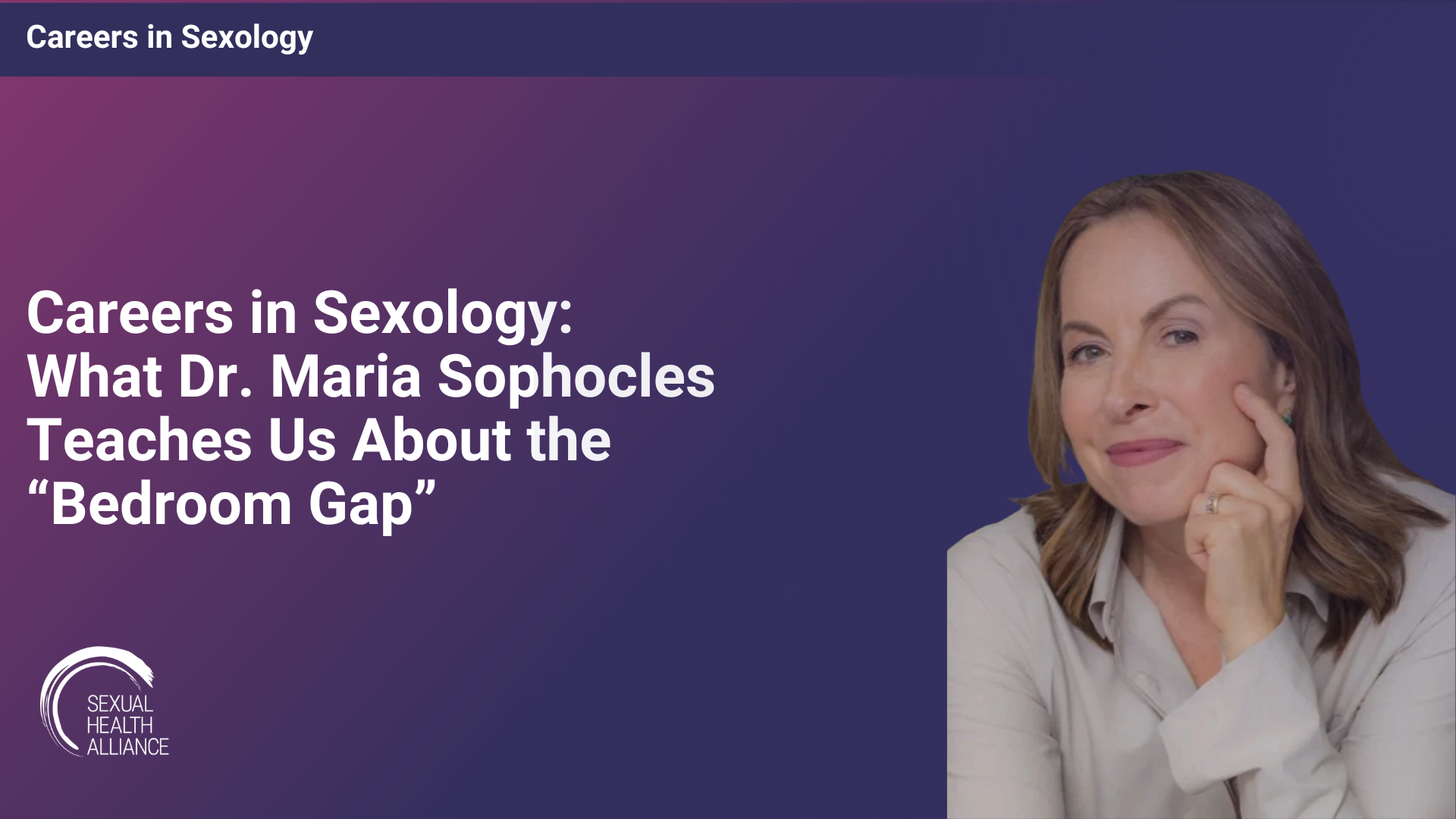
In this conversation with Dr. Maria Sophocles, a board-certified OB-GYN and global expert in menopause and women’s health, we get a powerful look into one of those overlooked areas: what she calls the “bedroom gap.”
This interview highlights why topics like menopause, consent, and access to care are essential knowledge areas for anyone entering the field of sexology.
Meet Dr. Maria Sophocles
Dr. Maria Sophocles is a board-certified OB-GYN with over 30 years of experience specializing in menopause and women’s sexual health.
Her work spans:
Midlife and menopause care
Sexual pain and hormonal changes
LGBTQ+ patient care
Sexual health across the lifespan
She entered the sexual health space through menopause care, where she began to see how deeply physical symptoms affect intimacy, relationships, and identity .
What Is the “Bedroom Gap”?
At the center of this conversation is a concept Dr. Sophocles calls the bedroom gap.
The bedroom gap refers to the growing disconnect between partners’ expectations and experiences of intimacy, especially in midlife.
This gap often widens due to:
Menopause symptoms like vaginal dryness and pain
Loss of libido
Erectile dysfunction in partners
Unequal access to treatment options
For example, men may have easier access to medications like Viagra, while women’s health concerns remain under-researched and under-treated .
But the issue goes deeper.
Dr. Sophocles explains that the bedroom gap is also shaped by:
Cultural norms
Lack of education
Historical neglect of women’s health
Media and societal expectations
For anyone pursuing a career in sexology, this highlights how intimacy issues are rarely just personal. They are systemic.
Why Menopause Is Essential in Careers in Sexology
One of the biggest takeaways from this interview is how critical menopause education is.
For most of human history, women did not live long past their reproductive years.
Today, menopause can represent one-third of a woman’s life.
And yet:
It is rarely discussed openly
It is underfunded in research
It is often misunderstood by both patients and providers
Dr. Sophocles emphasizes that menopause is not the end of sexuality.
It is a transition.
Women still have:
Desire
Curiosity
Interest in intimacy and pleasure
This is a key learning area in careers in sexology. Professionals must understand how biological changes intersect with emotional and relational dynamics.
The Role of Consent in Sexual Health
Another major theme in the conversation is consent.
Dr. Sophocles describes consent as a non-negotiable foundation of sexual health.
Not just passive consent.
But active, mutual, ongoing agreement between partners.
She also highlights how cultural norms have historically minimized the importance of consent, particularly for women .
For those entering careers in sexology, this reinforces that:
Sexual health is also about ethics
Power dynamics matter
Education plays a critical role in shifting societal norms
Why Listening Is the Most Important Skill
When asked what professionals need to know, Dr. Sophocles gives a simple but powerful answer.
Learn how to listen.
She shares that many patients feel dismissed by healthcare providers who:
Interrupt quickly
Jump to prescriptions
Fail to explore deeper concerns
This creates:
Frustration
Mistrust
Missed diagnoses
Careers in sexology require a different approach.
Professionals must:
Meet clients where they are
Avoid assumptions
Understand individual context
This aligns closely with modern sexology training, which emphasizes nuanced, patient-centered care.
The Global Gap in Sexual Health Education
The conversation also explores differences in sexual health education worldwide.
Dr. Sophocles points out a major issue in the United States:
Many states do not provide comprehensive sex education.
This leads to:
Higher rates of unplanned pregnancy
Lower use of contraception
Poor communication around intimacy
In contrast, countries like the Netherlands take a radically different approach.
They:
Start education early
Teach age-appropriate concepts
Emphasize mutual pleasure and communication
The result?
Better outcomes across the board.
For those exploring careers in sexology, this highlights how education systems directly shape sexual health outcomes.
The Rise of Innovation in Women’s Sexual Health
Despite the challenges, there are reasons for optimism.
Dr. Maria Sophocles highlights the rapid growth of:
SexTech
Pelvic floor therapy
Female-focused health innovation
For the first time, more funding is going toward:
Tools for pleasure
Pain management solutions
Female-centered design
This is an exciting space for future professionals, as careers in sexology increasingly intersect with technology, medicine, and innovation.
What This Means for Careers in Sexology
This interview makes one thing very clear.
Sexology is not a narrow field.
It sits at the intersection of:
Medicine
Psychology
Culture
Education
Public health
To be effective in this field, professionals must understand:
Lifespan changes like menopause
Structural gaps in healthcare
Cultural influences on sexuality
The importance of communication and consent
This is why comprehensive training is essential.
Frequently Asked Questions
What are careers in sexology?
Careers in sexology include roles in therapy, coaching, education, and healthcare focused on sexual health and relationships.
Why is menopause important in sexology?
Menopause significantly impacts intimacy, desire, and physical comfort, making it a key area of study for professionals.
What is the bedroom gap?
It refers to the disconnect between partners’ sexual expectations and experiences, often influenced by health and societal factors.
Do sexology professionals need medical knowledge?
Yes. Understanding biological factors like hormones and aging is essential for addressing real-world client concerns. This can be learned in a comprehensive program like those offered by Sexual Health Alliance.
Key Takeaways
Careers in sexology require understanding both biological and cultural factors
Menopause is a critical and often overlooked area in sexual health
The “bedroom gap” reflects deeper systemic issues, not just relationship problems
The importance of comprehensive, interdisciplinary training
If you’re considering a career in sexology, this conversation highlights the importance of comprehensive, interdisciplinary training.
Sexual Health Alliance prepares professionals to understand the full spectrum of sexual health, including topics like menopause, intimacy, and communication.
Explore:
Advanced training in relationships and intimacy
Upcoming educational events
Want to become an in-demand sexual health professional? Learn more about becoming certified with SHA!
Sexual Health Alliance Certification Programs:

