
Quick Answer: What Is Kink Informed Certification?
Kink informed certification is advanced training that teaches therapists how to work ethically, affirmatively, and competently with clients who engage in kink, BDSM, and non-normative sexual expression. It focuses on reducing bias, understanding erotic diversity, and supporting clients without pathologizing their identities or behaviors.
Introduction
If you are exploring kink informed certification, there is one reality that cannot be ignored.
Most therapists are not trained to work with erotic minorities.
That gap leads to misdiagnosis, shame, and missed opportunities for real healing.
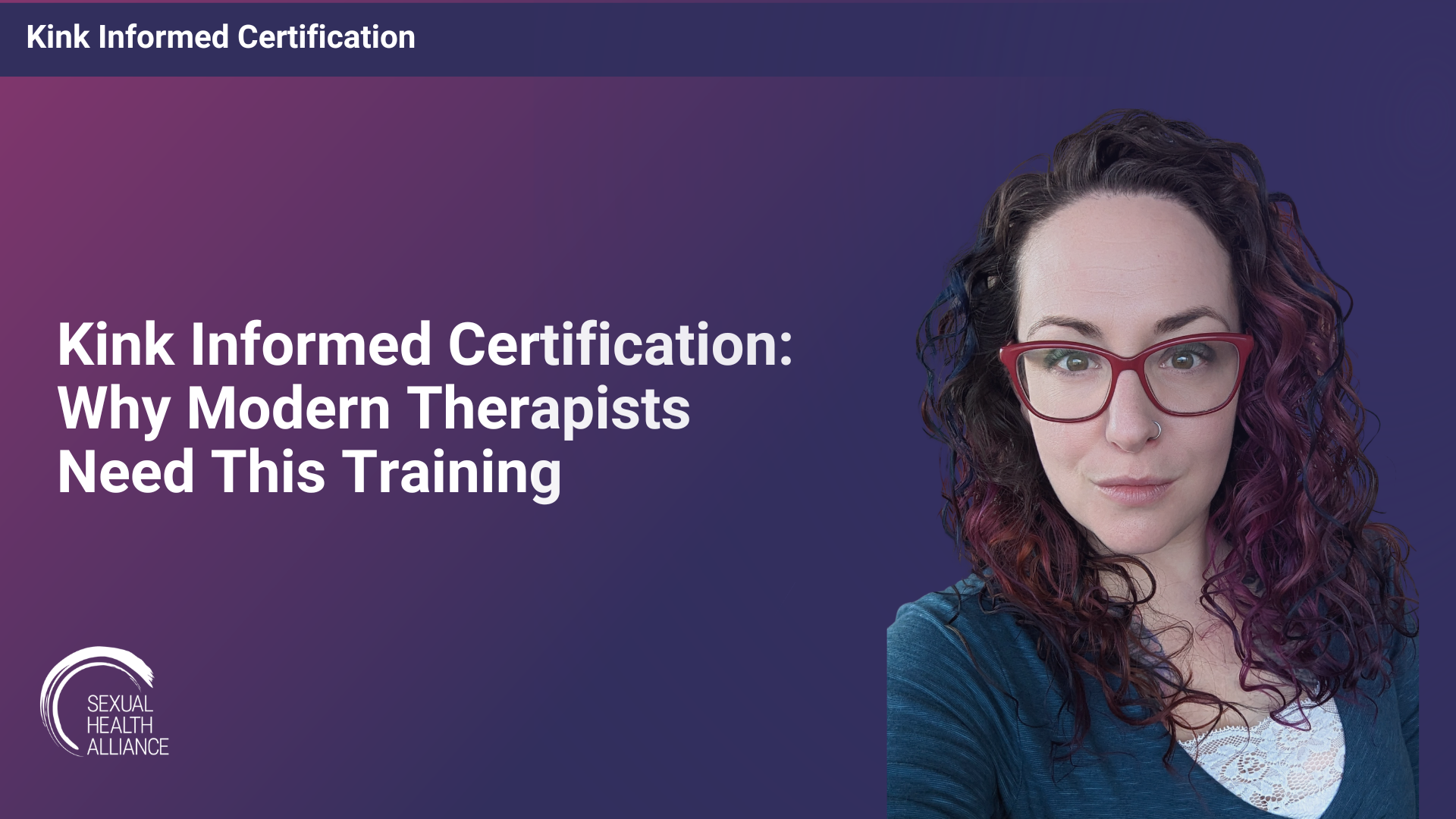
In this conversation with Amanda Jepson, a certified sex therapist, trauma specialist, and Sexual Health Alliance graduate, we get a clear, real-world look at what kink-informed care actually requires and why it is quickly becoming essential in modern clinical practice.
What Are Erotic Minorities and Why They Matter
Amanda defines erotic minorities as anyone outside of dominant societal norms around sexuality.
This includes:
LGBTQIA+ individuals
Disabled individuals
People in larger bodies
People of color navigating sexuality
In traditional clinical training, these groups are often overlooked or misunderstood.
As Amanda explains, many therapeutic interventions were not designed with these populations in mind, which can lead to unintended harm .
Kink informed certification directly addresses this gap by preparing clinicians to work inclusively and effectively with diverse sexual identities.
Why Therapists Need Kink Informed Certification
One of the most important insights from this interview is simple but critical.
Therapists often project their own beliefs onto clients.
Amanda highlights how many clinicians:
Define “healthy sexuality” based on personal values
Over-pathologize kink behaviors
Or swing the opposite direction and over-romanticize them
Neither approach is effective.
Kink informed certification teaches clinicians to:
Identify and unpack their own biases
Avoid judgment-based assumptions
Support clients in defining their own experiences
Without this training, even well-intentioned therapists can create harm.
The Role of Trauma-Informed Care in Kink-Aware Practice
Amanda’s work sits at the intersection of trauma and sexuality.
One of her most important contributions is integrating trauma-informed care into sex therapy.
This approach:
Slows down the therapeutic process
Allows clients to set the pace
Creates safer, more accessible experiences
For example, in traditional models, exercises like sensate focus often follow a fixed structure.
But in a trauma-informed, kink-aware approach:
Clients may stay at earlier stages longer
Consent and readiness are prioritized
The process adapts to the individual
This leads to better outcomes, even for clients without trauma histories .
A Real Case Study: What Kink-Informed Care Looks Like
Amanda shares a powerful example that highlights the difference between traditional and kink-informed therapy.
A client came in distressed about consuming taboo pornography.
Instead of:
Shaming the behavior
Labeling it as addiction
Trying to eliminate it immediately
She took a different approach.
Step 1: Normalize
She explained that taboo fantasies are common and supported this with research.
Step 2: Reduce Shame
By removing judgment, the client experienced less guilt and anxiety.
Step 3: Expand Options
They explored alternative forms of arousal, including:
Mental imagery
Ethical content
Communication with a partner
Step 4: Support Autonomy
The client chose to reduce certain behaviors while increasing self-acceptance.
The result:
Reduced shame
Improved relationship satisfaction
Greater alignment with personal identity
This is what kink informed certification prepares clinicians to do.
The Biggest Gaps in Traditional Training
Amanda identifies several critical gaps in standard clinical education.
1. Over-Reliance on Pathology
Sexual behaviors are often labeled as disordered without context.
2. External Definitions of “Normal”
Clinicians decide what is healthy instead of listening to the client.
3. Lack of Bias Awareness
Many therapists have not examined their own beliefs about sexuality.
4. Limited Understanding of Erotic Diversity
Training rarely includes kink, non-monogamy, or fluid identities.
These gaps are exactly what kink informed certification is designed to address.
The Shift Toward Personalized Sexuality
One of the most exciting trends Amanda highlights is the move toward individualized sexuality.
Clients are increasingly:
Exploring what works for them
Moving away from rigid labels
Creating their own definitions of identity and pleasure
She describes this as a “choose your own adventure” approach to sexuality .
This shift requires therapists to be:
Flexible
Curious
Non-judgmental
Kink informed certification equips professionals to support this evolution.
Digital vs Real-World Sexuality
Amanda also raises an important point about balance.
While digital sexuality is expanding rapidly, including:
Online communities
Digital intimacy
Virtual exploration
There is still a need for:
In-person connection
Embodied experiences
Real-world intimacy
Kink-informed clinicians must be able to navigate both spaces effectively.
Why SHA’s Kink Informed Certification Stands Out
Sexual Health Alliance’s Advanced Certification in Kink-Informed Care is designed to address the exact gaps highlighted in this conversation.
This program focuses on:
Working with erotic minorities
Understanding kink, BDSM, and non-normative sexuality
Reducing clinician bias
Supporting clients without pathologizing
It goes beyond theory.
It prepares you for real client work.
Frequently Asked Questions
What is kink informed certification?
It is specialized training that teaches clinicians how to work competently with kink, BDSM, and diverse sexual identities.
Do therapists need this training?
Yes. Most traditional programs do not adequately cover erotic diversity or kink-related care.
Is kink considered unhealthy?
Not inherently. Kink can be a healthy form of expression when practiced consensually and safely.
What is the biggest mistake therapists make?
Projecting their own beliefs onto clients instead of understanding the client’s experience.
Key Takeaways
Kink informed certification fills major gaps in traditional clinical training
Effective care requires reducing bias and supporting client autonomy
Trauma-informed, kink-aware approaches lead to better outcomes
Your Next Steps
If you want to work effectively with modern clients, kink informed certification is no longer optional.
It is essential.
Sexual Health Alliance’s Advanced Certification in Kink-Informed Care prepares you to:
Work with diverse sexual identities
Provide affirming, ethical care
Build a practice that meets real-world client needs
Learn more about becoming certified with SHA!
Sexual Health Alliance Certification Programs:

