
What is Affirmative Consent?
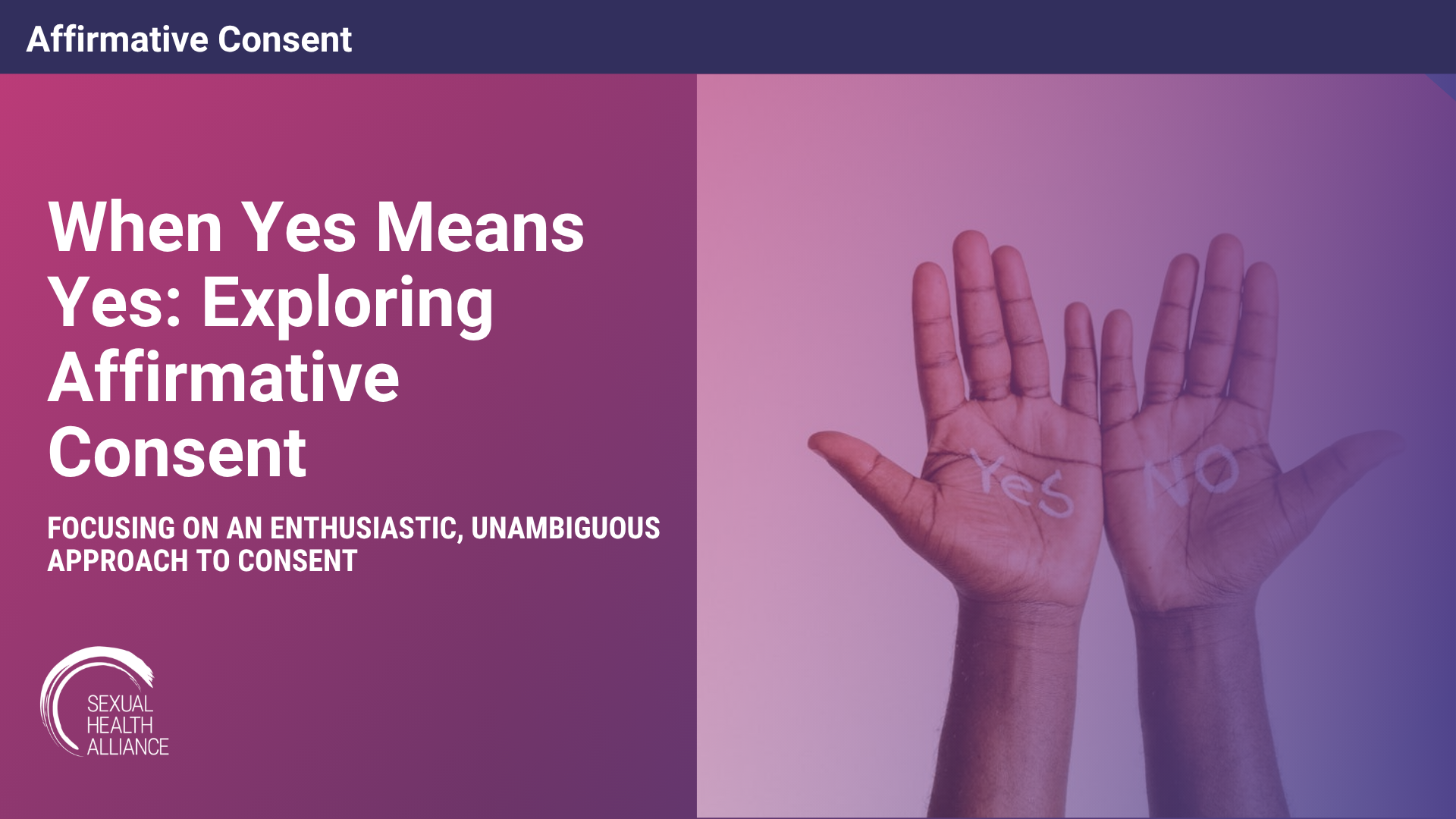
Previously, I wrote about consensual non-consent, which got me thinking about affirmative consent. For those who may not know, affirmative consent is the "yes means yes" model of consent. It's not a new concept; it actually dates back to around the 1990s.
If you’re interested in looking at a good legal explanation of affirmative consent, I would recommend reading about Denmark's Penal Code Committee Report on a voluntariness-based rape provision, which clarifies that affirmative consent places the responsibility on the person initiating sexual activity to actively seek agreement before going on to do the activity.
So what makes it different from other models? Affirmative consent demands active signs of agreement to sexual activity, not just the absence of a direct refusal (e.g., the traditional “no means no”). In other words, absence of disagreement is not the same as affirmative consent, meaning that silence or passivity doesn't count as a green light!
What Counts as Affirmative Consent?
Sometimes it can be hard to tell what it and is not affirmative consent, so here are some examples to paint a clearer picture:
All parties willingly and knowingly choose to engage in sexual activity together.
There is clear, informed agreement to participate that is completely free from pressure, manipulation, or coercion.
All parties are in a state where they are fully capable of giving consent (not unconscious, intoxicated, or otherwise incapacitated).
Relying solely on non-verbal cues (without a clear, spoken agreement, there is too much room for dangerous misinterpretation)
There’s flirting or romantic interest, but no active agreement has been made to engage in the specific sexual activity.
A person is incapacitated or otherwise unable to give clear, conscious consent.
The individuals are in a relationship. This is important: being someone's partner does not grant automatic or ongoing consent!
Agreeing to one sexual activity does not imply consent to any other; each act requires its own explicit agreement.
Still unsure what affirmative consent looks like in practice? Here are some words commonly used to describe it: clear, unambiguous, ongoing, and enthusiastic. If the agreement to sexual activity doesn't check those boxes, it doesn't qualify.
After reading those examples, you might be thinking: "ugh, that kills the whole exciting will-they-won't-they vibe!" But here's the thing: affirmative consent doesn't have to be a mood killer. Talking openly with your partner about what you want can actually be incredibly sexy, and yes, it absolutely counts as foreplay.
Why is Affirmative Consent Important?
It shifts the burden of proof. Affirmative consent stops asking what did the survivor do to stop it? and starts asking what did the accused do to establish consent? For example, "they didn't say no" is no longer sufficient, instead the initiating partner must be able to point to active, willing agreement.
Silence isn't consent. Freezing in response to sexual assault is a well-documented physiological trauma response. If a partner goes quiet, becomes still, or disengages, that is not a "yes", but rather a signal to stop. Affirmative consent makes this unambiguous: active participation is the baseline, and when it disappears, the encounter should pause or stop completely.
It has real legal weight. States like California have codified affirmative consent into law, requiring colleges to adopt "yes means yes" standards. In legal proceedings, this shifts the question from whether a survivor resisted to whether the accused took steps to ensure consent existed, which is a meaningful change in how legal accountability is determined.
Limitations and Future Directions of Affirmative Consent
The following isn't meant to be comprehensive, but rather a snapshot of where the research on this topic is headed. Researchers have begun surfacing real limitations in how affirmative consent is understood and practiced in different settings and among different groups of people.
Does affirmative consent hold up in online dating? As more connections happen digitally, the framework is struggling to keep pace. Computer-mediated communication creates built-in barriers to affirmative consent: it's harder to gauge whether someone's agreement is truly voluntary, especially in asynchronous formats like texting or DMs. It can also be more difficult to withdraw or clarify consent once messages have been sent.
Is affirmative consent accessible for everyone? In short, not really. Deaf and hard-of-hearing communities, for example, have already developed creative approaches, like using sign language on the body so that consent can be felt rather than seen or heard. This points to a broader need: future research should prioritize community participatory methods to build inclusive consent standards that work for people of all abilities, not just those the current framework was designed around.
Tech moves fast, and different individuals have different needs when it comes to consent communication. Existing frameworks seem to have some catching up to do. It will be interesting to see how it evolves over time!
Considerations for Sexual Health Professionals
I would argue that it is important to normalize affirmative consent conversations with clients, not just defining it, but what it looks and feels like in practice. This is especially valuable for survivors of sexual trauma and intimate partner violence, for whom an affirmative consent framework can help rebuild agency and trust in intimate relationships! It may also help to reduce the self-blame that so many survivors carry.
Want to become an in-demand sexual health professional? Learn more about becoming certified with SHA!
Written by Jesse John, B.S.
Jesse is a clinical psychology doctoral student at Rowan University in New Jersey. Their research focuses on sexual decision-making, sexual violence, and relationship experiences. The author identifies as a Queer, neurodiverse, white, non-binary person, which informs the way they write and see the world!

