Why be “Kink-Informed”?
Even the best training programs don't have time to dive deep into every important topic, and it seems as though sexual health is often one of the first things cut from the syllabus. I would argue that many instructors find the subject difficult or uncomfortable to teach, and some simply aren't up to date on current sexual health knowledge themselves.
But the clients you see are likely sexually active, navigating sexual health concerns, or carrying misconceptions about basic information, like how to practice safe sex! There are many ways to be sexually active safely and consensually, and kink is one of them. As long as a practice follows the core principles of sexual health, it's welcome.
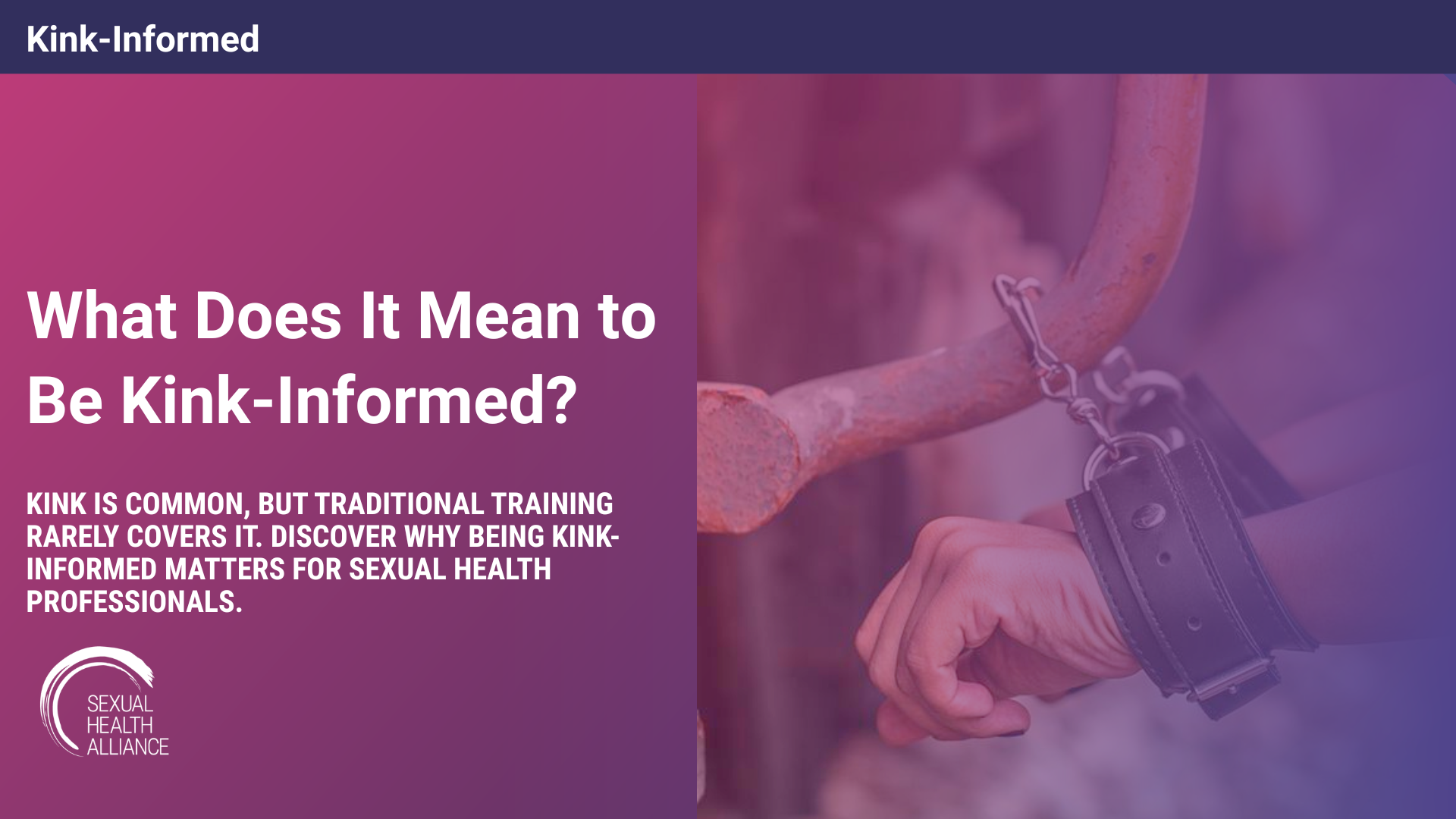
That's why it matters so much to normalize these practices, and why sexual health professionals shouldn't stop at being merely "kink aware" by simply knowing that kink exists.
They should be kink-informed: genuinely educated on these behaviors, so they don't end up stigmatizing the very clients they're meant to help. This matters even more given the history of alternative sexuality. Kinks, fetishes, BDSM, and sexual minority identities have all been stigmatized and pathologized throughout history and, in some ways, still are.
Where Can I Find Research and Learn More About Kink?
Sexual Health Alliance Kink-Informed Certification
Led by "The Supernova of Kink" Midori, SHA's Kink-Informed Certification is a one-stop shop for moving from aware to truly informed. It's online and self-paced, with access to articles, resources, and more.
Live monthly webinars (watch the recording or attend live)
1:1 interaction with Midori: bring your own cases, questions, or topics!
Guest experts throughout the program
Built for a wide range of professionals: educators, therapists, counselors, coaches, healers, and anyone who engages with kink, BDSM, or alternative sexuality in their work
Why would I need a kink-informed certification?
"I already know this stuff."
Maybe that's true, but who's going to recognize that you do? How do people who practice kink, BDSM, or alternative sexuality know you're a safe person to come to? Without some visible signal, clients are left guessing, and many won’t take the risk. Doing this line of work means holding the most intimate vulnerabilities of others, you need them to know they can trust you.
This certification gives you the resources and the personal access to move beyond simply being aware of these topics, and become genuinely knowledgeable and informed about them. That distinction, between awareness and informed competence, is exactly what clients are trying to identify when they're searching for someone to trust. It should not be on the client to defend their safe sexual practices or consistently educate you on different alternative sexuality practices.
Kink Literature Database
Another great resource to learn about kink, BDSM, and other alternative sexualities is the Kink Literature Database! It is exactly what it sounds like: a common place that brings together decades of academic and significant community publications on kink topics into one accessible place. Learn more about this database and how it was created in this blog.
Further Reading on Specific Kink/BDSM Topics
A Beginner's Guide to Understanding Consensual Non-Consent: Covers consensual non-consent where participants negotiate a scene that simulates non-consensual activity.
Adventurous Intimacy Is More Common Than You Think: An interview with Dr. Brad Sagarin on why communication and commitment, not compatibility, drive relationship satisfaction in BDSM communities.
At the Intersection of Autism, LGBTQIA+ Identity, and Kink: Looks at why BDSM's explicit structure may resonate with autistic individuals, the layered stigma facing people who hold multiple marginalized identities, and what intersectionality and minority stress theory tell us about that compounded experience.
Exploring the Overlap Between Kink and Neurodivergence: An interview with Liam Wignall on research finding autistic traits notably more common in some kink communities, and practical ways professionals can make their practice more accessible to neurodivergent clients.
Key Takeaways about being Kink-Informed for Sexual Health Professionals
Awareness isn't enough. Knowing kink exists is not the same as knowing how to support someone who practices it.
Kink, BDSM, and sexual minority identities have a long history of being pathologized.
Personal experience isn't competence. Practicing kink yourself doesn't make you informed enough to treat others.
Education signals safety. Certification tells clients, clearly, that you're someone they can trust.
Frequently Asked Questions
Do I need a certification to be kink-informed?
Not necessarily, but don't you want your clients to know? A certification gives you a concrete, visible way to signal that you've put in the work, rather than asking people to take your word for it. It also keeps you current: like any area of sexual health, the language, research, and best practices around kink are always evolving, and ongoing education helps you stay sharp instead of relying on what you learned once and assumed still applies.
If I practice kink, doesn’t that mean I am already kink-informed?
Personal experience doesn't equate to competence. Your own experience can be a great asset, but exploring a wider range of perspectives and experiences will help you better understand and reach the diverse clients you serve.
Are “alternative sexualities” and “kink” the same thing?
Alternative sexualities is a broad, umbrella term referring to any sexual preference or practice that is outside of heteronormativity (i.e. straight and vanilla). So, kink falls within the range of alternative sexuality, but that term refers to a broad range of other behaviors and orientations too!
Do you need to be kinky to get a Kink-Informed Certification?
No, both people who engage in kink and those who don’t can benefit from this certification. There is always something more to learn, and you don’t have to practice it to benefit from learning about it!
Want to become an in-demand sexual health professional? Learn more about becoming certified with SHA!
Take this one-minute quiz to discover which certification is best for you
Sexual Health Alliance Certification Programs:
Written by Jesse John, B.S.
Jesse is a clinical psychology doctoral student at Rowan University in New Jersey. Their research focuses on sexual decision-making, sexual violence, and relationship experiences. The author identifies as a Queer, neurodivergent, non-binary, white person, which informs the way they write and see the world!

