

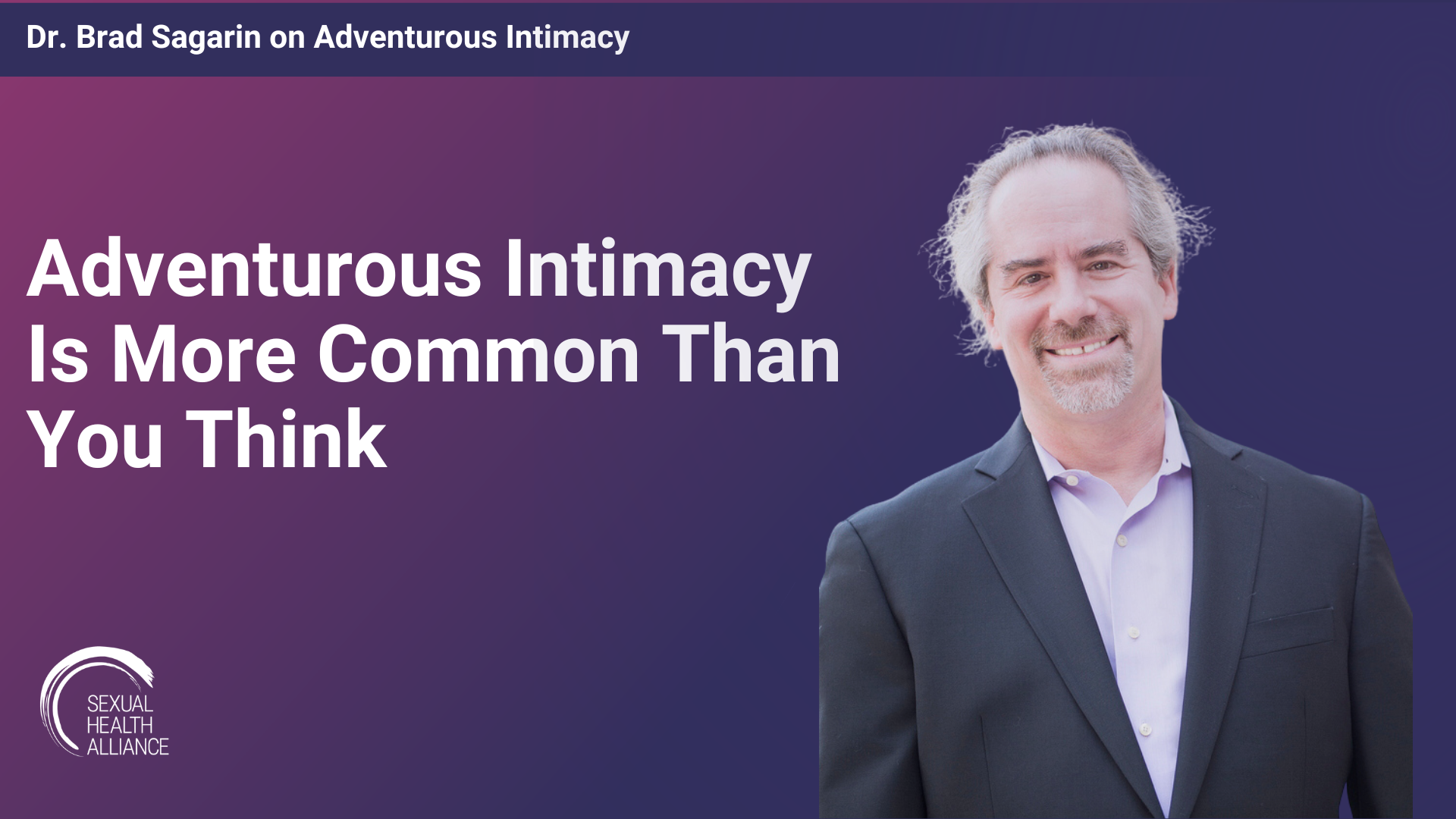
What BDSM Communities Teach Us About Desire, Communication, and Relationship Satisfaction - Insights from Dr. Brad Sagarin
When people hear the words BDSM or adventurous intimacy, many still picture something fringe, extreme, or rare. These assumptions persist despite decades of cultural change and growing research to the contrary. According to Dr. Brad Sagarin, Professor of Social Psychology at Northern Illinois University, those assumptions are not just inaccurate—they actively limit how people understand desire, intimacy, and connection.
In this interview, Dr. Sagarin draws from years of research on BDSM communities and intimate relationships to challenge some of the most entrenched myths about sexuality. His work highlights a powerful truth: many desires people believe are unusual are actually widely shared, and when people communicate openly about them, relationships tend to become healthier, more trusting, and more satisfying.
This blog explores Dr. Sagarin’s key insights on BDSM communities, why communication and transparency matter more than compatibility, and what these findings can teach all of us—regardless of how “adventurous” our sex lives may be.
Why Communication Is the Most Exciting Trend in Intimate Wellness
When asked what trend in intimate wellness genuinely excites him—not because it’s popular on social media, but because it has the potential to change how people connect—Dr. Sagarin’s answer is clear: research-backed communication and transparency.
Across studies, one pattern keeps emerging. Relationships function better when partners know:
what kinds of intimacy the other person is seeking
what fantasies or curiosities they may hold
what boundaries and interests matter most
Intimacy doesn’t thrive on guessing. It thrives on knowing.
Dr. Sagarin emphasizes that people cannot meet each other’s needs if those needs are never articulated. Communication is not an optional enhancement to intimacy—it is the infrastructure that supports it.
Adventurous Intimacy Is Not as Rare as We Think
Much of Dr. Sagarin’s research focuses on what he describes as more adventurous types of intimacy, including BDSM. These practices are often stereotyped as niche or extreme, leading many people to assume that only a small subset of individuals are interested in them.
Research tells a different story.
Dr. Sagarin explains that fantasies about, or engagement in, adventurous intimacy are surprisingly common. Far more people are curious about these dynamics than public discourse suggests. The perception that these desires are rare is driven less by data and more by stigma.
This gap between perception and reality creates a painful paradox:
People assume their desires are unusual
That assumption fuels embarrassment or shame
Shame discourages disclosure
Silence reinforces the myth that “no one else feels this way”
Breaking that cycle begins with accurate information—and with conversations that normalize curiosity rather than pathologize it.
Desire Feels Risky When We Think We’re Alone
One of the most important implications of Dr. Sagarin’s work is psychological, not behavioral.
When individuals believe their desires are unique or deviant, they are more likely to:
suppress those desires
feel ashamed of them
avoid talking about them with partners
settle for intimacy that feels incomplete
Dr. Sagarin offers a reframing that can be deeply relieving: your inner desires may be shared by many others. And when people are willing to be open with a partner, they often discover something unexpected—that their partner may be curious, interested, or even eager to explore those same ideas.
Openness creates possibility. Silence forecloses it.
How Dr. Brad Sagarin Found His Research Focus
Dr. Sagarin’s interest in BDSM communities didn’t come from trend-chasing or provocation. It came from noticing a serious gap in the research.
While in graduate school, he realized that adventurous intimacy was:
widely stigmatized
poorly understood
dramatically understudied
Despite its prevalence, it was rarely examined with the same scientific rigor applied to other aspects of human intimacy. This lack of research had consequences. When areas of sexuality are ignored academically, myths flourish and stigma goes unchallenged.
Dr. Sagarin recognized that BDSM communities, in particular, had something valuable to teach—not just about sex, but about how humans communicate desire, negotiate boundaries, and build trust.
What BDSM Communities Teach the Broader World
One of the most striking findings from Dr. Sagarin’s research is that people engaged in BDSM often demonstrate exceptionally strong communication skills.
These communities frequently emphasize:
explicit discussion of desires
negotiation before intimacy
clarity around boundaries
ongoing check-ins
transparency about needs
Contrary to stereotypes, these conversations do not reduce passion. Dr. Sagarin notes that talking ahead of time does not make intimacy less exciting or spontaneous. In fact, it often does the opposite.
When people know what their partner wants—and know that their own desires are welcomed—they experience:
greater freedom
deeper trust
increased excitement
reduced anxiety
Communication doesn’t drain eroticism. It protects it.
Talking First Doesn’t Kill the Mood—It Builds It
A persistent cultural myth suggests that discussing sex too much makes it clinical or boring. Dr. Sagarin’s research challenges this idea directly.
He explains that when partners communicate openly:
uncertainty decreases
fear of rejection lessens
curiosity increases
confidence grows
Knowing what’s welcome allows people to relax into intimacy rather than performing or guessing. Far from killing desire, communication often creates the conditions where desire can flourish safely.
This insight applies far beyond BDSM. Any relationship benefits when people feel secure enough to say what they want—and to hear what their partner wants in return.
The Message for the Next Generation: We Can’t Read Minds
If Dr. Sagarin could offer one message about love and intimacy to the next generation, it would be simple and foundational:
We cannot read minds.
This sounds obvious, yet many people still expect partners to intuit desires, boundaries, and fantasies without conversation. When that doesn’t happen, disappointment and resentment follow.
Dr. Sagarin emphasizes that talking about what you want:
builds intimacy
signals trust
invites reciprocity
When one person opens up, it often makes the other person feel safer doing the same. Over time, this creates what he calls a virtuous cycle of communication, passion, and excitement.
Why Compatibility Matters Less Than We Think
One of the most compelling insights Dr. Sagarin shares comes from recent (not yet published) research from his lab.
The study examined whether compatibility—the idea that partners need to be a perfect “match” in interests or desires—was the strongest predictor of relationship satisfaction.
Surprisingly, it wasn’t.
What mattered far more was each partner’s commitment to meeting the other person’s needs and desires.
In other words:
perfect alignment is less important than effort
shared values matter more than shared fantasies
willingness to care predicts satisfaction better than coincidence
This finding challenges a deeply ingrained romantic ideal. Relationships don’t thrive because two people magically fit together. They thrive because two people choose to prioritize each other’s well-being.
What This Means for Intimate Wellness
Dr. Sagarin’s work reframes intimate wellness as an active, relational process rather than a fixed trait.
Healthy intimacy is not about:
finding someone exactly like you
suppressing desires that feel risky
assuming interest equals incompatibility
It is about:
communicating openly
staying curious about each other
reducing shame around desire
committing to mutual satisfaction
Adventurous intimacy doesn’t threaten relationships. Silence does.
Implications for Sexual Health Professionals
For sex therapists, sex educators, and clinicians, Dr. Sagarin’s research offers several critical takeaways:
Normalize desire diversity. Many interests labeled “unusual” are far more common than clients realize.
Reduce shame through education. Knowledge helps people contextualize their desires rather than judge them.
Teach communication skills, not just consent. Talking about wants and boundaries is foundational.
Focus on commitment, not compatibility. Relationship satisfaction grows from effort and care.
BDSM communities are not anomalies—they are case studies in what happens when communication is taken seriously.
Summary: BDSM Communities and Intimate Wellness
Social psychology research by Dr. Brad Sagarin shows that adventurous intimacy, including BDSM, is far more common than cultural stereotypes suggest. His work highlights that communication and transparency—not perfect compatibility—are the strongest predictors of relationship satisfaction. Many people share desires they believe are unusual, and open discussion with partners often reveals mutual interest. BDSM communities demonstrate how talking about desires ahead of time builds trust, freedom, and excitement. Commitment to meeting a partner’s needs predicts satisfaction more than coincidental alignment of interests.
Final Takeaway
Dr. Brad Sagarin’s research invites a fundamental shift in how we think about intimacy.
Desire is not the problem.
Curiosity is not the problem.
Difference is not the problem.
The real obstacle is silence—fueled by stigma, fear, and misunderstanding.
When people talk openly about what they want, intimacy becomes safer, richer, and more satisfying. And when partners commit to caring about each other’s needs, relationships thrive—not because they were perfectly compatible from the start, but because they chose to communicate.
Adventurous intimacy is not about being extreme.
It’s about being honest.
Want to become an in-demand sexual health professional? Learn more about becoming certified with SHA!

