
Sex Therapy Certification: Your Complete Guide to Becoming a Certified Sex Therapist
Quick Answer: What Is Sex Therapy Certification?
Sex therapy certification is advanced professional training for licensed mental health professionals who want to specialize in human sexuality, intimacy, and relationships. A comprehensive certification program teaches clinical assessment, evidence-based interventions, ethics, diversity, and sexual health while preparing therapists to confidently work with clients experiencing sexual concerns.
Introduction
As conversations around sexual health become more open, the need for qualified sex therapists has never been greater.
Clients are increasingly seeking professionals who understand intimacy, desire, sexual function, relationships, identity, trauma, and communication. Yet many graduate programs devote little time to sexuality, leaving therapists feeling underprepared when these topics arise in the therapy room.
If you're considering sex therapy certification, you're already taking an important step toward filling that gap.
This guide explains what sex therapy certification involves, who it's for, what you'll learn, and why Sexual Health Alliance (SHA) has become a trusted destination for therapists looking to build expertise in sexual health.
What Is Sex Therapy Certification?
Sex therapy certification is specialized postgraduate training designed for licensed mental health professionals who want to incorporate sexual health into their clinical practice.
Unlike general psychotherapy training, sex therapy certification focuses on helping clients navigate issues such as:
Low desire
Sexual pain
Erectile difficulties
Orgasm concerns
Infidelity and betrayal
Communication challenges
Relationship conflict
Gender and sexual identity
Trauma and intimacy
Desire discrepancies
Certification combines evidence-based education with practical clinical application so therapists can approach these conversations with confidence and competence.
What Does a Certified Sex Therapist Do?
Certified sex therapists help individuals, couples, and relationships navigate concerns involving sexuality and intimacy.
Their work often includes:
Comprehensive sexual health assessments
Couples therapy
Psychoeducation
Trauma-informed interventions
Communication coaching
Desire and intimacy concerns
Collaboration with physicians and other healthcare professionals
Rather than focusing only on sexual function, certified sex therapists examine the emotional, relational, psychological, and biological factors influencing sexual well-being.
Why Sex Therapy Certification Matters
Many therapists discover early in practice that clients regularly bring up concerns related to sex and intimacy.
Unfortunately, most graduate programs provide little formal education in these areas.
Certification in as a sex therapist helps bridge that gap by providing advanced training in:
Human sexuality
Clinical interventions
Diversity and inclusion
Ethics
Research
Relationship dynamics
Medical considerations
Sexual dysfunction
The result is greater confidence, stronger clinical skills, and improved client care.
What You'll Learn During Sex Therapy Certification
A comprehensive program should prepare therapists for the realities of clinical practice.
Human Sexuality
Students develop a deep understanding of:
Sexual response
Anatomy and physiology
Lifespan sexuality
Desire and arousal
Reproductive health
Clinical Assessment
Training includes:
Sexual history taking
Differential diagnosis
Treatment planning
Case conceptualization
Relationship Therapy
Students learn to address:
Communication
Emotional intimacy
Conflict resolution
Infidelity recovery
Diversity and Inclusion
Modern sex therapists must understand:
LGBTQIA+ populations
Kink and BDSM
Consensual non-monogamy
Disability
Religious considerations
Ethics and Professional Practice
Therapists also receive training in:
Scope of practice
Professional boundaries
Consent
Ethical decision-making
Who Should Pursue Sex Therapy Certification?
Sex therapy certification is designed primarily for licensed mental health professionals.
This includes:
Marriage and family therapists
Professional counselors
Clinical social workers
Psychologists
Psychiatrists
Many healthcare providers also pursue advanced sexual health education to better support patients.
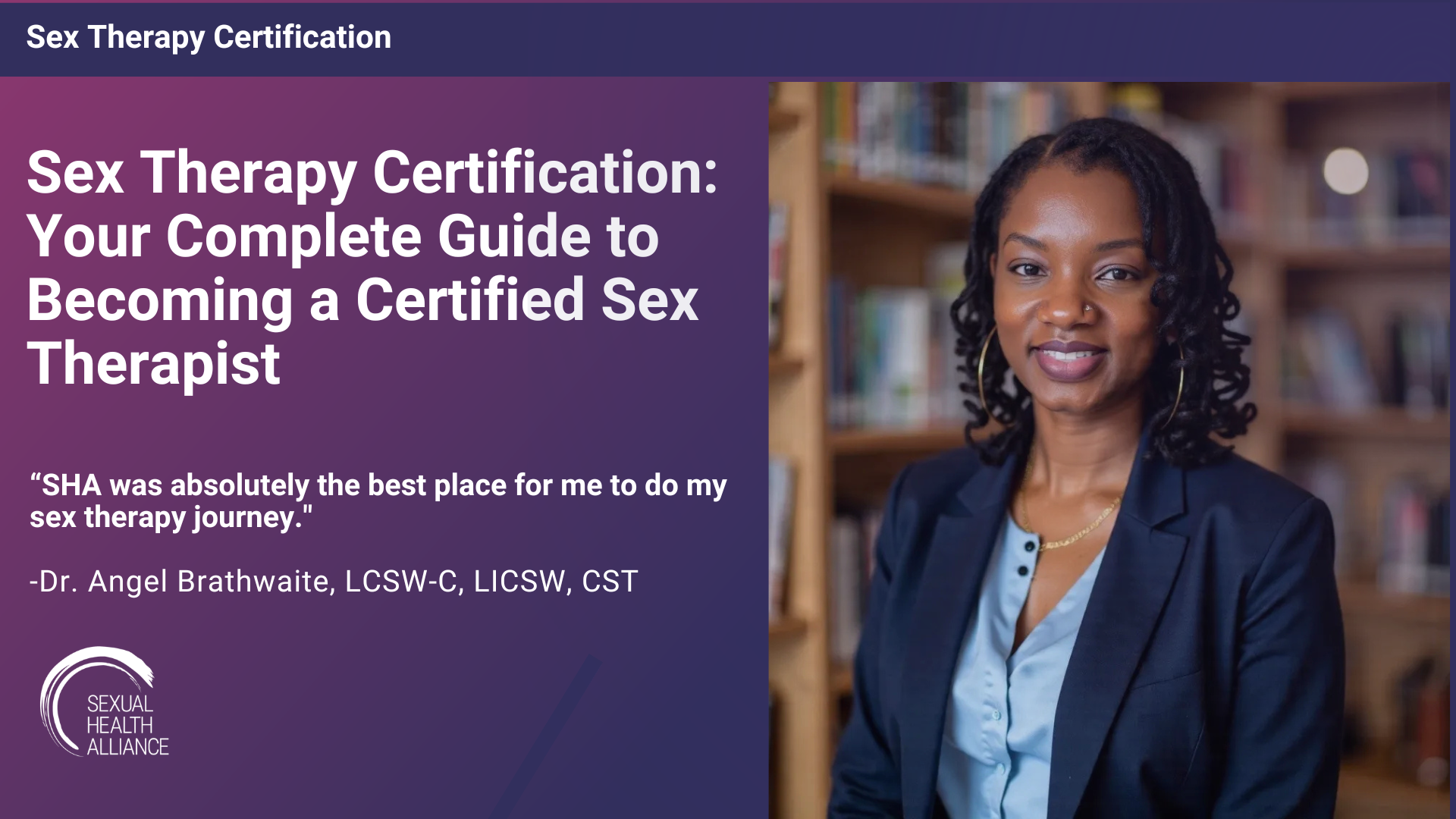
One Therapist's Journey: Dr. Angel Brathwaite
Finding the right certification program can feel overwhelming, especially if you're entering the field without an established network.
That was the experience of Dr. Angel Brathwaite.
When she began exploring sex therapy certification, she had no professional connections in the field.
Instead of choosing the first program she found, she spoke with graduates, asked questions, and looked for a learning community where she felt supported.
She found that community at Sexual Health Alliance.
As Dr. Brathwaite explains:
"It was the place that I felt the most comfortable. I was able to ask a million questions. I was able to talk to people who had already gone through the program and people who were currently going through the program."
That supportive environment helped launch her career in ways she never expected.
Early in her training, she was invited to present at one of SHA's conferences.
That opportunity gave her the confidence to continue speaking professionally and eventually led to an invitation to present at a national AASECT conference.
As she describes:
"Imagine being in your first year or two starting this journey and already speaking and presenting at these amazing conferences."
Her story highlights an important point:
The value of a certification program extends far beyond coursework.
Professional relationships, mentorship, networking, and opportunities to contribute to the field can have a lasting impact on your career.
Why Choose Sexual Health Alliance?
Sexual Health Alliance has trained thousands of professionals across six continents and has become one of the leading organizations for sexuality education and certification.
Students benefit from:
Expert faculty
Live online education
Interactive conferences
Sexual Attitude Reassessment (SAR)
Professional mentorship
Clinical supervision
Networking opportunities
A global professional community
For Dr. Brathwaite, those resources made all the difference.
She reflects:
"Between the connections, the material, the supervision, the networking, the support, SHA was absolutely the best place for me to do my sex therapy journey."
Today, she continues contributing to the SHA community as both a graduate and educator.
Career Outlook for Certified Sex Therapists
Demand for certified sex therapists continues to grow.
Greater awareness of sexual health has created increasing demand across:
Private practice
Hospitals
Integrated healthcare systems
Universities
Group practices
Educational organizations
Certification may also create opportunities for:
Public speaking
Media appearances
Teaching
Consulting
Writing
Professional training
As more clients seek specialized care, therapists with advanced sexuality training are well positioned to meet that need.
Common Misconceptions
Myth: Graduate school already prepares therapists for sexual health.
Truth: Many graduate programs provide minimal education in sexuality, making specialized certification valuable.
Myth: Sex therapy is only about sexual dysfunction.
Truth: Sex therapy addresses relationships, communication, intimacy, identity, trauma, pleasure, and overall well-being.
Myth: Certification is only about earning credentials.
Truth: Strong programs provide mentorship, networking, supervision, and long-term professional development.
Myth: You have to build your career alone.
Truth: A supportive professional community can accelerate growth and create opportunities that extend far beyond the classroom.
Frequently Asked Questions
How long does sex therapy certification take?
Program length varies depending on coursework, supervision, and certification requirements.
Who can become a certified sex therapist?
Licensed mental health professionals who complete advanced sexuality education and supervision may pursue certification.
Can I complete sex therapy certification online?
Many programs, including Sexual Health Alliance, offer flexible online education combined with live learning experiences.
Why choose Sexual Health Alliance?
SHA combines comprehensive education with mentorship, networking, supervision, and a global professional community that supports students throughout their careers.
Is sex therapy a growing specialty?
Yes. Growing awareness of sexual health has created increasing demand for clinicians with advanced training.
Key Takeaways
Sex therapy certification prepares licensed clinicians to confidently address intimacy, relationships, and sexual health.
Comprehensive training includes clinical skills, ethics, diversity, supervision, and mentorship.
Sexual Health Alliance provides education, networking, and professional opportunities that continue long after graduation.
Your Next Steps
Choosing a sex therapy certification program is about more than earning a credential.
It's about finding a community that supports your growth as both a clinician and a professional.
As Dr. Angel Brathwaite's journey demonstrates, the right education can lead to meaningful mentorship, speaking opportunities, lifelong professional relationships, and a career built around the clients you are passionate about serving.
If you're ready to become the therapist you aspire to be, explore Sexual Health Alliance's Sex Therapy Certification Program and discover how comprehensive training can transform your career.
Want to become an in-demand sexual health professional? Learn more about becoming certified with SHA!
Take this one-minute quiz to discover which certification is best for you
Sexual Health Alliance Certification Programs:

