
What Dr. Ryan Kent Teaches Us About Acceptance, Resilience, and Sexual Confidence
Most people don’t struggle with body image because they haven’t tried hard enough to “fix” themselves. They struggle because they’ve been taught—explicitly or implicitly—that their bodies are only acceptable if they are perfected, stable, and complete.
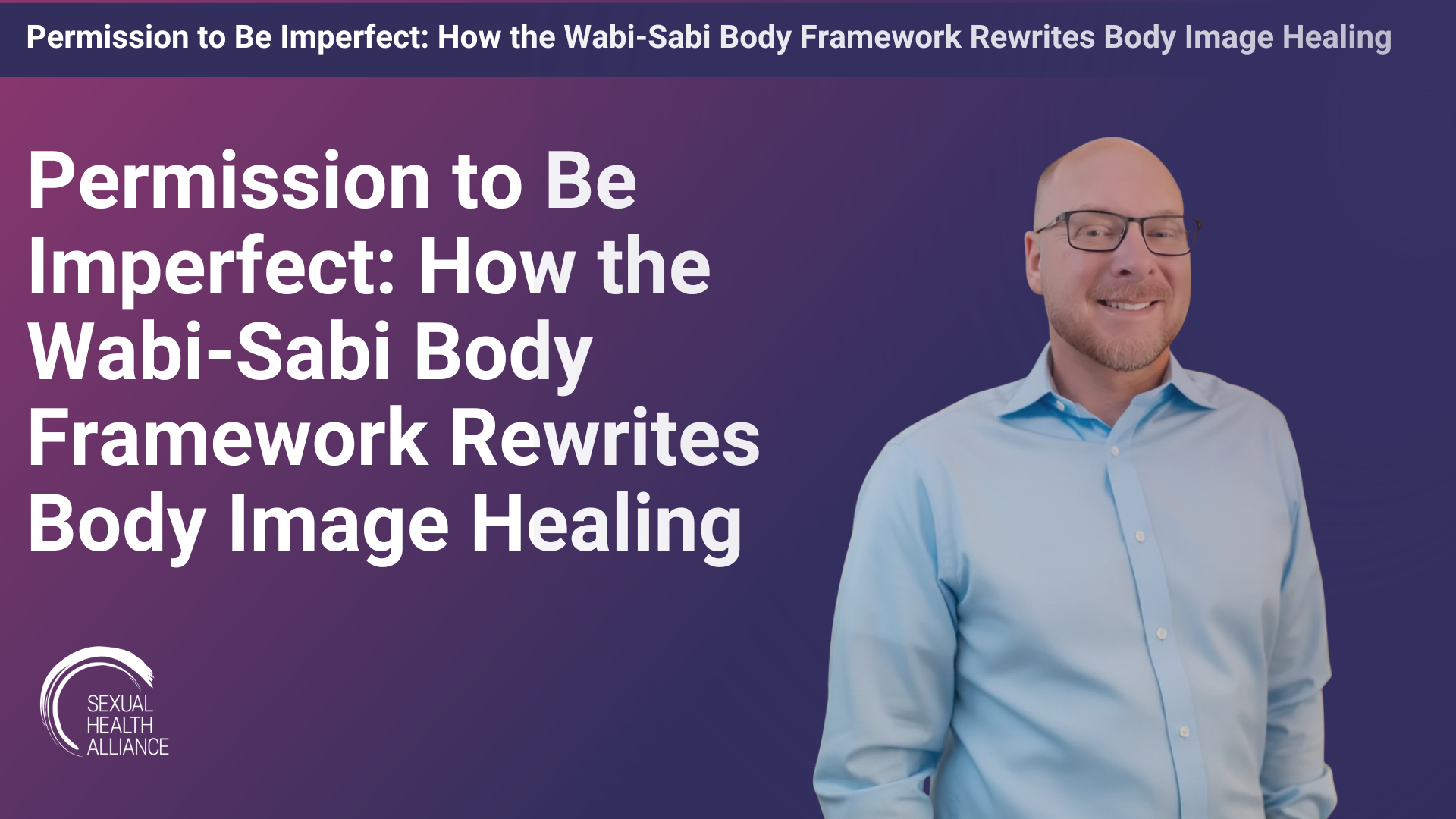
In this conversation, Dr. Ryan Kent—licensed clinical consultant, certified sex therapist, educator, and founder of Afterglow Behavioral & Sexual Health—introduces a radically different approach to body image healing: the Wabi-Sabi Body Framework. Rooted in an ancient Japanese philosophy and adapted for modern therapeutic work, the framework offers something many people have never been given—permission.
Permission to be imperfect.
Permission to be impermanent.
Permission to be incomplete.
And, perhaps most importantly, permission to still be worthy of desire, intimacy, and connection.
Dr. Kent brings this lens to his national consultation and training work with clinicians across the United States, as well as through his weekly blog, In the Know With Afterglow. His clinical focus centers on body acceptance, resilience, and sexual confidence—especially for individuals and couples navigating how chronic medical and health conditions impact sexual pleasure, intimacy, and connection.
This article explores what the Wabi-Sabi Body Framework is, why it resonates so deeply in a culture obsessed with optimization, and how it offers both individuals and professionals a practical, compassionate path forward in body image and sexual health work.
Why Body Image Work Needs a Different Starting Point
Body image concerns are often treated as surface-level problems: something to be managed with confidence tips, affirmations, or physical change. Dr. Kent’s work begins from a deeper truth—nearly everyone struggles with their body at some point, regardless of size, age, health status, or appearance.
It’s rare to find a person who loves every aspect of their body all the time. Most people can identify at least one feature they feel uncertain or critical about. The Wabi-Sabi Body Framework reframes this reality: insecurity is not a personal failure; it is a shared human experience.
Rather than asking people to eliminate insecurity, the framework teaches them how to stay connected to themselves even when confidence is low—a crucial skill for long-term resilience, intimacy, and sexual well-being.
What Is the Wabi-Sabi Body Framework?
Dr. Kent began developing the Wabi-Sabi Body Framework in 2014 as a therapeutic model to support people struggling with body image—not only related to weight or appearance, but also connected to health concerns, disability, aging, and bodily change.
The framework draws inspiration from Wabi-sabi, an ancient Japanese philosophy that recognizes beauty and meaning in:
imperfection
impermanence
incompleteness
Instead of viewing these qualities as problems to be corrected, Wabi-sabi treats them as natural and valuable aspects of being human.
Dr. Kent adapts this philosophy into a clinically grounded framework that helps people:
understand the roots of body image distress
shift from self-criticism to self-acceptance
build sexual confidence without relying on external validation
This approach is particularly impactful for clients whose bodies have changed due to illness, injury, chronic conditions, or life transitions—contexts where traditional body positivity models often fall short.
Permission as a Therapeutic Intervention
One of the most powerful elements of the Wabi-Sabi Body Framework is its emphasis on permission.
Many people live with the belief that acceptance must be earned—that they can feel worthy only after their body improves, stabilizes, or meets certain standards. Wabi-Sabi Body interrupts that belief by explicitly granting permission to be:
imperfect
impermanent
incomplete
This is not resignation. It is relief.
When people stop fighting the reality of their bodies, they often regain energy, curiosity, and agency. Shame softens—and shame is one of the biggest barriers to sexual confidence, intimacy, and connection.
Beyond Acceptance: Affirmation, Reinforcement, and Identity
The Wabi-Sabi Body Framework goes beyond passive acceptance. Dr. Kent emphasizes affirmation and reinforcement—providing statements and practices that help individuals internalize self-worth at a deeper level.
These affirmations reinforce that:
you do not need constant external validation to be valuable
you can be minimal and still be sexy
authenticity is not a liability—it is an asset
what makes you different is often what makes you desirable
Many clients intellectually understand body acceptance but still feel unworthy emotionally. Affirmation bridges that gap by repeatedly reinforcing identity where shame tends to live—in the nervous system, not just the intellect.
“Minimal and Sexy”: Redefining Attractiveness
A striking concept within the framework is the idea that minimalism and sexiness can coexist.
In a culture that equates desirability with enhancement, performance, and optimization, Wabi-Sabi Body offers a counter-narrative: attraction does not require excess. You can show up as you are. You can embrace the parts of your body shaped by experience, health, and time.
Dr. Kent reframes difference as desirability—not despite imperfection, but because of it. For many people, this is the first time they are invited to see their body not as a project, but as a story.
Body Image Beyond Weight: Health, Change, and Reality
A key strength of the Wabi-Sabi Body Framework is its breadth. It does not limit body image struggles to weight or appearance.
Dr. Kent explicitly includes people navigating:
chronic medical conditions
disability and illness
aging and hormonal changes
medication side effects
physical trauma or surgery
This inclusive scope is central to his specialization: helping individuals and couples navigate how health conditions impact sexual pleasure, intimacy, and connection. Rather than framing these experiences as losses alone, Wabi-Sabi Body creates space for adaptation, creativity, and renewed confidence.
Bodies change. Desire changes. Capacity changes. Worth does not.
Why This Framework Matters for Intimacy and Relationships
Body image struggles rarely stay contained within the self. They show up in relationships, sexual expression, and emotional availability.
When someone feels ashamed or disconnected from their body, they may:
avoid intimacy
struggle to stay present during sex
fear rejection or judgment
minimize their needs or desires
The Wabi-Sabi Body Framework supports intimacy by helping individuals say, “This is who I am—and I am still allowed to want connection.”
Dr. Kent emphasizes that when people stop trying to hide or fix themselves, they often become more grounded and open. Confidence grows not from changing the body, but from changing the relationship to it.
Embracing the Body Even When Confidence Is Low
A defining feature of the Wabi-Sabi Body Framework is that it does not demand constant positivity.
It does not say:
“You must love your body every day.”
“Confidence is the goal.”
Instead, it teaches people how to remain self-connected during moments of doubt, grief, or discomfort. This makes the framework durable—useful during flare-ups, health changes, stress, and aging.
Confidence naturally fluctuates. A therapeutic model that only works when confidence is high is fragile. Wabi-Sabi Body works in the middle of real life.
Applications for Sexual Health Professionals
For sex therapists, sex educators, and clinicians, the Wabi-Sabi Body Framework offers a practical, culturally grounded approach to body image and sexual health work.
Clinical implications include:
shifting from “fixing” bodies to reshaping relationships with bodies
normalizing imperfection rather than pathologizing it
integrating body image work into sex therapy and relational care
supporting clients navigating health-related sexual barriers
Through Afterglow Behavioral & Sexual Health, Dr. Kent provides national consultation and training to clinicians seeking inclusive, realistic strategies for addressing body image, intimacy, and sexual confidence in practice.
Why the Wabi-Sabi Body Framework Resonates
Body dissatisfaction is nearly universal—but the solutions offered are often narrow or unrealistic. The Wabi-Sabi Body Framework resonates because it:
removes moral judgment from bodies
honors change rather than resisting it
integrates philosophy with clinical practice
offers language for experiences people already feel but haven’t named
It meets people where they are—without requiring them to become someone else first.
Wabi-Sabi Body and Sexual Confidence
The Wabi-Sabi Body Framework, developed by Dr. Ryan Kent, helps individuals address body image issues by embracing imperfection, impermanence, and incompleteness. Inspired by the Japanese philosophy of Wabi-sabi, the framework offers permission to be oneself without needing physical perfection or external validation. It includes affirmations that reinforce body acceptance, resilience, and sexual confidence, even during periods of low confidence or health-related change. The framework is especially effective for individuals and couples navigating how chronic medical conditions impact intimacy and sexual well-being.
Final Takeaway
The Wabi-Sabi Body Framework offers something rare in modern wellness culture: freedom from the pressure to become “better” before becoming worthy.
By teaching people to embrace imperfection as a feature—not a flaw—Dr. Ryan Kent provides a pathway toward deeper self-acceptance, more authentic intimacy, and sustainable sexual confidence.
You don’t need to be complete to be whole.
You don’t need to be permanent to be valuable.
You don’t need to be perfect to be desired.
Sometimes, healing begins with permission.
Want to become an in-demand sexual health professional? Learn more about becoming certified with SHA!

