Quick Answer: What Is Problem Sexual Behavior Certification?
Problem sexual behavior certification trains professionals to work with clients experiencing distress around sexual thoughts, urges, or behaviors using non-shaming, evidence-informed approaches. Modern models like OCSB (Out of Control Sexual Behavior) focus on emotional regulation, attachment, and individualized care rather than labeling clients as “addicts.”
Introduction
For years, conversations around problematic sexual behavior were dominated by one framework: the sex addiction model.
But many clinicians and researchers have begun questioning whether that model truly helps clients or simply pathologizes them.
Today, a growing number of professionals are moving toward more nuanced, person-centered approaches like OCSB, or Out of Control Sexual Behavior.
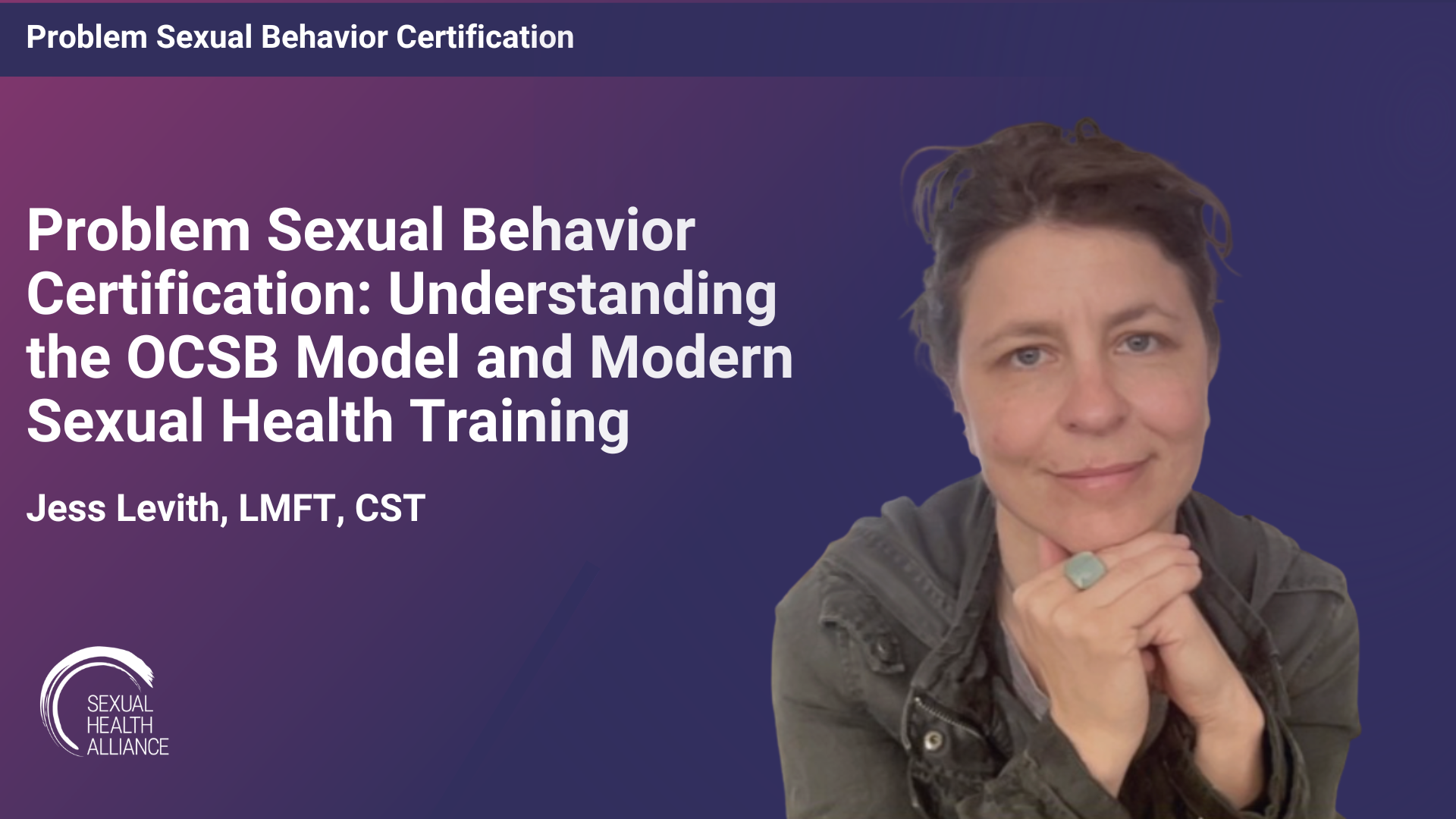
In this conversation, we hear from Jess Levith, a licensed Marriage and Family Therapist and certified sex therapist who specializes in problematic sexual behavior, unhealthy attachment, and sexual health support. Jess shares why she moved away from addiction-based frameworks and how more clinicians are seeking advanced training through problem sexual behavior certification programs.
What Is Problem Sexual Behavior Certification?
Problem sexual behavior certification is specialized training that prepares clinicians to work with clients experiencing distress related to sexual thoughts, behaviors, or urges.
This training typically includes:
Sexual dysregulation
Attachment theory
Trauma-informed care
Emotional regulation
Ethical and non-shaming interventions
Modern certification programs increasingly focus on the OCSB model rather than addiction-based frameworks.
This approach views problematic sexual behavior through the lens of:
Context
Regulation
Relationships
Nervous system responses
Rather than reducing clients to labels.
What Is OCSB?
OCSB stands for Out of Control Sexual Behavior.
According to Jess, OCSB refers to:
“A perceived feeling of being out of control with our sexual thoughts, behaviors, urges, and the negative consequences that come with them.”
One of the most important distinctions is this:
The distress is defined by the client, not imposed by the therapist or society.
This creates a more individualized and compassionate framework for treatment.
Why Many Professionals Are Moving Away from the Sex Addiction Model
Jess shares that she spent years in the sex and love addiction world before ultimately leaving it behind because it felt overly pathologizing.
What drew her to OCSB was its focus on:
Human complexity
Emotional regulation
Attachment patterns
Individual context
Rather than framing sexuality itself as inherently addictive.
As she explains:
“We’re not looking to perform an erotic ectomy. We want to have our full sexuality intact. We just want to learn how to relate to our sexuality differently.”
This distinction is central to modern problem sexual behavior certification.
What Problem Sexual Behavior Can Look Like
One of the most valuable aspects of the OCSB framework is that it avoids one-size-fits-all assumptions.
Jess explains that problematic sexual behavior can present differently depending on:
Gender
Attachment history
Trauma experiences
Cultural messaging
Relationship dynamics
Examples may include:
Sexual dysregulation around pornography or sexual imagery
Fear or avoidance of sex
Risky sexual behaviors causing distress
Attachment-related dysregulation within relationships
The focus is not on labeling behavior as “bad,” but understanding:
Why it is happening
What emotional function it serves
How the client wants to change their relationship with it
What Is Sexual Dysregulation?
Jess describes sexual dysregulation as part of the broader OCSB framework.
Rather than seeing behavior as purely compulsive or addictive, sexual dysregulation focuses on:
Difficulty regulating emotional states
Nervous system responses
Interpersonal attachment dynamics
This approach draws heavily from:
Attachment theory
Interpersonal neurobiology
Trauma-informed care
It reframes the issue from:
“What is wrong with this person?”
To:
“What is happening in this person’s emotional and relational world?”
Why Context Matters in Sexual Health
One of the strongest themes throughout the interview is context.
Jess emphasizes that sexuality cannot be separated from:
Life experiences
Trauma history
Relationships
Social and cultural influences
As she explains:
“Our sexual health is impacted by the world around us.”
This is why modern problem sexual behavior certification programs emphasize person-centered care instead of rigid diagnostic labels.
Acceptance and Commitment Therapy (ACT) in Sexual Health
Jess also discusses her work integrating Acceptance and Commitment Therapy (ACT) into sexual health treatment.
ACT focuses on:
Staying present with difficult thoughts and emotions
Reducing avoidance and shame
Continuing to move toward meaningful values
As she explains:
“It’s about being able to be in the present moment with really difficult thoughts and feelings… while still moving toward what matters.”
This approach aligns closely with OCSB because it prioritizes:
Flexibility
Self-awareness
Emotional regulation
Instead of fear-based control.
The Biggest Gaps in Traditional Clinical Training
Jess identifies several major problems in traditional sexuality education.
1. Over-Pathologizing Sexuality
Many clinicians still rush to addiction-based labels.
2. Lack of Contextual Understanding
Clients are often treated without considering trauma, attachment, or social context.
3. Clinician Bias
Therapists may unintentionally impose personal beliefs about sexuality onto clients.
4. Rigid Thinking
The field changes rapidly, and clinicians must remain flexible and open to new evidence.
As Jess explains:
“You are not going to know everything.”
Why SHA’s Problem Sexual Behavior Certification Matters
Sexual Health Alliance’s Problem Sexual Behavior Certification is designed to address these exact gaps.
The program emphasizes:
OCSB and person-centered frameworks
Trauma-informed care
Attachment and nervous system regulation
Ethical treatment approaches
Non-shaming clinical practices
Students learn how to:
Work with nuance and complexity
Avoid pathologizing clients
Understand sexual behavior within broader emotional systems
Career Outlook for Professionals in This Area
Demand for clinicians trained in problematic sexual behavior continues to grow.
More clients are seeking:
Non-shaming approaches
Evidence-informed treatment
Alternatives to addiction-based models
Professionals with advanced training may work in:
Private practice
Trauma treatment settings
Couples therapy
Sexual health clinics
Educational and consulting roles
Common Misconceptions About Problem Sexual Behavior
Myth: All problematic sexual behavior is addiction
Truth: Many clinicians now use regulation and attachment-based frameworks instead.
Myth: Sexuality itself is the problem
Truth: The issue is often emotional regulation, shame, or attachment distress.
Myth: Clients need strict control and punishment
Truth: Modern approaches emphasize compassion, context, and flexibility.
Myth: One treatment model works for everyone
Truth: Effective care must be individualized.
Frequently Asked Questions
What is problem sexual behavior certification?
It is specialized training for professionals working with clients experiencing distress around sexual behaviors or urges.
What does OCSB stand for?
OCSB stands for Out of Control Sexual Behavior.
Is sex addiction recognized in the DSM-5?
No. Sex addiction is not an official DSM-5 diagnosis.
What is the difference between OCSB and sex addiction?
OCSB focuses on emotional regulation, attachment, and context rather than addiction labels.
Who should pursue this certification?
Therapists, counselors, coaches, and sexual health professionals interested in modern, non-shaming approaches.
Key Takeaways
Problem sexual behavior certification teaches modern, person-centered treatment approaches
OCSB focuses on regulation, attachment, and emotional context instead of addiction labels
SHA prepares professionals to work ethically and effectively with complex client experiences
Your Next Steps
If you want to work effectively with clients experiencing problematic sexual behavior, advanced training matters.
Sexual Health Alliance provides comprehensive education grounded in modern sexual health frameworks, including OCSB, trauma-informed care, and attachment-based approaches.
Want to become an in-demand sexual health professional? Learn more about becoming certified with SHA!
Sexual Health Alliance Certification Programs:

