

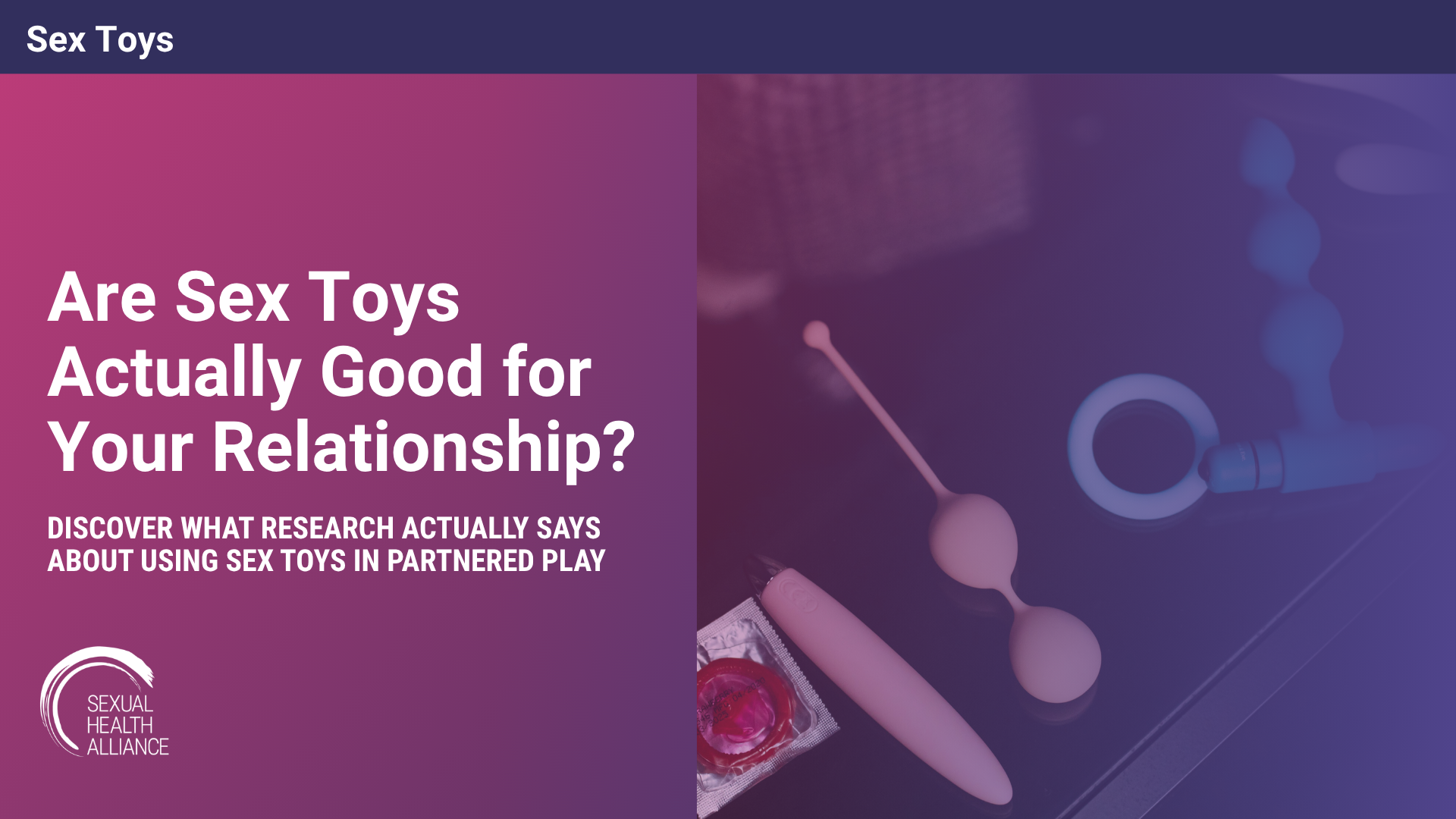
There is a lot of controversy surrounding the use of sex toys when in a relationship–often wrapped in narratives of shame, uncertainty, and insecurity. But some couples are flipping the script. Recent research indicates that using sex toys during partnered sex can augment the experience!
A Whole New World: The Sex Toy Landscape
If you haven't browsed the sex toy market lately, you might be surprised by just how much is out there. The range is vast, so it really seems like there’s something for everyone.
On the more traditional end, you've got vibrators, dildos, penis sleeves, cock rings, and toys designed specifically for anal play, like anal beads and butt plugs. Some vibrate, some don't. Some are phallic, some are abstract shapes designed to hit specific spots. Materials, sizes, and intensities vary wildly, so there's plenty of room to find what works for you and your partner.
Then there's the tech side of things, which has taken the sexual world by storm. Ever heard of teledildonics? It's the (very fun to say) term for sex toys integrated with digital technology. Think remote controls, Bluetooth connectivity, and mobile apps that let you or your partner control the experience, sometimes from across the room, sometimes from across the world. These types of sex toys are sometimes sold as a pair of devices (e.g., a dildo and a sleeve). It's a whole category worth exploring if you're curious about adding a fun, interactive digital element to partnered play.
Research on Sex Toy Use
Feminism: There is a persistent stigma suggesting that sex toy use is somehow wrong or unnatural. Feminist research has (indirectly) pushed back against this by critiquing the coital imperative and orgasmic imperative embedded in normative heterosexual relations, or the assumptions that penile-vaginal intercourse is the most "authentic" form of sex, and that orgasm is the only actual goal of sexual behavior. Many feminists view sex toys as not only acceptable but welcomed, acknowledging that different people have different needs and one-size-fits-all sex is not for everyone!
Despite this, many heterosexual women have reported hiding their sex toys from partners out of fear of backlash, feeling shame or abnormality for preferring clitoral stimulation over penetration. But, good news: acceptance of sex toy use seems to be growing!
Solo vs. Partnered Use in Women: A study of heterosexual women found that those who incorporated sex toys into partnered intercourse, compared to using them solely for solitary masturbation, reported significantly higher levels of arousal, sexual satisfaction, and subjective orgasmic intensity. So, bringing toys into the bedroom together may make a meaningful (and pleasurable) difference!
Research on Teledildonics
A growing body of research discusses teledildonics specifically, focusing on how people are using digitally-enhanced sex toys alone and partnered to achieve pleasure. In a study of heterosexual couples, women reported that technology-assisted sex opened up new possibilities for self-exploration, intimacy, and pleasure, with a greater sense of control and freedom from self-consciousness or pressure. Men, meanwhile, tended to frame digital sex devices as technological aids that helped them fulfill what they saw as their responsibility for their partner's pleasure and orgasm, with the broader goal of enhancing the experience for both! Some other key findings include:
Greater sense of control, yet also reported greater safety in relinquishing control
Greater focus on their own sensory experience
Higher levels of sexual desire
Higher sexual self-esteem
Higher ability to orgasm
Future Research on Sex Toys
Queer Experiences: While existing research has begun to explore LGBTQ+ sex toy use, there is so much more to learn that would help inform sexual health education and therapy. There are so many questions we do not have answers to: Which types of toys are preferred or avoided? How are attitudes toward toy use may be shaped by queer identity and community norms? How does partnered toy use function within same-sex or gender-diverse relationships? Future research should examine how factors such as gender identity, sexual orientation, and community belonging influence toy selection, comfort, and sex toys in partnered play.
Consensual Non-Monogamy: The landscape of sex toy use among people practicing polyamory, open relationships, or other forms of ethical non-monogamy remains largely unexplored. Key questions include how toys are negotiated across multiple partnerships, whether they serve as tools for maintaining intimacy with different partners, and how hygiene, boundaries, and communication around shared or partner-specific toys are managed in these relationship structures.
Accessibility: As the sex toy industry continues to grow and innovate, questions of accessibility remain underexamined. Research should investigate how well current products accommodate individuals with physical disabilities, chronic pain, limited mobility, or sensory differences, as well as whether product design, packaging, and retail environments are inclusive of diverse needs.
The Ins & Outs: Some Common Questions
Still have questions about bringing a toy into the mix with a partner? Let's get into it.
Is it wrong to use a sex toy with a partner? Not at all! Like most things in a relationship, it really comes down to comfort and communication. Have an open conversation before you dive in, check in with each other along the way, and debrief afterward. How did it feel? What worked? What didn't? Treating it like any other part of your intimacy–something you navigate together–makes all the difference.
Interested in toys but not sure how to start the conversation? Bring it up outside the bedroom, when you're both relaxed and there's no pressure. Bringing it up in the moment can feel jarring, so give it the space it deserves. Be honest about your interest, and invite your partner to share how they feel too. Don’t worry about being perfect, just about being open.
Does using sex toys in a relationship mean something is wrong? Nope! It doesn't say anything negative about you, your partner, or the relationship. It just means you're curious about adding something new to your partnered play. That's all. Plenty of people in happy, healthy relationships use sex toys.
Should I be okay with my partner wanting to use sex toys? That's entirely personal, and only you can answer it. Your comfort and enthusiasm matter just as much as your partner's. This is another example of where open and honest communication is key!
Feeling a little jealous of the toy? Totally understandable, but a sex toy isn't competition. What you bring to intimacy, maybe the connection, presence, way you make your partner feel, or something else, is fundamentally different from what a toy does. They simply aren’t comparable. Instead of competing with it, think of the toy as a tool you both get to use. It's there to enhance the experience, not replace the connection.
Want to become an in-demand sexual health professional? Learn more about becoming certified with SHA!
Written by Jesse John, B.S.
Jesse is a clinical psychology doctoral student at Rowan University in New Jersey. Their research focuses on sexual decision-making, sexual violence, and relationship experiences. The author identifies as a Queer, neurodiverse, white, non-binary person, which informs the way they write and see the world!

