

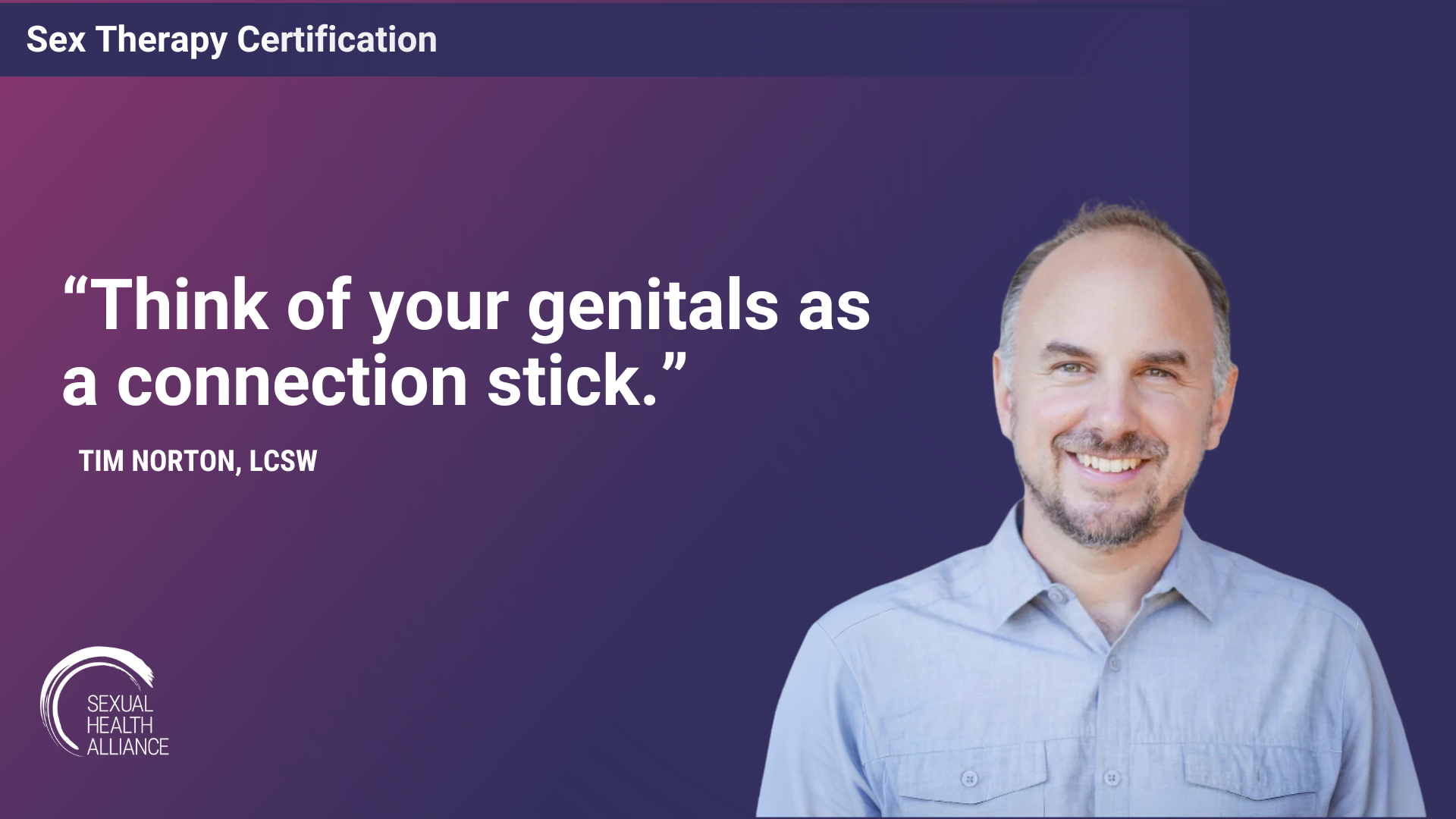
In the field of sexual health, one truth consistently rises to the surface: you cannot guide others into deeper intimacy, vulnerability, or connection if you haven’t done that work yourself. This theme came through powerfully in our recent conversation with Tim Norton, LCSW, a respected therapist who specializes in men’s sexual health and hosts the podcast Hard Conversations.
Tim’s insights illuminate not only the current landscape of men’s health, but also the evolving skills today’s professionals must cultivate. For those pursuing sex therapy certification, his message is clear: your personal development is inseparable from your professional excellence.
Below, we unpack the key themes from the interview and share why structured, comprehensive education—like SHA’s certification programs—matters now more than ever.
The Role of Self-Work in Sexual Health Education
One of therapist Tim Norton’s core messages is simple—and essential:
Professionals cannot normalize intimacy, reduce shame, or foster authentic conversations unless they have done the work themselves.
For clinicians, educators, and coaches, this means:
Exploring your own boundaries
Engaging in open, honest conversations with partners
Sitting with discomfort around taboo topics
Expanding your capacity for vulnerability
As Tim explains, “Sometimes you're not going to come across authentically talking about this stuff with others if you haven't done that for yourself.” Real intimacy education isn’t theoretical—it is lived, embodied, and practiced.
This philosophy is deeply aligned with SHA’s approach to sex therapy certification, which emphasizes both professional competence and personal growth. Our programs bring professionals into community with expert faculty, research-backed frameworks, and experiential opportunities that help deepen self-awareness—because clients feel the difference when a provider is genuinely at ease discussing topics others shy away from.
A Lifelong Path Into Men’s Sexual Health
Tim’s career began long before he entered graduate school. Growing up in the San Fernando Valley, he always sensed he was moving toward a helping profession. During his undergraduate studies in psychology, he found himself naturally drawn to sexual concerns—especially those considered taboo.
He describes discovering this work as “gratifying” and intuitive. His comfort with stigmatized topics allowed clients to open up, and over time men’s sexual health became his primary specialty.
This echoes what many SHA students express when entering our certification programs: they’ve always been drawn to this work, but need structure, guidance, supervision, and community to turn that calling into a sustainable practice.
The Myth of the “Quick Fix”: How ED Marketing Misleads Young Men
A major theme in Tim’s practice today is the impact of widespread misinformation on social media—particularly around erectile dysfunction.
While ED medication has valid medical uses, Tim is troubled by advertising that sells pills as a way to avoid uncomfortable conversations. Many ads explicitly state:
“Don’t have the awkward conversation.”
For professionals in sexual health, this messaging is deeply concerning. The “awkward conversation” is the very heart of intimacy work.
Avoiding it:
Reduces connection
Creates misalignment between partners
Reinforces shame
Encourages shortcuts over communication
Prevents long-term relational growth
For clients dealing with anxiety around erections, desire, or performance, the real solution often lies not in pharmacology but in communication, emotional presence, and relational attunement—skills that are central in SHA’s sex therapy certification curriculum.
Rethinking Chemistry: “Your Genitals Are a Connection Stick”
Perhaps the most memorable moment in Tim’s interview is when he describes a core teaching he offers clients:
“Think of your genitals as a connection stick.”
This metaphor highlights an essential truth:
Sexual response is not just a physiological reaction—it is relational, emotional, and deeply tied to connection.
Young men, he explains, often believe erections and desire are driven by physical attraction, testosterone levels, or biological readiness. While biology plays a role, long-term sexual satisfaction depends far more on:
Authentic emotional connection
Eye contact
Vulnerability
Trust
Feeling seen and safe with another person
Professionals entering the field must understand this multidimensional model of sexuality—another reason comprehensive training matters. SHA’s programs teach clinicians to integrate psychological, relational, cultural, and biological frameworks to help clients navigate their full sexual selves.
Disconnecting to Reconnect: A Message for the Next Generation
When asked what advice he would give future sexual health professionals working in men’s health, Tim didn't hesitate:
“Put down your devices for a minute. Get out into nature, eye gaze, hold each other, and connect.”
He emphasizes that the survival of meaningful human relationships—and maybe even the world—depends on our ability to return to embodied presence.
This isn’t just personal advice; it’s clinical guidance. Sexual health providers are increasingly navigating the effects of:
Performance-driven online culture
Dopamine-driven content loops
Erosion of in-person connection
Understanding how technology shapes sexual behavior is essential for modern clinicians, and SHA’s sex therapy certification programs address these emerging dynamics head-on.
“Where Do I Even Start?” Relearning Connection
Many people feel disconnected from their bodies or uncertain about how to begin rebuilding intimacy. Tim pushes back on the idea that people “don’t know how to connect”—pointing instead to millions of years of biological wiring within us.
His recommended first steps:
Start with your own well-being.
Attend to sleep, movement, and sources of everyday pleasure.Listen to your body.
Notice sensations, emotions, and moments of attraction.Move toward experiences that feel authentic, not performative.
Push through fear—with consent.
Vulnerability is a learned practice.Seek professional support if needed.
Many people require guidance to unlearn shame or reconnect with desire.
For sexual health professionals, helping clients take these steps requires training that integrates neuroscience, somatic awareness, trauma-informed care, and relational therapy approaches—all of which are central to SHA’s certification programs.
Digital Distraction, Dopamine Loops, and the New Sexual Landscape
One of the most urgent topics Tim highlights is the rise of technology-driven intimacy issues. He sees clients lose hours to scrolling, subscription platforms, and algorithm-driven content designed to outcompete human connection.
Some patterns he sees regularly:
Men unintentionally drifting into parasocial or subscription-based online relationships
Couples struggling because one partner’s digital habits erode intimacy
Individuals relying on digital stimulation rather than relational closeness
Escalating habits that feel like emotional or sexual affairs
These challenges require nuanced, modern interventions—and they are reshaping the field of sexual health. SHA’s curriculum directly addresses these emerging concerns so providers can assess, treat, and guide clients through an increasingly digital world.
The Core of Professional Competence: Do Your Own Work
Tim ends with a message every aspiring or practicing sexual health professional should hear:
“Do your own work.”
To be effective, clinicians must:
Explore their own relationship to shame
Practice talking openly about sexuality
Understand their own biases and discomforts
Seek training that pushes their edges
Cultivate authenticity, vulnerability, and confidence
This is exactly why professional training—not casual learning, not surface-level courses—matters. SHA’s sex therapy certification programs offer:
A comprehensive, evidence-based curriculum
World-class instructors and researchers
Experiential learning opportunities
A global community of professionals
Training that integrates personal exploration with clinical excellence
It is an education that transforms both the provider and the profession.
Ready to Deepen Your Work in Sexual Health?
If Tim Norton’s insights resonated with you, you are not alone. Sexuality professionals worldwide are recognizing the need for deeper training, personal growth, and community support to meet the demands of an evolving field.
SHA is the global leader in training, certifying, and supporting sexual health professionals.
If you’re ready to take the next step in your career, explore our sex therapy certification pathways and upcoming training events.
Want to become an in-demand sexual health professional? Learn more about becoming certified with SHA!

