

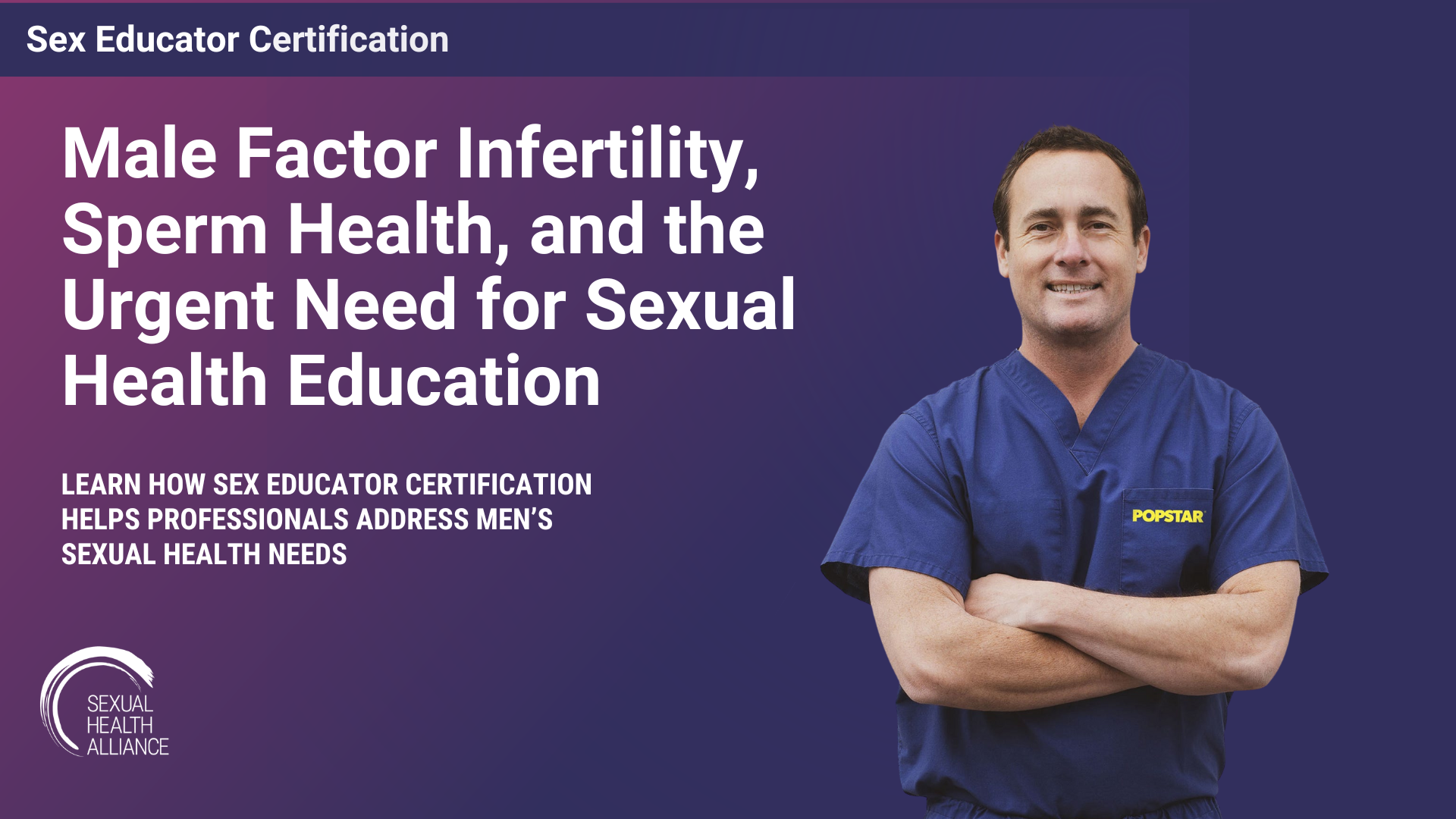
Male factor infertility is no longer a niche issue—it is a global public health concern hiding in plain sight.
Sperm counts worldwide have declined by nearly 50% since 1970, and more than half of all infertility cases involve male factors. Yet fertility conversations still overwhelmingly focus on women, leaving men undereducated, underdiagnosed, and often emotionally isolated when problems arise.
According to urologist and men’s health expert Dr. Brian Steixner, sperm health is one of the clearest indicators of a man’s overall wellness. Diet, exercise, stress, environmental exposures, substance use, and long-term lifestyle patterns all leave a measurable imprint on sperm quality. In other words, infertility is rarely just about reproduction—it’s about total health.
This is exactly why sex educator certification plays such a critical role in today’s sexual health landscape.
Professionally trained sex educators are uniquely positioned to bridge the gap between medical care, public understanding, and emotional support. Through accurate education, stigma reduction, and evidence-based guidance, sex educators help individuals and couples understand male factor infertility, advocate for early evaluation, and make informed decisions about their reproductive futures.
Sexual Health Alliance (SHA) trains professionals to lead these conversations with confidence, compassion, and credibility—because the fertility crisis demands better education, not silence.
Dr. Brian Steixner’s Entry Into Men’s Health and Fertility Care
Dr. Brian Steixner’s path into male fertility work began in oncology. As a urologist treating cancer patients, he noticed a pattern that profoundly shaped his career: while cancer survival rates improved, many men were left struggling with sexual side effects such as erectile dysfunction, testosterone imbalance, and infertility—issues that were often overlooked once treatment ended.
This experience led him to focus on men’s wellness and survivorship, expanding his work beyond cancer care and into broader sexual and reproductive health.
His career highlights a systemic gap that sex educators routinely encounter: medical treatment often addresses survival, but not quality of life, fertility, or sexual wellbeing. Education fills that gap.
Male Factor Infertility: What It Is and Why It’s Misunderstood
Male factor infertility refers to any condition in which a man’s reproductive health contributes to difficulty conceiving. Despite outdated assumptions, infertility is not primarily a women’s issue.
Dr. Steixner emphasizes that male factors contribute to infertility more than half the time, yet men are frequently evaluated later—or not at all.
Contributing factors include:
Low sperm count
Poor sperm motility (difficulty swimming)
Abnormal sperm morphology (head or tail structure)
Hormonal imbalances
Prior surgeries or medical conditions
Lifestyle and environmental exposures
Sex educators trained through a sex educator certification program help dismantle myths that place blame solely on women and normalize male fertility evaluation as a standard part of reproductive care.
Sperm Health as a Biomarker of Overall Health
One of the most powerful insights Dr. Steixner shares is that sperm health reflects overall male wellness.
The number of sperm present
How effectively sperm move
Whether sperm are structurally healthy
These factors don’t develop overnight. Sperm quality is shaped by years—often decades—of lifestyle patterns, particularly between the ages of 18 and 35.
For sex educators, this information is foundational. It allows professionals to teach that fertility is not random or predetermined, but deeply influenced by modifiable behaviors and systemic health factors.
The Global Decline in Sperm Health
The worldwide drop in sperm counts is not happening in isolation. Dr. Steixner points to several contributors:
Poor nutritional quality of modern diets
Sedentary lifestyles
Chronic stress
Chemical exposure from plastics and industrial pollutants
Increased metabolic and hormonal disruption
Sex educators play a crucial role in helping individuals understand how these macro-level issues translate into personal reproductive health outcomes—without fear-based messaging or shame.
When Should Men Seek Fertility Evaluation?
One of the most common questions couples ask is when to seek help. Dr. Steixner recommends:
Allowing several months for natural conception
Seeking evaluation after 6–12 months of unsuccessful attempts
Seeking help sooner if the couple is in their mid-to-late 30s or older
Sex educators help normalize early evaluation and reinforce that fertility assessments are a proactive step—not a failure.
What Young Men Need to Know About Sperm Health
Sperm take approximately 70–75 days to mature, meaning choices made today affect fertility outcomes months later.
Dr. Steixner consistently emphasizes simple but impactful interventions:
Quitting smoking
Limiting alcohol consumption
Improving diet quality
Exercising regularly
Addressing vitamin and mineral deficiencies
This information is especially important for young men who may not be planning families yet but want to preserve future fertility options.
Sex educators trained through SHA are equipped to deliver this education in developmentally appropriate, non-alarmist ways.
Sperm Banking and Fertility Preservation
Historically, sperm banking was associated primarily with cancer treatment or medical emergencies. Today, that narrative is changing.
More men are choosing to bank sperm earlier in life, recognizing that sperm quality can decline with age and environmental exposure. This trend reflects increased awareness—but also underscores the need for accurate, ethical education.
Sex educators help individuals understand fertility preservation options without commercial pressure or misinformation.
The Emotional Impact of Male Factor Infertility
Dr. Steixner is clear: infertility can be emotionally devastating for men.
Many men experience infertility diagnoses as a threat to their identity, masculinity, and sense of worth. Shame, silence, and isolation often follow—especially in cultures where male fertility is rarely discussed.
This is where professionally trained sex educators are essential.
A certified sexual health professional can:
Address emotional and relational impacts of infertility
Reduce stigma and isolation
Encourage open communication between partners
Support informed decision-making
Education, when delivered skillfully, becomes a form of care.
Why Sex Educator Certification Is Essential in Addressing Male Infertility
Male factor infertility is not just a medical issue—it is a social, emotional, and educational one.
Sex educators serve as trusted guides who help individuals and couples:
Understand sperm health and fertility timelines
Advocate for appropriate medical evaluation
Separate myths from evidence-based information
Sexual Health Alliance’s sex educator certification programs provide comprehensive training rooted in science, ethics, and inclusivity—preparing professionals to lead these conversations responsibly.
Becoming Part of the Solution
The fertility crisis will not be solved through medicine alone. It requires education, normalization, and professionals trained to meet people where they are.
Sexual Health Alliance equips sex educators to address male factor infertility and sperm health with clarity, confidence, and care—changing lives in the process.
If you’re passionate about sexual health, fertility education, or reproductive justice, pursuing a sex educator certification is one of the most impactful ways to contribute to meaningful change.
Want to become an in-demand sexual health professional? Learn more about becoming certified with SHA!

