

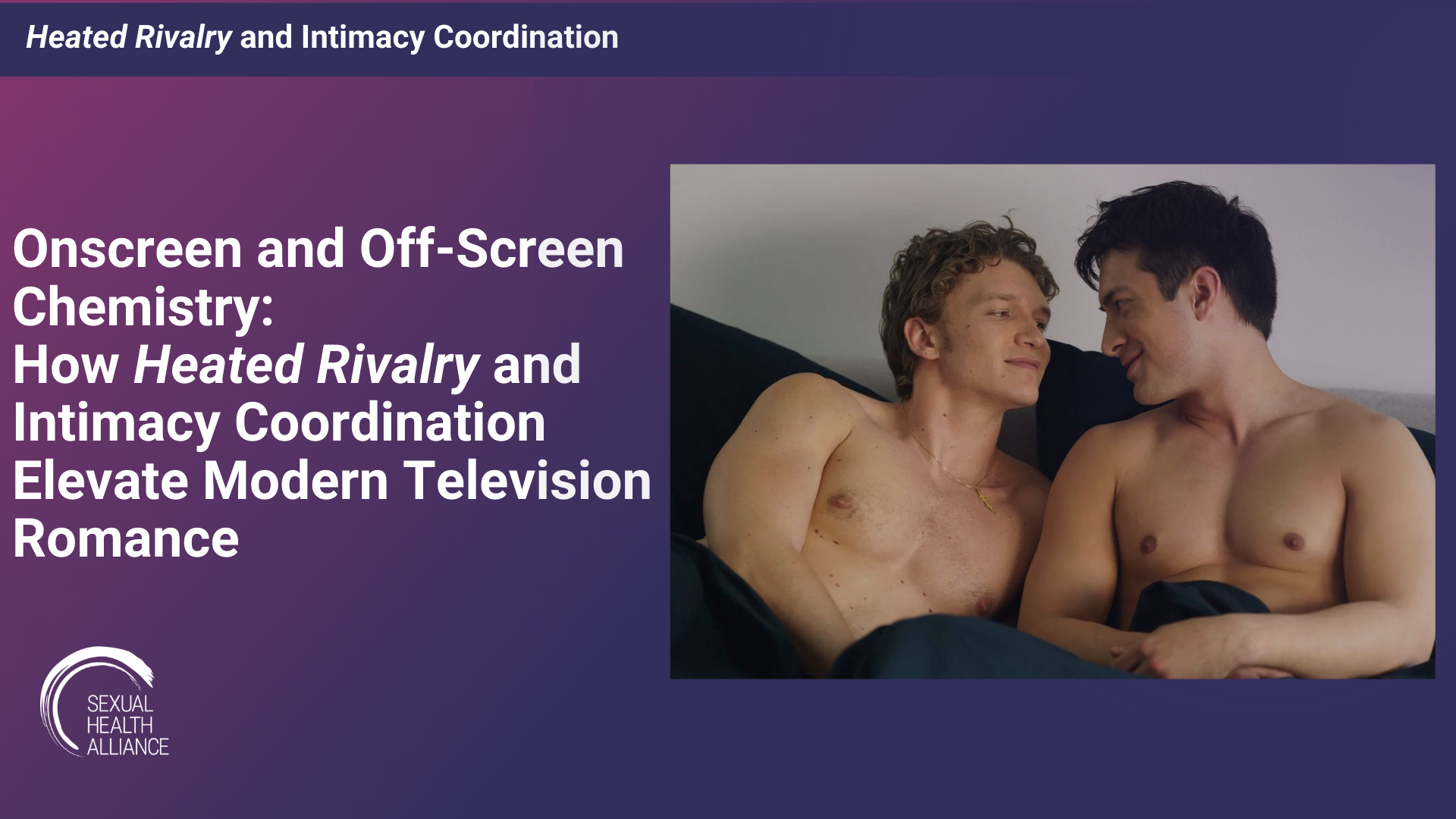
When a show becomes a cultural obsession, it is usually because of chemistry.
The kind that makes viewers lean forward in their seats.
The kind that makes people rewind scenes.
The kind that sends fans to social media at two in the morning to scream into the void about fictional characters.
Heated Rivalry, the queer hockey romance series based on the beloved novels by Rachel Reid, has delivered exactly that kind of chemistry.
But there is something fascinating happening behind the scenes that makes those moments possible.
Beyond the electric connection between Shane Hollander and Illya Rozanov, there is another creative professional shaping the story.
The intimacy coordinator.
So let’s talk about it.
Because what makes Heated Rivalry work so well is not just passion on screen.
It is trust, collaboration, and intentional storytelling behind the camera.
What Is an Intimacy Coordinator?
Their role is to help actors perform intimate scenes safely, professionally, and with clear communication about boundaries.
In many ways the role blends the work of a choreographer and a stunt coordinator. Intimate scenes are carefully planned and rehearsed so performers know exactly what will happen in the scene and how it will unfold.
This process ensures that performers maintain agency over their bodies while still creating scenes that feel authentic to the audience.
Intimacy coordinators typically help productions by
• choreographing intimate scenes so movements appear natural on camera
• facilitating conversations between actors and directors about comfort levels and boundaries
• ensuring consent remains clear and ongoing throughout filming
• establishing professional safety protocols for scenes involving nudity or simulated sex
In the past many productions filmed these scenes with very little guidance. Today intimacy coordination has become an essential part of responsible storytelling in film and television.
Chemistry That Lights Up the Screen
If you are new to Heated Rivalry, here is the premise.
Two rival professional hockey players find themselves caught in a long running secret relationship inside one of the most hypermasculine environments in sports.
Shane Hollander and Illya Rozanov compete against each other on the ice.
Off the ice something very different unfolds.
From their first interactions on screen there is an unmistakable tension between them. It feels electric. Playful. Dangerous. Emotional.
And most importantly it feels believable.
Viewers have repeatedly praised the show for how authentic the relationship feels. Desire and sexuality are not treated as spectacle. They are woven into the characters and their emotional development.
Part of that authenticity comes from something very simple.
Trust.
Actors Hudson Williams and Connor Storrie have spoken about building a genuine rapport during filming. That off camera connection allows them to bring vulnerability, humor, and emotional complexity into their performances.
When actors trust each other, audiences can feel it.
Viewers are not simply watching characters fall in love.
They experience the tension themselves.
Why Intimacy Coordination Matters
Modern audiences want authenticity.
We want relationships that feel real. Emotional moments that feel earned. Intimate scenes that carry meaning rather than existing only for shock value.
At the same time, performers deserve safety and agency when filming scenes that involve nudity or simulated sex.
That is where intimacy coordinators play a critical role.
For Heated Rivalry, the production brought in experienced intimacy coordinator Chala Hunter to help shape the series’ intimate scenes.
Her work involved choreographing moments between the characters so the scenes would feel emotionally authentic while still maintaining professional boundaries for the actors.
Every gesture, movement, and moment of physical closeness is carefully discussed and planned.
This preparation allows actors to fully focus on performance.
Instead of worrying about physical uncertainty, they can explore the emotional reality of the scene.
And that emotional reality is exactly what audiences respond to.
Intimacy as Storytelling
One of the reasons Heated Rivalry resonates with viewers is that intimacy is never treated as a throwaway moment.
It is part of the narrative.
The relationship between Shane and Illya evolves slowly.
First rivalry.
Then curiosity.
Then attraction.
Then something deeper that neither of them can easily ignore.
The progression feels natural.
Stolen glances become lingering touches.
Tension becomes vulnerability.
Eventually the characters reach a level of intimacy that reflects years of emotional connection.
Instead of interrupting the story, these scenes deepen it.
The physical connection between the characters reveals things they cannot always say out loud.
In that sense intimacy becomes another language in the story.
Okay But Let’s Be Honest for a Second
If you have watched Heated Rivalry, there is a good chance you have rewatched certain scenes.
No judgment.
Because the moments that people replay the most are not always the obvious ones.
Yes, the intimate scenes are powerful.
But many viewers find themselves returning to quieter moments.
A look across the rink.
A conversation that carries more tension than either character wants to admit.
A moment where rivalry starts to look suspiciously like longing.
That emotional tension is the real magic of the show.
At Sexual Health Alliance we often talk about how desire actually works in real relationships.
Attraction is rarely just about physical appearance.
It is about anticipation.
Emotional risk.
The complicated intensity of wanting someone you cannot fully have.
Stories like Heated Rivalry capture that emotional psychology in a way audiences recognize immediately.
Which is why viewers are not simply watching the series.
They are talking about it.
Analyzing it.
Obsessing over it.
Why Heated Rivalry Resonates With Audiences
From a sexual health and relationship perspective the story resonates for several reasons.
• It portrays sexual tension developing gradually rather than appearing instantly
• It explores vulnerability and masculinity within professional sports culture
• It depicts intimacy as emotional connection rather than spectacle
• It offers meaningful queer representation in a traditionally hypermasculine environment
Stories like Heated Rivalry work because they combine emotional storytelling with authentic depictions of sexuality, identity, and connection.
Audiences can feel the difference.
The Growing Role of Intimacy Coordinators in Television
The rise of intimacy coordinators reflects a broader shift in the entertainment industry.
Productions are recognizing that scenes involving sexuality require the same level of planning and professionalism as stunt sequences or complex choreography.
Major shows including Bridgerton, Euphoria, and I May Destroy You have all incorporated intimacy coordination into their production processes.
The goal is not to restrict creativity.
It is to support it.
When performers feel safe and respected, they are more willing to explore vulnerability in their performances.
That vulnerability is often what creates the most powerful moments on screen.
Why This Matters for Modern Storytelling
Stories about relationships and intimacy shape cultural conversations.
They influence how people think about desire, consent, vulnerability, and connection.
When those stories are created with care and professionalism, the results are stronger for everyone involved.
Performers are protected.
Stories become richer.
Audiences experience intimacy that feels authentic rather than exploitative.
For a show like Heated Rivalry, where themes of masculinity, identity, and hidden relationships intersect, that thoughtful approach matters even more.
The Real Takeaway
The chemistry audiences feel in Heated Rivalry is not accidental.
It comes from a combination of strong storytelling, trust between actors, and thoughtful collaboration behind the scenes.
Intimacy coordinators play a vital role in that process.
They help ensure that scenes involving vulnerability and sexuality are handled ethically and professionally while still supporting the emotional truth of the story.
At Sexual Health Alliance we pay attention to moments like this in pop culture because stories influence curiosity.
And curiosity is often the first step toward learning more about relationships, sexuality, and communication.
When intimacy on screen is built on trust, consent, and creativity, it becomes something far more powerful than spectacle.
It becomes storytelling that stays with us long after the credits roll.
Want to become an in-demand sexual health professional? Learn more about becoming certified with SHA!

