

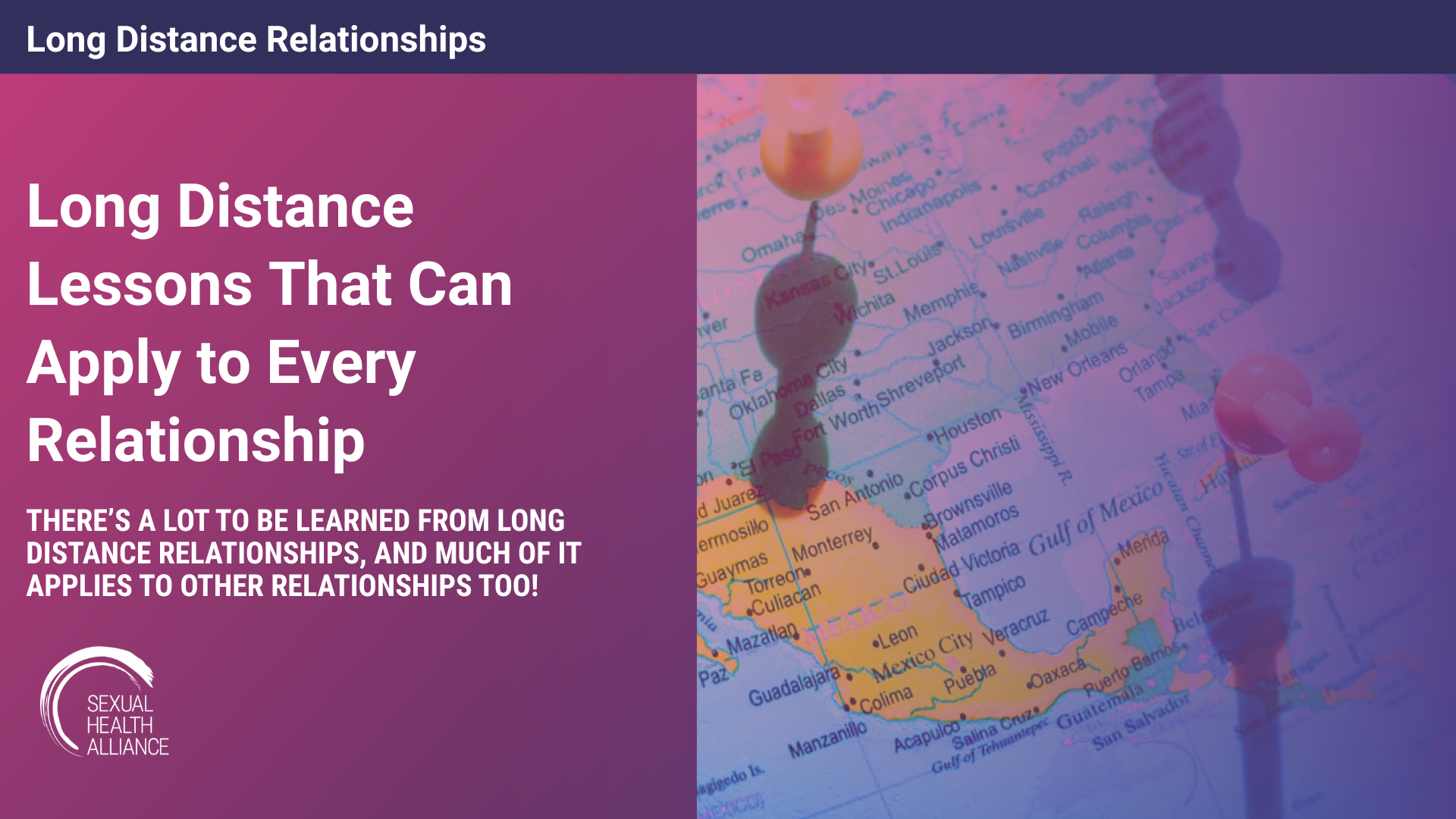
Whether your relationship is separated by a few hour drive, takes a short flight, or means journeying halfway across the globe, it can be a long distance relationship. What constitutes "long distance” can vary substantially, but this kind of relationship generally fits into the category of “living apart together” and means less time together compared to relationships where the partners live closer.
A few months ago, I shared personal anecdotes and reflections about my experience in a long distance relationship. It got me thinking: it’s not that different from a shorter distance relationship.
Although, I'm not actually sure a “shorter distance relationship” is a term. Regardless, I see some clear similarities that I believe are worth exploring. Let’s get into it!
(Meta)communication is Key!
I would argue that all relationships have their fair share of miscommunications. No one is a mind-reader (I think). But, it can hurt quite a bit to be misunderstood in an intimate relationship. Sometimes, it then becomes necessary to have a conversation about how you’re communicating with each other and acknowledging the subtext – this is called metacommunication.
Metacommunication might overlap with sexual communication:
“How should I tell you when I don’t like something you’re doing in bed?”
“How can I give you feedback in a way that doesn’t hurt your feelings so this experience can be better for both of us?”
“Is there a better way for me to tell you that I’m not in the mood?”
For more insights on how to talk to your partner about sex that are more activity-based, see here.
It can help facilitate other parts of the relationship:
“When you talk to me like that after a long day at work, it makes me think you’re mad at me. I want you to have a place to vent your frustration, but could you be more clear that it’s not me you’re upset with?”
“I can’t tell what you’re trying to say, could you phrase it a different way?”
“What kind of compliments and displays of affection mean the most to you?”
Metacommunication comes into play incredibly often in a long distance relationship, at least in my experience. That, in large part, is because more direct forms of communication are really all you have when you’re miles away. The way you express yourself in conversation with your partner, or possibly body language if you’re on a video call, is a huge part of the relationship when other displays of affection (e.g. acts of service) might be harder to offer.
But, metacommunication is important for all relationships (even those with your colleagues, family, and friends)! It can help reduce interpersonal tension and conflict. In my experience, it can also foster a sense of closeness and trust in a relationship. You may begin to feel seen and understood after sharing how you want to be talked to and interacted with.
Spend Time Together Intentionally
Just as you should be communicating intentionally, you should also be spending time with your partner intentionally.
Unfortunately, I have a tendency to be pulled in multiple directions all at once while I am trying to spend quality time with loved ones. This is applicable to all of my relationships, but especially pertinent when thinking about my romantic one. How can I be a good partner when I’m not paying attention? The answer is that I really can’t.
The reality of it is that there will always be more work to do, chores that are piling up, and worries taking us away from the present moment. A few tips that have worked for me:
Set a stop rule. If I know I’ll be hanging out with my partner, I set a specific time beforehand that I will be done doing work. I try to give my neurodivergent brain about 10 to 15 minutes to transition between a work task and quality time. Unfortunately, it doesn’t always pan out, but it is getting easier with practice! The key is to communicate when you need more time, or when the plan has to change based on how you’re feeling or outside factors.
Create a routine. I have found it helpful to have a few routine quality time activities. It takes the stress off the question of “What do you want to do tonight?” after a long day to have a little list to rotate through. Having general predetermined times to hang out can also ease some of the cognitive load that comes with daily planning. If you’re feeling really scandalous, maybe make a shared calendar!
You may be thinking “Jesse, it is unrealistic and exhausting to be intentional all the time! I can’t do this!” You’re right, being perfect is unrealistic. But, that’s not what I’m saying. Rather, try your best to show up – mentally and physically – for your partner. It is a crucial way to communicate to them that you care and that they are worth putting whatever else you’re carrying to the side, even if just for a while.
Not Everyone Will Support Your Relationship
I get a few common responses when I disclose that I’m in a long distance relationship:
“That must be so hard, is it worth it?”
“I could never do that.”
“Are you sure you’re not wasting your time?”
When my friends and family ask questions or express concern about it, I know they are looking out for my best interest and that it comes from a place of care. However, when I get these skeptical responses from acquaintances and other people I interact with, they do not necessarily have those same positive intentions. People say things like this all the time, and not just about long distance relationships. Other non-mainstream relationship dynamics and partnerships, especially alternative sexualities (e.g. ethical non-monogamy, kink/BDSM, LGBTQIA+) are subject to this poking and disapproval too.
As much as you care about your partner(s) and your relationship(s), you can’t force others to accept them. You can only control yourself. I would encourage you to protect your peace. Listen to the people who care about you when they express concerns, and consider keeping the opinions of others at arm's length!
Want to become an in-demand sexual health professional? Learn more about becoming certified with SHA!
Written by Jesse John, B.S.
Jesse is a clinical psychology doctoral student at Rowan University in New Jersey. Their research focuses on sexual decision-making, sexual violence, and relationship experiences. The author identifies as a Queer, neurodivergent, non-binary, white person, which informs the way they write and see the world!

