

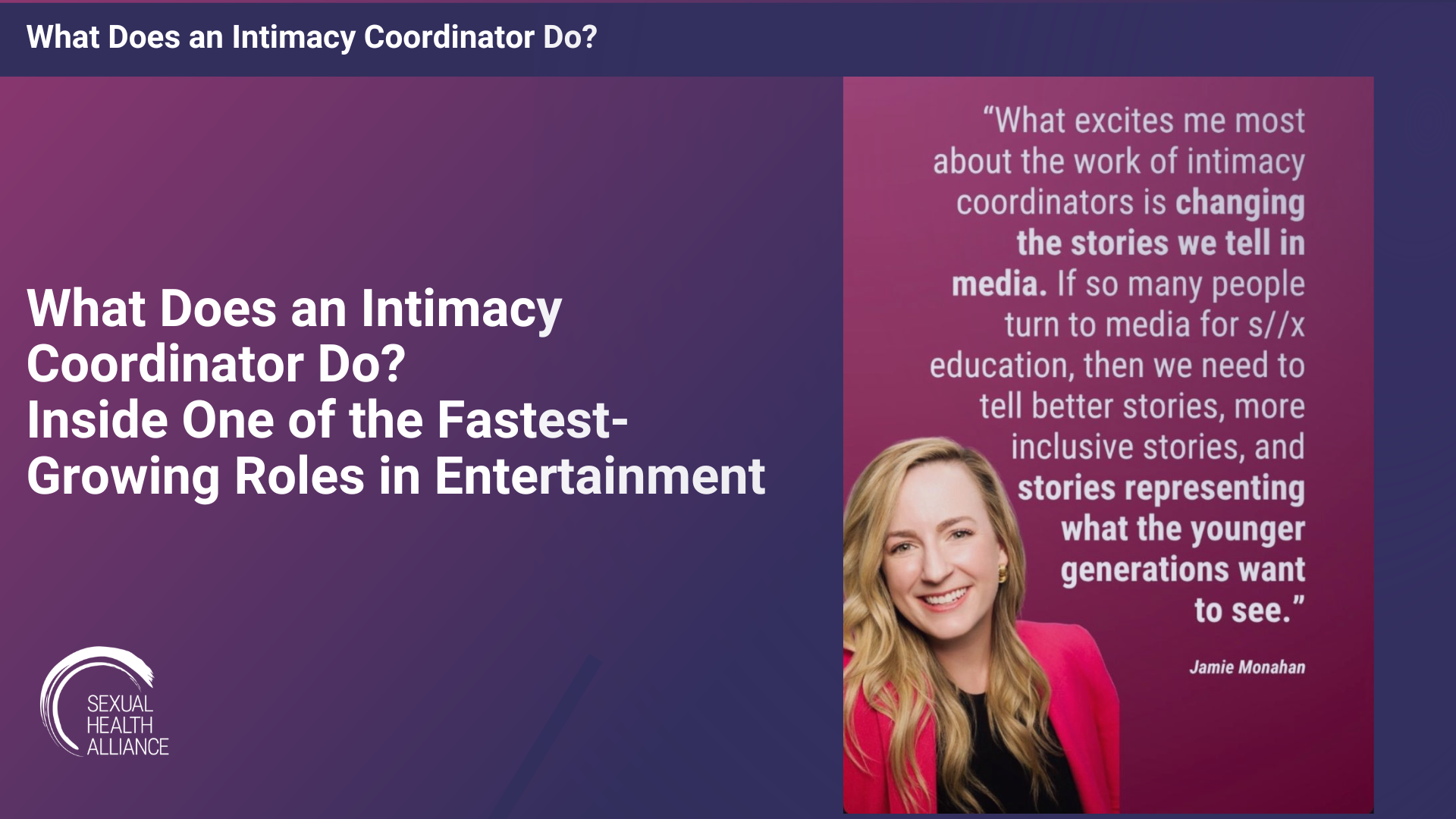
What Does an Intimacy Coordinator Do? Inside One of the Fastest-Growing Roles in Entertainment
Primary Keyword: what does an intimacy coordinator do
Secondary Keywords: intimacy coordinator, intimacy coordinator job, how to become an intimacy coordinator, intimacy coordinator training, intimacy coordinator film, intimacy coordinator career, intimacy coordinator salary
SEO Title: What Does an Intimacy Coordinator Do? A Career Guide
Meta Description: What does an intimacy coordinator do? Learn how intimacy coordinators support actors, directors, and productions, plus the training and skills needed for this growing entertainment career.
URL Slug: /what-does-an-intimacy-coordinator-do
What Does an Intimacy Coordinator Do? Quick Answer
An intimacy coordinator is a trained professional who works with performers and production teams to help plan and facilitate scenes involving nudity, simulated sex, physical intimacy, and other hyper-exposed content. Intimacy coordinators advocate for performers, facilitate communication around consent and boundaries, collaborate with directors and production departments, and may help choreograph intimate movement so scenes can be performed safely, consistently, and authentically.
According to SAG-AFTRA’s Standards and Protocols for the Use of Intimacy Coordinators, intimacy coordinators work throughout pre-production, filming, and sometimes post-production. Their role combines knowledge of consent, movement, production, communication, choreography, modesty garments and barriers, and entertainment-industry protocols.
It is a fascinating example of how expertise in sexuality can extend far beyond a therapist's office.
What Is an Intimacy Coordinator?
An intimacy coordinator is a professional who helps actors and production teams navigate scenes involving physical intimacy, nudity, simulated sex, and other potentially vulnerable material.
SAG-AFTRA describes the intimacy coordinator as an advocate, liaison between performers and production, and movement coach or choreographer for intimate and hyper-exposed scenes.
That distinction matters.
An intimacy coordinator isn't simply there to make sure everyone feels comfortable. They are part of the creative and production process.
Their job is to help establish clear expectations and boundaries while working with directors, actors, assistant directors, costume departments, makeup departments, props, producers, and other members of the production team to execute the scene.
SHA has previously explored intimacy coordination as one example of the expanding field of sexuality consulting and careers in sexology.
What Does an Intimacy Coordinator Do Before Filming?
A significant amount of intimacy coordination happens before anyone steps in front of a camera.
Review Scripts and Identify Intimate Content
An intimacy coordinator may review scripts with the director, writer, or producers to identify scenes involving nudity, simulated sexual activity, kissing, intimate touch, or other hyper-exposed situations.
The team can then clarify what the story requires and how those moments will be approached.
Discuss Boundaries With Performers
Performers need to understand what a scene involves before filming begins.
SAG-AFTRA's protocols call for intimacy coordinators to communicate individually with performers before rehearsal and filming to confirm consent around the agreed-upon intimate content.
That creates an important distinction between:
"Do whatever feels natural when the cameras roll"
and
"Here is exactly what we have agreed to perform."
Collaborate With Production Departments
An intimate scene can involve much more than two actors.
Costumes may need to provide modesty garments. Props may need barriers. Camera placement can determine what appears to be happening on screen. Assistant directors may need to establish closed-set procedures.
The intimacy coordinator helps these different departments communicate so the creative vision and agreed-upon boundaries can coexist.
What Does an Intimacy Coordinator Do on Set?
Once filming begins, the intimacy coordinator's work becomes even more visible.
Maintain Clear Consent
Consent isn't treated as a one-time checkbox.
Intimacy coordinators help maintain communication throughout rehearsal and filming so performers understand what is happening and can communicate if something needs to change.
Choreograph Intimate Movement
Some intimate scenes are carefully choreographed in much the same way as fight sequences or dance.
An intimacy coordinator may help performers determine specific movements, positioning, touch, timing, and physical interactions.
This can actually make scenes look more natural because performers aren't being asked to improvise physical intimacy while simultaneously remembering dialogue, blocking, camera positions, and character choices.
Support the Director's Creative Vision
One misconception about intimacy coordinators is that their role is to prevent directors from creating provocative or realistic scenes.
Their job is not to remove intimacy from storytelling.
SAG-AFTRA specifically describes intimacy coordinators as resources who can help realize a director's vision while promoting appropriate safety protocols.
When the process works well, creativity and performer boundaries aren't competing priorities.
They're part of the same production plan.
Help Implement Closed-Set Procedures
For scenes involving nudity or simulated sex, productions may limit who is allowed on set.
An intimacy coordinator can help ensure closed-set protocols and other relevant production guidelines are followed.
Coordinate Modesty Garments and Barriers
Film and television use specialized garments, barriers, prosthetics, and camera techniques to create the appearance of physical intimacy.
Understanding how these tools work is another technical part of intimacy coordination.
Jamie Monahan on the Rise of Intimacy Coordination
One professional helping bring greater visibility to this work is Jamie Monahan, an award-winning filmmaker, director, actress, and certified intimacy coordinator.
Monahan recently joined Sexual Health Alliance to present “The Rise of Intimacy Coordination in Modern Media” during SHA's Sexology & Media Summit.
Her career demonstrates how multidisciplinary intimacy coordination can be.
Monahan completed Intimacy Directors and Coordinators training and is listed on the SAG-AFTRA Intimacy Coordinator Pre-Registry. She has worked as an intimacy professional across more than 80 productions and multiple forms of media.
Her work also extends beyond traditional film and television. Monahan served as intimacy coordinator and script consultant for Quinn Audio's Ember & Ice, demonstrating how principles of intimacy coordination can apply to audio storytelling as well as visual performance.
Monahan is also an award-winning filmmaker and director, giving her experience on both sides of the creative process.
That combination highlights something important about the profession: intimacy coordination requires much more than knowledge of sexuality. It requires an understanding of storytelling, production workflows, movement, communication, performers, and the realities of making entertainment.
Why Are Intimacy Coordinators Important?
Intimate scenes present unusual professional challenges.
Actors are simultaneously:
Performing emotionally vulnerable material
Following choreography
Remembering dialogue
Responding to another performer
Working within camera and lighting requirements
Maintaining personal boundaries
Historically, expectations surrounding intimate scenes were not always communicated with the precision now expected in modern productions.
The emergence of professional intimacy coordination has helped create a more structured approach.
SAG-AFTRA introduced its first industrywide Standards and Protocols for Intimacy Coordinators in 2020 and has since developed additional training, qualification, accreditation, registry, and pre-registry standards.
The profession reached another milestone when the first SAG-AFTRA Intimacy Coordinator Agreement went into effect for covered scripted television, theatrical, and streaming productions.
Intimacy coordination is increasingly becoming an established professional discipline within modern entertainment.
What Training Does an Intimacy Coordinator Need?
Becoming an intimacy coordinator requires specialized professional training.
SAG-AFTRA identifies multiple areas of expertise relevant to the profession, including:
Consent
Anti-harassment and sexual harassment
Movement coaching
Masking techniques
Modesty garments and barriers
Mediation and conflict resolution
Gender identity and sexual orientation
Anti-racism, equity, diversity, and inclusion
Bystander intervention
Mental health first aid or trauma stewardship
SAG-AFTRA has also established recommended standards for intimacy coordinator qualifications, training, and vetting.
These standards reinforce why becoming an intimacy coordinator is different from simply having an interest in sexuality, acting, or film.
It is a specialized entertainment profession with its own training expectations and industry practices.
Is an Intimacy Coordinator a Sexologist?
An intimacy coordinator and a sexologist are not automatically the same thing.
A sexologist is a professional with specialized education or expertise in human sexuality. Sexologists may work in education, healthcare, research, coaching, consulting, media, advocacy, or other sexuality-focused careers.
An intimacy coordinator has specialized training specifically related to intimate and hyper-exposed performance within entertainment.
However, the two fields can overlap.
Education in human sexuality can give professionals a deeper understanding of consent, sexual diversity, relationships, communication, gender, culture, and other topics relevant to working with intimacy.
Professionals interested in building broader expertise in sexuality can explore SHA's Sexologist Certification.
Is an Intimacy Coordinator a Therapist?
No. An intimacy coordinator is not acting as a therapist on set.
Therapists provide mental health treatment within the scope of their professional licenses. Intimacy coordinators perform a specialized production role focused on communication, consent, choreography, advocacy, and the execution of intimate scenes.
Some intimacy coordinators may independently hold credentials in mental health, sexuality education, coaching, or other professions, but those credentials do not change the scope of their intimacy coordination role.
Professionals interested in clinical sex therapy can learn more about SHA's Sex Therapy Certification, while professionals from healthcare, counseling, social work, graduate mental health programs, and related backgrounds may also want to explore Sexuality Counselor Certification.
How Do You Become an Intimacy Coordinator?
There is no shortcut to becoming a professional intimacy coordinator.
Learn the Entertainment Industry
Intimacy coordinators work inside a complex production environment. Understanding film, television, theater, production hierarchy, rehearsal processes, and on-set communication is essential.
Complete Specialized Intimacy Coordinator Training
Seek professional training specifically designed for intimacy coordination.
SAG-AFTRA's standards are an important starting point for understanding the qualifications and training expected within the industry.
Build Broader Sexuality Knowledge
Human sexuality is complex.
Education in consent, relationships, gender, sexual orientation, sexual health, communication, cultural differences, and sexual behavior can strengthen the broader knowledge base professionals bring to this work.
SHA's professional certifications and continuing education programs provide opportunities to study these subjects with experts working across sexology, healthcare, mental health, education, and media.
Gain Production Experience
Intimacy coordination is practical work.
Training must eventually translate into experience working with performers and productions while learning how to navigate the realities of professional sets.
Continue Professional Development
Entertainment standards continue to evolve.
SAG-AFTRA's registry system incorporates continuing education, reflecting the importance of staying current with industry practices and expectations.
How Much Do Intimacy Coordinators Make?
Compensation varies based on the type of production, experience, union coverage, location, project length, and other factors.
For covered productions under the SAG-AFTRA Intimacy Coordinator Agreement, minimum rates and working conditions are established through the union agreement.
Those figures should not be interpreted as universal intimacy coordinator salaries. Independent productions, theater, non-covered projects, consulting work, and other forms of media may compensate professionals differently.
For current rates and contract details, review the SAG-AFTRA Intimacy Coordinator Agreement.
Can Intimacy Coordinators Work Outside Film and Television?
Yes. The principles behind intimacy coordination are increasingly relevant across different forms of performance and storytelling.
Professionals may work in:
Film
Television
Streaming productions
Theater
Audio storytelling
Live performance
Other forms of media involving intimate content
Jamie Monahan's work across film, theater, and audio is a strong example of how the profession can extend beyond a traditional movie set.
As media continues to evolve, the ways professionals apply expertise in sexuality and intimacy are likely to evolve with it.
SHA explores these emerging intersections of sexuality, entertainment, business, and culture through professional education and events such as the Annual Sexological Conference.
Frequently Asked Questions About Intimacy Coordinators
What does an intimacy coordinator do?
An intimacy coordinator works with performers and production teams on scenes involving nudity, simulated sex, physical intimacy, or other hyper-exposed content. Their responsibilities can include facilitating communication about boundaries and consent, coordinating production protocols, collaborating with multiple departments, and choreographing intimate movement.
Does an intimacy coordinator choreograph sex scenes?
They can. SAG-AFTRA's standards identify movement coaching and choreography as potential parts of the role. Choreography can help performers execute intimate scenes consistently while respecting agreed-upon boundaries.
Does an intimacy coordinator stay on set during filming?
Intimacy coordinators frequently work during filming of the scenes to which they are assigned. SAG-AFTRA's protocols include on-set responsibilities such as reviewing scene content and riders, supporting closed-set protocols, helping with movement, and maintaining communication regarding consent.
What is the difference between an intimacy coordinator and intimacy director?
Terminology and responsibilities can differ by medium. "Intimacy coordinator" is commonly associated with film and television, while "intimacy director" is often used in theater and live performance. Both roles involve specialized approaches to intimate performance.
Do intimacy coordinators need sexuality education?
Intimacy coordinator training includes specialized areas such as consent, gender identity, sexual orientation, movement, anti-harassment practices, conflict resolution, and trauma stewardship. Broader education in human sexuality can complement this professional training but does not replace specialized intimacy coordinator training.
Is intimacy coordination a real career?
Yes. Intimacy coordination is an established entertainment profession with formal SAG-AFTRA standards, training criteria, registry and pre-registry systems, and collective bargaining protections for covered productions.
The Future of Intimacy Coordination
The rise of intimacy coordination represents a larger change in how entertainment approaches sexuality.
Productions do not have to choose between provocative storytelling and professional boundaries. Skilled intimacy professionals can help filmmakers create compelling work while giving performers greater clarity about what they are being asked to do.
Professionals like Jamie Monahan also demonstrate how this emerging career can intersect with filmmaking, directing, sexology, consulting, and new forms of media.
For sexual health professionals, that's worth paying attention to.
Sexology is no longer confined to traditional clinical or educational settings. Expertise in sexuality is increasingly relevant to entertainment, technology, business, media, healthcare, and culture.
And intimacy coordination may be one of the clearest examples of where those worlds are meeting.
Your Next Steps
If intimacy coordination interests you, start by learning about the professional standards established by SAG-AFTRA and researching specialized intimacy coordinator training programs that meet current industry expectations.
If you're interested in developing broader expertise in human sexuality, explore Sexual Health Alliance's professional certification programs and continuing education opportunities. SHA brings together leading professionals across sexology, therapy, healthcare, coaching, education, research, media, and emerging careers to explore where the field of sexual health is headed next.
About Sexual Health Alliance
Sexual Health Alliance (est. 2015) is a global leader in education for sex therapy, coaching, counseling, sexology, and sex education. SHA supports thousands of professionals in building meaningful, transformative careers, with a diverse community of students and alumni across healthcare, education, research, and coaching spanning six continents.

