

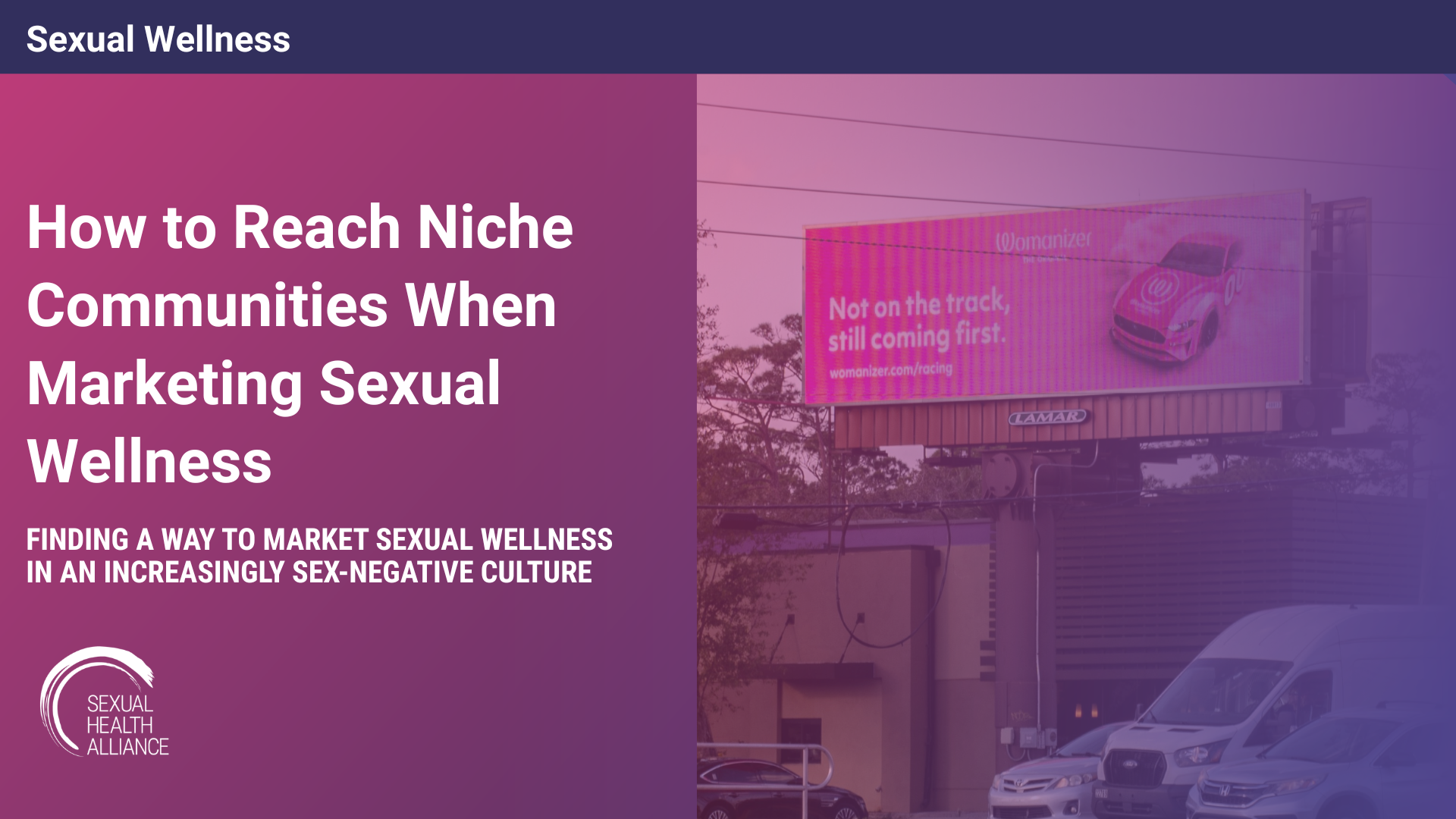
It can be difficult for sexual health education and information to find its way into niche communities. At the Sexual Health Alliance’s “Sexology & Media Summit”, LoveHoney Group’s North American PR Manager Jessica Puder tackled a question that a lot of sexual wellness marketers wrestle with: in a world that feels increasingly sex-negative, how do you reach people who aren't already looking for you?
For her, speed was the bridge! Jessica is a lifelong NASCAR fan and she used that personal interest, paired with her role at LoveHoney Group, to spot a point of connection. Both the brands are, in their own way, about going fast. That overlap opened a door: female-focused brands entering motorsport spaces that have traditionally been male-dominated, and pushing female pleasure into cultural conversation.
NASCAR: the premier stock-car racing series in the U.S., with a nationwide fan base. Top speeds hit around 200 mph.
Womanizer: a leading clitoral stimulation brand under LoveHoney Group, known for its Pleasure Air Technology. Customers have said the product almost works too well, or “too fast."
Of course, sponsorships in racing are not prescriptive. Drivers and teams get to choose who they compete with. Womanizer secured a driver, but could not get NASCAR’s approval because the brand wasn’t “family friendly.”
That rejection didn't hold up well under scrutiny. NASCAR has sponsored erectile dysfunction brands like Viagra and ExtenZe in the past, along with plenty of other "controversial" categories like alcohol, nicotine, firearms, gambling.
The Pivot
The double standard that male sexual health had a home on the track but female pleasure didn’t became the real story.
Crafting a PR Response
Rather than walk away, Jessica and her team turned the rejection into a campaign. During Daytona 500 week, they launched a billboard campaign outside Daytona International Speedway:
A digital billboard near the speedway, with the line: "Not on the track, still coming first."
A mobile billboard that circled the speedway during Daytona 500 Media Day specifically to catch journalists' attention, with the line: "They passed on us. You won't."
A media strategy built around targeted outreach and owned social content on Instagram and LinkedIn.
Being told “no” opened up a wave of opportunities the original sponsorship never would have.
What Does This Rejection Say About Mainstream Culture?
The rejection may have been a more meaningful entry point into the community than a successful sponsorship might have been. Even without a car, Womanizer became part of the conversation around the race.
The lesson here is simple: you may not get the outcome exactly how you wanted it, but you can still make it work for you!
Why It Worked
There are a few key takeaways that can extend to other sexual wellness advertising campaigns
A clearly defined community: The campaign focused specifically on NASCAR, or more largely, the motorsports community.
A recognizable tension came from NASCAR rejecting Womanizer’s proposed sponsorship.
Cultural relevance was clearly present when thinking about how men’s performance and pleasure is mainstream while women’s is not.
Timely execution is key. If you miss the moment the campaign is less likely to gain traction.
Focus on a simple message that individuals in the community can identify with or get behind.
An authentic reason to participate: The goal should be to find a credible point of connection with people in the community, not just attaching to a random trend.
Not every niche is ready or right for every brand or every expert, but plenty of seemingly unrelated communities already contain conversations that may be more relevant than you think!
So, What Can You Take Away from This?
Framework for Finding a Niche
In her presentation, Jessica offered a framework for finding and successfully integrating sexual wellness products into a niche community.
Find the community: Sexual wellness is already part of mainstream culture, but that culture and language develop differently at the grassroots level within each hobby or fandom. Start by identifying the community worth expanding into.
Listen before entering! That means reading the discussions, understanding the language, the frustrations, and the history of the community before joining the conversation
Identify the tension. Note that tension doesn't have to be as dramatic as a public rejection. It can be as small as an unmet need within a subgroup, a misconception, or a conversation the community is already having.
Define your credible role within that community. A sexologist, therapist, educator, medical professional, creator, or brand each brings something different. Be specific and accurate about what you genuinely know or can offer.
Contribute something worth talking about. It's easy for a brand to grab a popular cultural moment, slap a logo on it, post it, and move on, but that rarely builds meaningful recognition or long-term trust with a community. This is a marathon, not a sprint! Entering a community credibly has to be intentional.
Remember: your first move should never be product placement.
Where to Look
Wondering how to pick a niche community? Your next idea may already be inside your. . .
Hobby
Partner’s hyperfixation
Colleague’s fandom
Customer’s community
Group chat
Social feed
Remember: hobbies are not separate from culture. They are often where culture comes from!
Frequently Asked Questions
How Do I Market Sexual Wellness Products to a Community I Don’t Know Anything About?
It is your responsibility to learn about a community, its culture, and its needs before you approach them in a marketing context. Seek out members of the community – they may even be people you already know! Remember to be respectful, not exploitative. You should be marketing a sexual wellness product to benefit them, not to make a quick profit.
What Other Events Does SHA Offer?
In addition to business and media styled events for sexual health professionals, SHA also offers “Sexual Attitude Reassessments” and “Sexceptional Weekends.” I have attended several other events other than this past weekend’s, and I would recommend them to current and aspiring sexual health professionals! For a list of 2026 SHA events, click here.
Want to become an in-demand sexual health professional? Learn more about becoming certified with SHA!
Take this one-minute quiz to discover which certification is best for you
Sexual Health Alliance Certification Programs:
Written by Jesse John, B.S.
Jesse is a clinical psychology doctoral student at Rowan University in New Jersey. Their research focuses on sexual decision-making, sexual violence, and relationship experiences. The author identifies as a Queer, neurodivergent, non-binary, white person, which informs the way they write and see the world!

