

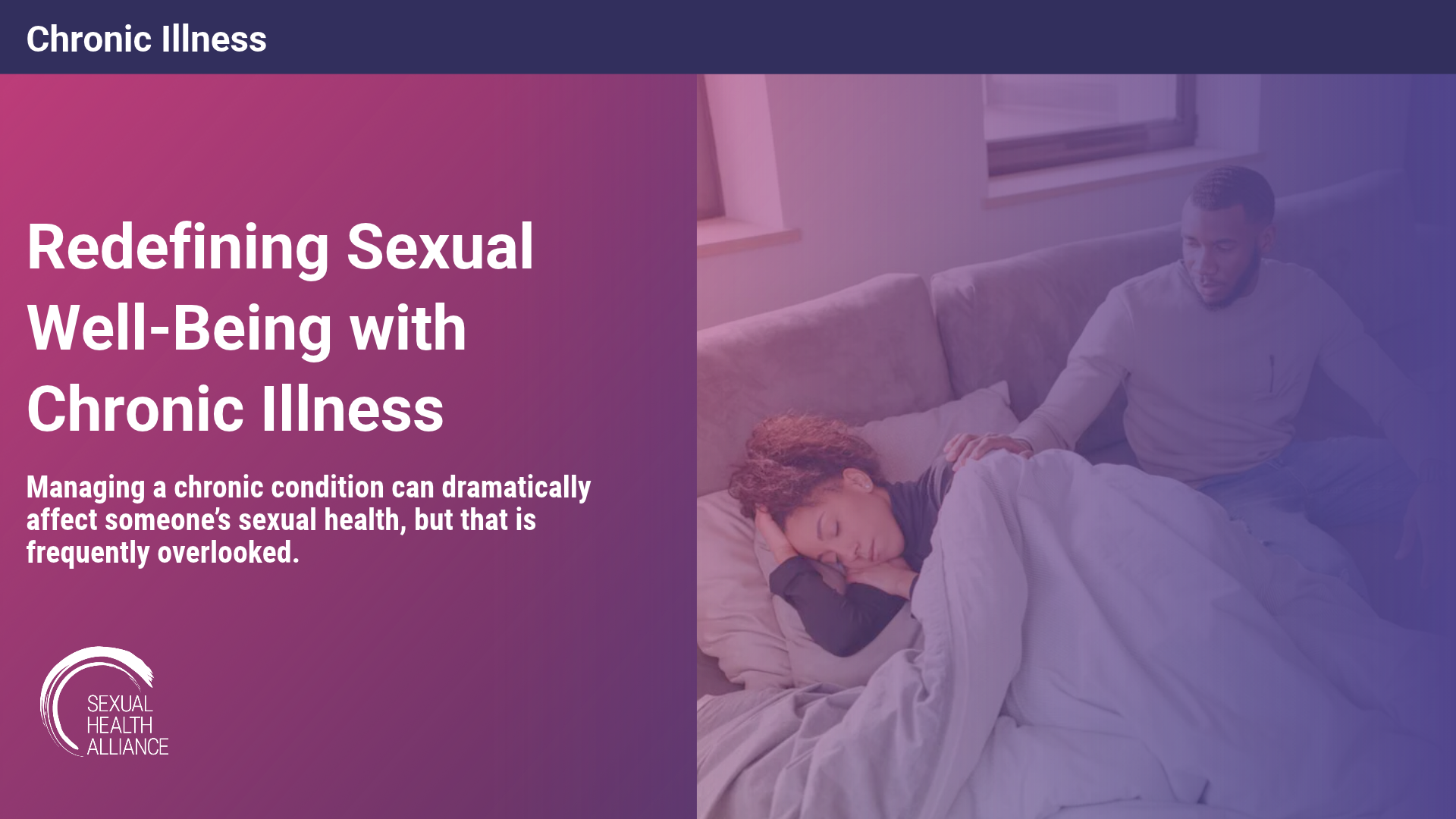
There’s a lot on a healthcare provider's mind when treating patients with chronic conditions or disabilities. On the other side of the exam table, patients have their own pressing concerns, and rightfully so! But with limited time during visits, crucial topics often fall through the cracks. One of the most frequently overlooked? Sexual health.
We often forget how deeply illness and disability impact every corner of a person’s life. Both inside and outside a healthcare office, people assume that a chronic diagnosis means sex is off the table, or that it simply isn’t a priority anymore. These assumptions stem from ableism and the false idea that sexual health exists separate from overall well-being. That couldn’t be further from the truth!
To break down these misconceptions, I sat down with Ryan Kent, a SHA-certified sex therapist and Licensed Clinical Social Worker. We explored how chronic illness intersects with sexuality and discussed practical ways professionals can better support their patients' sexual health.
Common Misconceptions About Sexuality and Chronic Illness
Misconception 1: "Illness Only Affects Sexuality When It Directly Impairs Sexual Function"
It’s easy to focus solely on the physical mechanics of sex, but sexual health is far more complex than just mechanical function. Yes, many conditions directly impact the body in ways that make sex difficult or painful, such as:
Physical Sexual Dysfunction: Direct physiological changes, such as nerve damage, impaired blood flow, or hormonal imbalances, can directly affect arousal, lubrication, or the ability to achieve orgasm.
Musculoskeletal and Mobility Challenges: Muscle weakness, joint stiffness, chronic fatigue, or limited range of motion can make traditional sexual positions or physical engagement exhausting or painful.
However, there is a much quieter side to chronic illness that often goes unacknowledged; it is important to also consider the indirect ways in which it reshapes an individual's intimate life:
Medication Side Effects: Standard treatments often take a heavy toll on libido. SSRIs (antidepressants), blood pressure medications, and hormone therapies are prime examples of drugs that can drastically mute desire or delay climax.
Body Image and Identity Shifts: Living with a new diagnosis or changing body can deeply affect how someone views themselves. Changes in weight, surgical scars, mobility aids, or loss of bodily control can make it tough to feel confident, attractive, or comfortable in one’s own skin.
Mental and Emotional Burnout: Managing a chronic illness is exhausting. The daily cognitive load of managing symptoms, attending appointments, and navigating pain leaves very little room or emotional energy for intimacy. When your body feels like a source of stress, stepping into a sensual mindset can feel impossible.
Misconception 2: "Illness Just Affects the Individual’s Sexual Health"
When an illness or disability enters the picture, its impact rarely stays contained to just one person. It creates a ripple effect across a person’s entire support system, including their intimate partner(s). Navigating sex with a chronic condition requires a mutual adjustment, where partners frequently navigate complex emotional waters:
Guilt Around Unmet Desires: Partners may feel intense guilt for still having sexual desires, especially if those needs feel out of reach or place an unfair burden on their partner who is managing a chronic condition or illness.
Fear of Causing Harm: A partner might hold back or avoid touch altogether out of fear of inflicting pain, aggravating symptoms, or causing physical injury during sex. This can lead to avoidance of sex as well as sexual dissatisfaction for one or more parties.
Grief for the Past Dynamic: Both individuals often experience a shared loss, grieving the sex life, spontaneous intimacy, or physical ease they used to share before the illness began.
Grieving How It Used to Be: Unlocking a "New Normal"
When living with a chronic condition, clients and their partners often carry a deep sense of grief for the sex life they once had. They may yearn to get back to their baseline, or their old "normal." While that past reality may no longer be entirely accessible, mental health professionals can help shift the narrative. Instead of viewing change as an endpoint, we can frame it as an invitation to get creative and define a new normal.
Change in a sex life is inevitable. Whether due to aging, life stress, or health shifts, our intimate lives are always evolving. In cases of illness or disability, that change often arrives abruptly and unexpectedly, but it doesn't mean intimacy is over–it’s just taking a different form. The key is helping clients let go of the pressure of "what used to be" so they can uncover the possibilities of what could be.
Consider asking something like:
"What assumptions are you making about what a 'good' sex life has to look like? Which of those rules can we throw out?"
"Instead of focusing on what your body can no longer do, what are the ways your body can still experience comfort, warmth, or sensation right now?"
“How can we recreate the feelings you got from your sex life in the past through different activities today?"
Recommendations for Sexual Health Professionals
When working with clients navigating chronic illness or disability, mental health providers, and sexual health professionals broadly, play a vital role in opening the door to conversations about intimacy. Ryan shared several actionable recommendations for clinicians looking to integrate sexual health into their practice thoughtfully and effectively.
Ask Directly and Normalize the Topic
Don’t wait for the client to bring up sex—they are often waiting for you to give them permission to discuss it. Ask about sexual health directly, respectfully, and explicitly. A simple, matter-of-fact invitation signals that their intimate life is a valid and important topic for the room.
Clarify Their Goals (Don't Assume Them)
Avoid assuming you know what a client wants. Their primary goal may not be returning to penetration, achieving orgasm, or replicating their old sexual routine. Instead of guessing how often or in what ways they want to be intimate, ask directly: "What does sexual well-being look like for you right now?" Let the client define what success looks like on their own terms.
Frame Sex as an Opportunity, Not an Obligation
Avoid assigning rigid sexual "homework" or setting pass-fail benchmarks like "try to have sex twice this week." Goal-oriented approaches like SMART goals often backfire in therapy when addressing sexual health, creating performance anxiety and a sense of failure if the goal is not met. When an assignment feels like a test they failed, clients are far more likely to avoid intimacy altogether. Frame exercises around exploration, pleasure, and connection rather than quota-based outcomes.
Recognize that Illness Is Not "All or Nothing"
Health and ability exist on a dynamic spectrum—not a binary of "sick" or "healthy." A client's energy, pain levels, and capacity can fluctuate drastically from week to week, or even hour to hour. Clinical interventions need to account for these shifts over time. Helping clients adapt to the ebb and flow of their condition allows them to stay connected to their sexuality without feeling like bad health days completely derail their progress.
Do Your Homework (Without Reducing Them to a Diagnosis)
Build a general baseline understanding of the client’s condition and its treatments so you can ask informed, relevant questions. However, be careful not to let the diagnosis overshadow the human being sitting across from you. Ask how the illness uniquely affects them, how treatments impact their daily life, and how they personally feel.
Want to become an in-demand sexual health professional? Learn more about becoming certified with SHA!
Written by Jesse John, B.S.
Jesse is a clinical psychology doctoral student at Rowan University in New Jersey. Their research focuses on sexual decision-making, sexual violence, and relationship experiences. The author identifies as a Queer, neurodivergent, non-binary, white person, which informs the way they write and see the world!

