

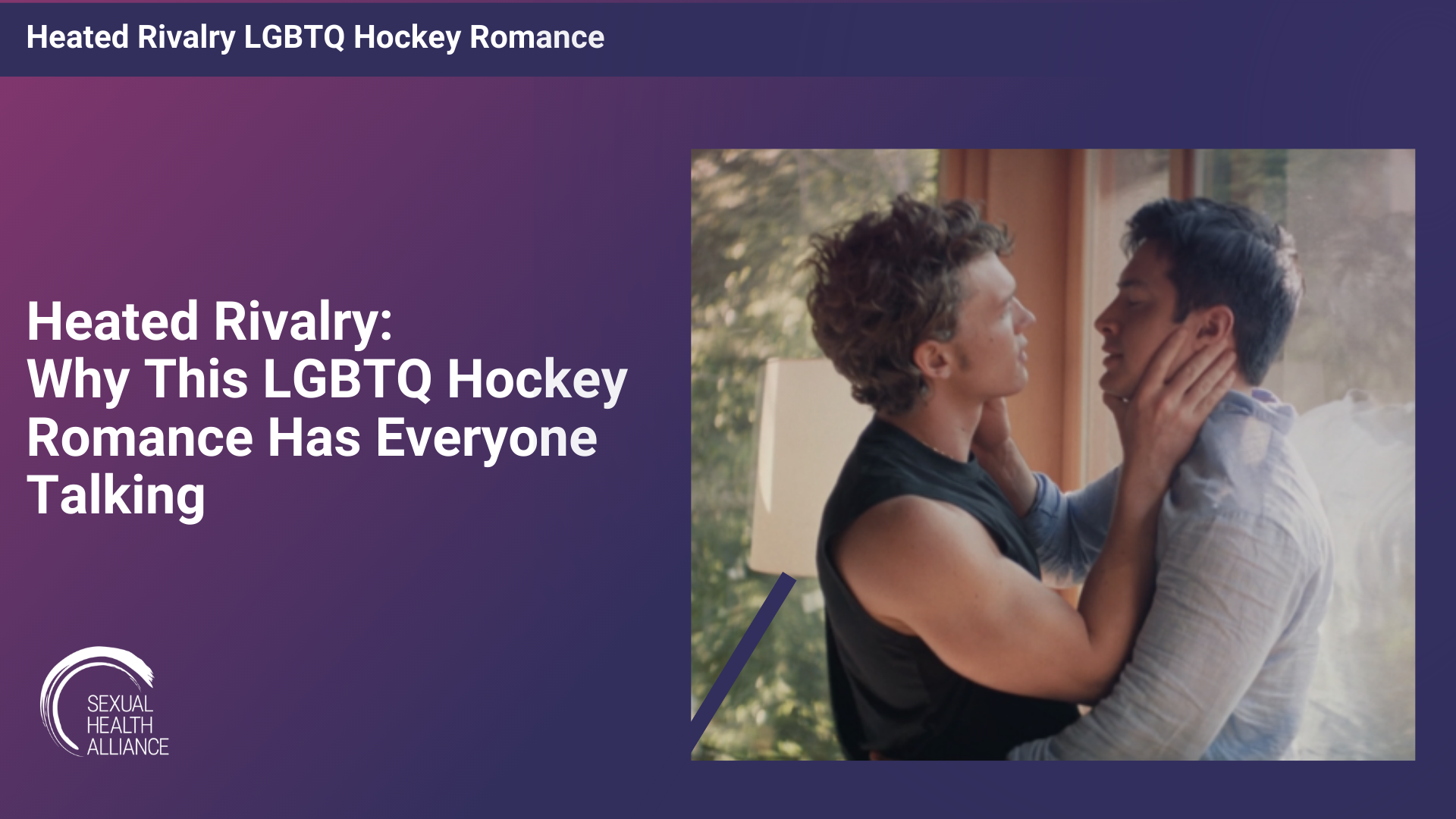
Are we tired of talking about Heated Rivalry?
Absolutely not.
But why do we love Heated Rivalry so much? What is it that’s keeping us talking?
From the emotional heart of the story, to the timely LGBTQ professional hockey coming-out moment, to the S-E-X, there’s a lot to unpack.
And honestly? That’s exactly why people can’t stop talking about it.
Why Heated Rivalry Resonates With Viewers
Heated Rivalry has become one of the most talked-about LGBTQ romance stories in modern television because it blends emotional vulnerability, sexual chemistry, and high-stakes representation in professional sports. The story of Shane Hollander and Illya Rozanov explores themes of identity, secrecy, desire, and authenticity over a decade-long relationship.
From a sexual health and relationship perspective, the show resonates with audiences for several reasons:
• It portrays sexual consent and communication in a realistic and erotic way.
• It shows how sexual relationships evolve over time, from lust to emotional intimacy.
• It highlights the cultural pressure LGBTQ athletes face in professional sports environments.
• It provides rare mainstream representation of queer romance in professional hockey.
Stories like Heated Rivalry resonate deeply because they combine emotional storytelling with authentic depictions of sexuality, vulnerability, and identity.
Heated Rivalry Gives You the Feels — In More Than Your Loins
The actors are fabulous and the sex is definitely hot, but there’s more going on here than just good-looking men and steamy scenes.
This show makes you feel something.
The scene I found myself watching over and over again (yes, I went to YouTube just to search for this scene… several times) was the “I love you” scene.
It wasn’t a passionate sex scene that had me hitting replay.
It was an emotional one.
After all the pining, the longing, and the barriers preventing them from being together, this scene was it for me.
So what made the “I love you” scene so powerful?
It was that moment of vulnerability where both characters knew everything was about to change.
It wasn’t just passionate sex anymore. (And let’s be honest, it had been becoming more than that long before this moment.)
This was a heart-wrenching moment where our main characters finally said what we had been watching them express through actions for so long.
They loved each other.
And now we got to hear it out loud.
Here’s the scene: with tears in his eyes and his voice full of emotion, Illya spreads kisses across Shane and whispers “I love you” in Russian.
“I love you. I love you.”
Then finally he says it in English.
And Shane understands.
“Holy shit. I love you too.”
Then Illya collapses into Shane’s chest and they hold each other.
That moment changed the entire emotional landscape of the story.
As a viewer, I knew that whatever happened next, they loved each other, and now they both knew it.
And if you’re a romance lover like me, you know fictional couples can survive a lot of chaos if they both know they’re in love.
But there’s a problem.
Shane and Illya don’t exactly live in a world that makes their love easy.
Can You Be Out and Proud in Professional Hockey?
If you’ve read Game Changers, the first book in Rachel Reid’s series, before Heated Rivalry, you might feel slightly robbed by the TV adaptation.
Scott and Kip could have had their own entire season, and I will absolutely stand by that opinion.
What we got in the TV adaptation was excellent.
But it was like being served only the whipped cream and cherry from your sundae.
Sure, it’s delicious.
But where the hell is the rest of my ice cream?
Scott and Kip’s story unfolds over years, and what they go through is deeply important to the larger narrative of queer athletes in professional hockey.
Their relationship represents something bigger.
In many ways, they (dare I say it?) changed the game for LGBTQ players.
And that’s another reason people are still talking about Heated Rivalry.
For many viewers, this is one of the first times they’ve seen an LGBTQ romance in a mainstream professional sports setting.
Men’s professional sports have historically not been the safest space to come out.
The show acknowledges that reality.
The characters face fears of rejection, losing friendships, career consequences, and even potential violence.
The stakes are enormous.
And when love unfolds in a high-stakes environment like that, it hits differently.
Because at its core, this is the heart of romance:
Someone willing to risk everything to live authentically.
Someone loving you so boldly and openly that they’re willing to stand in front of the world and say it out loud.
Straight couples have seen versions of this story play out in media for decades.
LGBTQ audiences have rarely been given the same opportunity.
That’s why the representation matters.
I’ve seen posts across social media of viewers tearing up while watching scenes from Heated Rivalry because for once, the kind of love they recognize…the kind of love they want… is being shown on screen.
Representation doesn’t just entertain us.
It validates us.
All the Sex They Had Running Through My Head, Running Through My Head
Hold please while I go watch every Heated Rivalry sex scene so I can provide a proper analysis.
…
Okay, I’m back.
And if you didn’t know, we’re Sexual Health Alliance.
Sex is kind of our thing. At Sexual Health Alliance, we explore how media, culture, and relationships shape the way people understand sexuality.
So let’s talk about it.
The sexual arc between Shane and Illya is one of the most compelling aspects of the series. Their connection evolves over time in ways that mirror real human sexual development.
How It Started: Attraction and Lust
When these characters first meet, they aren’t in love.
They aren’t courting each other.
They’re not planning their future together.
They are two people who feel intense attraction and sexual chemistry.
The vibe is very much:
“I’m attracted to you and I want to fuck.”
Direct.
Honest.
And… relatable.
But even in these early encounters, we see something important.
Care and consent.
Throughout their sexual interactions, the characters consistently check in with each other. There’s mutual desire, ongoing communication, and enthusiastic participation.
This matters.
Mainstream media often pushes the myth that consent ruins passion.
That if partners pause to check in with each other, the sexual tension somehow disappears.
That’s simply not true.
In reality, consent can actually increase intimacy and eroticism.
When people feel safe with each other, they’re more likely to explore, communicate desire, and fully enjoy the experience.
Sometimes consent even sounds a lot like dirty talk.
How It’s Going: Attraction, Lust, and Love
As the series progresses, the sexual dynamic between Shane and Illya evolves.
The chemistry never disappears.
The desire is still there.
But new layers are added: friendship, trust, emotional intimacy, and love.
The energy shifts from:
“Fuck me now.”
to
“Fuck me now… I need you… and I love you.”
This progression also reflects something realistic about sexual development over time.
The story spans nearly ten years.
When we first meet Shane and Illya, they’re barely adults.
Most of us can look back at our own lives and recognize that the way we approached sex at 18 is probably different from how we approach sex at 28.
Then add in a decade of shared history.
A decade of rivalry.
A decade of secrecy.
A decade of knowing someone as a lover, a friend, and a competitor.
That kind of connection changes people.
And it changes sex.
Why Heated Rivalry Resonates So Deeply
At its core, Heated Rivalry works because it captures something very human.
Desire.
Fear.
Longing.
Vulnerability.
The thrill of wanting someone you maybe shouldn’t want.
The courage it takes to finally say the truth out loud.
And the risk involved when love collides with identity, reputation, and public life.
This story isn’t just about hockey players.
It’s about what happens when passion refuses to stay hidden.
And honestly?
If a show can make us laugh, cry, rewind emotional scenes on YouTube, and then immediately start analyzing sexual consent and queer representation in professional sports…
Yeah.
We’re definitely not tired of talking about Heated Rivalry yet.
Not even close.
Key Takeaways From Heated Rivalry
• Heated Rivalry resonates because it blends emotional storytelling with realistic depictions of desire and intimacy.
• The relationship between Shane and Illya highlights how sexual attraction can evolve into trust, vulnerability, and long-term love.
• Representation of LGBTQ relationships in professional sports is still rare in mainstream media, making stories like this culturally significant.
• The show models healthy communication, consent, and emotional intimacy within sexual relationships.
P.S. Professionals interested in working with couples navigating desire, identity, and intimacy can pursue advanced training through programs like the Sexual Health Alliance’s sex therapist certification.
P.P.S. Many therapists pursue AASECT sex therapy certification training to deepen their understanding of sexuality, relationships, and consent.
Heated Rivalry FAQ
-
Heated Rivalry resonates with viewers because it combines emotional storytelling, sexual chemistry, and LGBTQ representation in a professional sports setting. The relationship between Shane Hollander and Illya Rozanov unfolds over nearly a decade, exploring themes of secrecy, identity, vulnerability, and long-term desire. The story’s mix of romance, rivalry, and high-stakes coming-out narratives makes it particularly compelling for audiences.
-
Yes. Heated Rivalry is one of the few mainstream romance stories centered on LGBTQ professional hockey players. The story highlights the real pressures athletes may face when considering whether to come out publicly, including concerns about career impact, locker-room culture, and media scrutiny. Because of this, the series has become meaningful for many viewers seeking more authentic LGBTQ representation in sports media.
-
Fans connect with Shane and Illya because their relationship develops realistically over time. What begins as intense attraction gradually evolves into trust, friendship, emotional intimacy, and love. Their story spans many years, allowing audiences to see how desire, identity, and vulnerability change as people grow older and navigate complex life circumstances.
-
Yes. One of the reasons the series stands out is that it models enthusiastic and ongoing consent. Shane and Illya communicate openly about what they want, check in with each other, and respect boundaries. Sexual health educators often emphasize that clear communication can enhance intimacy rather than diminish passion, and the series reflects that dynamic in a realistic way.
-
Stories like Heated Rivalry matter because they combine romance with representation. Seeing LGBTQ relationships portrayed with emotional depth and sexual authenticity helps expand cultural narratives around love, identity, and belonging. For many viewers, these stories provide rare moments of recognition and validation in mainstream media.
-
Organizations like Sexual Health Alliance provide education and professional training in areas such as sex therapy, sexuality counseling, and relationship health. Understanding topics like communication, desire, consent, and identity can help people build healthier and more fulfilling intimate relationships.
Want to become an in-demand sexual health professional? Learn more about becoming certified with SHA!
Written by Michelle Melville-Kashon
Michelle is the Community and Content Director at Sexual Health Alliance. She is passionate about supporting students and professionals as they build meaningful, transformative careers through SHA’s innovative programs. You can usually find Michelle page deep in a romance novel or smutty book.

