
Gen Z is often described as the generation having less sex. But new research reveals a much more interesting story. Young adults are exploring sexual identities, challenging traditional relationship expectations, and embracing kink at higher rates than older generations. At the same time, they are showing a surprising interest in monogamy.
Welcome to EMERGEN-Z, a generation emerging into adulthood with a different understanding of sexuality, identity, intimacy, and relationships.
Research from Dr. Justin Lehmiller, a research fellow at the Kinsey Institute, and the dating platform Feeld suggests that Gen Z's sexual attitudes are more complex than popular headlines suggest.
For sex therapists, sexuality counselors, sex educators, and other sexual health professionals, these findings offer important insights into how younger clients understand desire, negotiate relationships, and develop their sexual identities.
Quick Answer: How Is Gen Z Redefining Sexuality?
Gen Z is redefining sexuality through greater openness to sexual and gender identity exploration, increased interest in kink, and evolving relationship preferences. Research published in 2024 by Feeld and Dr. Justin Lehmiller of the Kinsey Institute found that Gen Z respondents were more likely than older generations to report discovering new sexual interests and exploring their identities. Surprisingly, monogamy was also the most commonly preferred individual relationship style among Gen Z respondents on Feeld.
These findings challenge the assumption that younger generations are universally moving away from traditional relationships. Instead, Gen Z appears to be approaching sexuality with greater flexibility, personal choice, and openness to different forms of intimacy.
Key Takeaways
Gen Z is surprisingly interested in monogamy. In the Feeld survey, monogamy was the most commonly selected relationship preference among Gen Z respondents, at 23%.
Sexual identity exploration is more common among younger respondents. Among Gen Z Feeld members, 18% reported changing their sexual identity since joining the platform.
Kink exploration is increasingly visible. Fifty-five percent of Gen Z Feeld respondents reported discovering a new kink since joining the app.
Younger adults report less frequent sexual activity. In a separate survey of 4,175 American adults, Gen Z reported a median of three sexual encounters in the previous month, compared with five for Millennials and Gen X.
Sexual health professionals need to move beyond generational stereotypes. Gen Z's experiences highlight the importance of individualized, affirming, and evidence-informed sexual health care.
What Is EMERGEN-Z?
EMERGEN-Z is a term for the emerging generation of young adults who are reshaping conversations about sexual identity, pleasure, dating, and relationships.
Rather than accepting one definition of a successful relationship or a healthy sexual identity, many Gen Z adults are questioning inherited expectations and exploring what works for them.
That exploration can include monogamy, ethical non-monogamy, sexual fluidity, kink, celibacy, or other expressions of intimacy.
Importantly, EMERGEN-Z does not mean every Gen Z adult shares the same attitudes or experiences. Generational labels can help researchers identify patterns, but they cannot fully describe an individual's sexual values or preferences.
The central question for sexual health professionals is not whether Gen Z is more sexually progressive or traditional.
It is how this generation is developing its own understanding of intimacy in a rapidly changing social environment.
Inside Dr. Justin Lehmiller's Research on Gen Z Sexuality
In 2024, Feeld collaborated with Dr. Justin Lehmiller, a research fellow at the Kinsey Institute, to publish The State of Dating Report: How Gen Z Is Redefining Sexuality and Relationships.
The report examined sexual attitudes, relationship preferences, gender identity, and kink across generations.
The Feeld survey included:
3,310 adult Feeld members
Participants from 71 countries
Respondents from multiple generations
A range of sexual orientations and gender identities
Questions about relationship structures, sexual exploration, and personal desires
The report also incorporated findings from separate Kinsey Institute research, including surveys of 4,175 and 1,500 American adults.
An important distinction: Feeld members are a self-selected group using a dating platform known for welcoming diverse relationship structures and sexual interests. Their responses should not be interpreted as representative of all Gen Z adults.
Nevertheless, the findings offer a valuable perspective on emerging sexual attitudes and provide important questions for future research.
1. Gen Z May Be More Interested in Monogamy Than We Think
One of the most surprising findings from Lehmiller's research challenges the popular narrative that Gen Z is abandoning monogamy.
Among Gen Z Feeld respondents, monogamy was the most commonly preferred individual relationship style, selected by 23%.
The leading preferences differed across generations:
Gen Z: Monogamy, 23%
Millennials: Ethical non-monogamy, 24%
Gen X: Ethical non-monogamy, 27%
Boomers: Friends with benefits, 27%
A separate survey of 4,175 American adults revealed another interesting pattern.
Eighty-one percent of Gen Z respondents reported having fantasized about monogamy, and 44% said they fantasized about it frequently.
Among older generations, approximately 23% to 27% reported frequent fantasies about monogamy.
These findings suggest that interest in monogamy remains significant among younger adults, even as discussions about alternative relationship structures become more visible.
Why Is Gen Z Interested in Monogamy?
The report offers several possible explanations.
Many younger adults have experienced dating primarily through digital platforms, where communication can be ambiguous and relationship expectations are not always clear.
For some, monogamy may represent stability, emotional security, and clearly defined commitments.
Younger adults also have less relationship experience on average than older generations. A relationship structure that feels familiar or restrictive to someone with decades of dating experience may feel new and appealing to someone entering their first serious partnership.
However, these are possible explanations rather than established causes.
For clinicians, the finding reinforces an important principle: relationship preferences should be explored individually rather than assumed based on age or generation.
A Gen Z client may prefer monogamy, polyamory, or another relationship structure. None of these preferences automatically indicates greater emotional maturity, sexual openness, or relationship health.
2. Gen Z Is Exploring Sexual and Gender Identity in New Ways
Another major finding concerns sexual and gender identity exploration.
Among Gen Z respondents on Feeld:
18% identified as gender diverse.
71% reported a sexual identity other than heterosexual.
18% reported changing their sexual identity since joining Feeld.
10% reported changing their gender identity since joining Feeld.
These percentages describe Gen Z participants within the Feeld survey, not the general Gen Z population.
The report also found that among Feeld respondents across generations who reported changing their sexual identity, 93% agreed that they had developed a deeper understanding of their sexuality.
This distinction matters.
A change in identity label does not necessarily indicate that someone's underlying attractions have changed. It may reflect a new understanding of existing feelings, access to more accurate language, or greater comfort expressing an identity.
What Sexual Fluidity Means for Clinical Practice
Sexual fluidity refers to the possibility that aspects of sexual attraction, identity, or experience may vary across time or circumstances.
For some people, identity remains consistent throughout life. For others, the language they use to describe themselves may evolve.
Neither experience is inherently healthier.
Sexual health professionals can support clients by allowing space for exploration without imposing a predetermined outcome.
That may involve asking how clients understand their attractions, what particular identity terms mean to them, and whether they feel pressure to define themselves before they are ready.
The goal is not to encourage identity change. It is to support informed self-understanding, autonomy, and psychological well-being.
3. Gen Z Is More Open About Kink and Sexual Exploration
One of the report's most discussed findings concerns kink.
When Feeld members were asked whether they had discovered new kinks or desires since joining the platform, younger respondents were more likely to say yes.
The percentages were:
Gen Z: 55%
Millennials: 49%
Gen X: 39%
Boomers: 33%
The report also referenced a separate nationally representative survey of 1,500 American adults conducted by Lehmiller.
In that survey, 56% of Gen Z respondents reported BDSM fantasies, compared with 52% of Millennials, 31% of Gen X, and 12% of Boomers.
These findings suggest that younger adults may be more comfortable acknowledging and exploring certain sexual interests.
However, having a fantasy does not necessarily mean someone wants to act on it.
Similarly, discovering a kink does not automatically mean engaging in a particular sexual behavior.
Why Might Younger Adults Be More Open to Kink?
Several cultural changes may contribute to greater openness.
Sexual interests that were once rarely discussed publicly are now more visible through media, online communities, and educational resources.
Younger adults may also have greater access to language that helps them understand and communicate their desires.
At the same time, increased visibility does not necessarily translate into accurate sexual health education.
Sexual health professionals have an opportunity to help clients distinguish fantasy from behavior, understand consent, communicate boundaries, and evaluate the risks associated with particular activities.
Kink-Affirming Care Is an Important Clinical Skill
Kink-affirming care involves approaching consensual sexual interests without automatically treating them as symptoms of dysfunction.
Clinicians must still assess distress, coercion, safety, consent, and possible harm.
An interest in BDSM or another form of kink is not, by itself, evidence of a mental health disorder.
For professionals working with EMERGEN-Z clients, developing competence in consensual kink and alternative relationship structures can support more accurate assessments and stronger therapeutic relationships.
4. Gen Z Is Having Less Sex, but That Doesn't Tell the Whole Story
Another finding challenges the idea that greater sexual openness necessarily leads to more sexual activity.
In Lehmiller's survey of 4,175 American adults, the median number of reported sexual encounters during the previous month was:
Gen Z: 3
Millennials: 5
Gen X: 5
Boomers: 3
The report also found that 37% of Gen Z respondents reported no sexual activity during the previous month, compared with 19% of Millennials and 17% of Gen X.
Nearly half of Gen Z respondents were single, compared with approximately one-fifth of respondents in older generations.
These results raise important questions about the relationship between sexual attitudes and sexual behavior.
A person can be curious about sexuality, comfortable discussing kink, and open to different relationship structures while having relatively little partnered sexual experience.
Sexual openness and sexual frequency are not interchangeable measures.
Does Having Less Sex Mean Gen Z Has a Sexual Health Problem?
Not necessarily.
Sexual frequency alone cannot determine sexual satisfaction, relationship quality, or psychological well-being.
A person who has sex infrequently may be completely satisfied with their sexual life. Another person may experience distress about a difference between their desired and actual level of sexual activity.
For clinicians, the more useful questions concern satisfaction, personal values, consent, relationship circumstances, and whether an individual experiences unwanted distress.
This distinction is particularly important when working with younger adults who may feel pressured by cultural messages about how much sex they should be having.
5. EMERGEN-Z Is Challenging Traditional Definitions of Sexual Wellness
Taken together, these findings suggest that Gen Z is approaching sexual wellness through a combination of exploration and personal choice.
Some younger adults are interested in traditional relationship structures. Others are exploring consensual non-monogamy.
Some are developing new language for their identities. Others have maintained the same identities throughout their lives.
Some are interested in kink. Others are not.
The common thread is not a single sexual preference.
It is the growing visibility of different ways to understand and experience sexuality.
For sexual health professionals, this creates an opportunity to reconsider assumptions about what healthy sexuality should look like.
Sexual wellness cannot be reduced to sexual frequency, relationship structure, orientation, or the presence or absence of particular desires.
Instead, professionals can consider whether a person's sexual experiences align with their values, support their well-being, and involve meaningful autonomy and consent.
What EMERGEN-Z Means for Sex Therapists and Sexual Health Professionals
Lehmiller's research offers several practical considerations for clinicians, educators, and counselors working with younger adults.
Move Beyond Generational Assumptions
Gen Z is not universally non-monogamous, sexually active, or interested in kink.
Professionals should avoid using generational trends as substitutes for individual assessment.
Build Competence in Sexual and Gender Diversity
Clients may use terminology that was less common in earlier generations.
Professionals benefit from understanding contemporary identity language while allowing clients to define their own experiences.
Understand Diverse Relationship Structures
Monogamy, consensual non-monogamy, and other relationship arrangements require different conversations about boundaries, expectations, and communication.
Clinicians should be prepared to work competently with different relationship structures without assuming one is inherently superior.
Integrate Consent and Communication Education
Greater openness about kink and sexual experimentation increases the importance of accurate information about consent, boundaries, risk awareness, and communication.
Distinguish Sexual Exploration From Sexual Distress
Exploration is not automatically evidence of dysfunction.
Effective assessment considers the individual's circumstances, personal goals, distress, and overall functioning.
These principles are central to contemporary sexual health education and clinical practice.
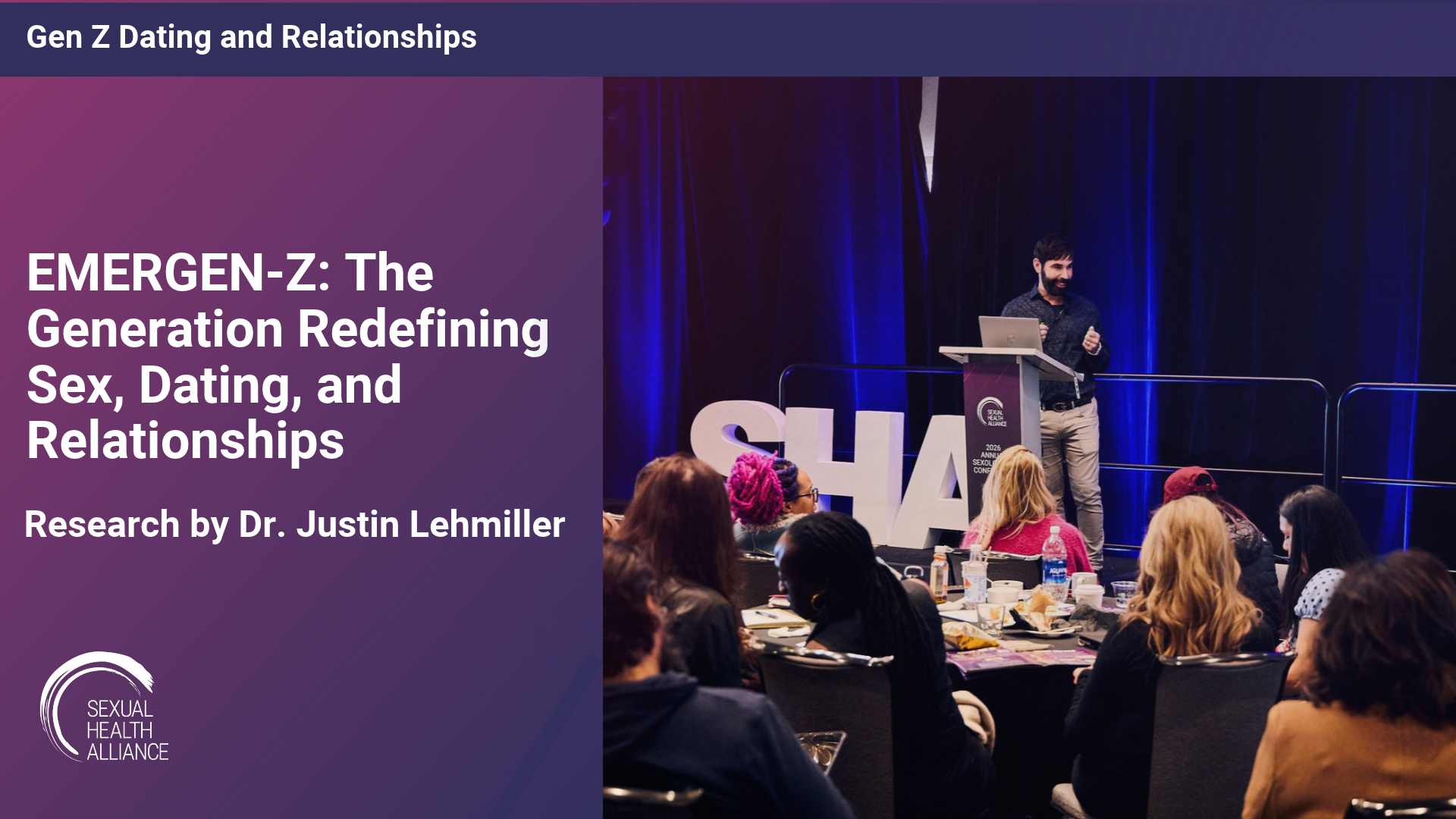
From Research to Practice: Dr. Justin Lehmiller at SHA's Annual Sexological Conference
Understanding how sexual attitudes are changing requires more than reading statistics. It requires connecting research findings to the real experiences of clients, patients, and communities.
Dr. Justin Lehmiller, a prominent researcher in human sexuality and author of Tell Me What You Want: The Science of Sexual Desire and How It Can Help You Improve Your Sex Life, was among the featured experts at Sexual Health Alliance's 2026 Annual Sexological Conference in Denver, Colorado.
The conference brought together professionals working across sex therapy, medicine, counseling, education, and sexuality research to examine contemporary issues in sexual health.
Lehmiller's research provides an important foundation for understanding changing sexual fantasies, relationship preferences, and generational attitudes.
For sexual health professionals, findings like those in the Feeld report demonstrate why continuing education matters.
The field is evolving. Professionals need the research literacy and clinical skills to understand emerging patterns without reducing clients to stereotypes.
At Sexual Health Alliance, we bring together researchers, educators, clinicians, and other leaders in sexuality to help professionals translate contemporary research into informed practice.
Our professional education opportunities include certification programs, online educational events, international study experiences, and the Annual Sexological Conference.
Frequently Asked Questions About Gen Z Sexuality
Is Gen Z more sexually open than previous generations?
Research suggests that Gen Z respondents in certain studies report greater openness to sexual identity exploration and kink. However, openness varies across individuals, and results from specialized dating platforms cannot be generalized to an entire generation.
Does Gen Z prefer monogamy or polyamory?
In the 2024 Feeld and Kinsey Institute report, monogamy was the most commonly selected individual relationship preference among Gen Z Feeld respondents, at 23%. This does not mean a majority preferred monogamy. The findings indicate substantial diversity in relationship preferences.
Is Gen Z having less sex than Millennials?
In a survey of 4,175 American adults referenced in Lehmiller's report, Gen Z respondents reported a median of three sexual encounters in the previous month, compared with five among Millennials and Gen X. Sexual frequency alone does not indicate sexual satisfaction or health.
Why is Gen Z more interested in kink?
The report suggests that increased cultural visibility, greater access to sexual communities, and reduced stigma may contribute to kink exploration among younger adults. These explanations are plausible but do not establish a direct cause.
What is sexual fluidity?
Sexual fluidity describes the potential for aspects of sexual attraction, identity, or experience to vary over time or across circumstances. Not everyone experiences sexual fluidity, and identity changes should not be assumed or encouraged by clinicians.
What is EMERGEN-Z?
EMERGEN-Z is an editorial term describing emerging Gen Z attitudes toward sexuality, identity, pleasure, dating, and relationships. It highlights a generation navigating changing social expectations and a wider range of possibilities for sexual expression. It is not a formal scientific classification.
Who is Dr. Justin Lehmiller?
Dr. Justin Lehmiller is a social psychologist, sexuality researcher, and research fellow at the Kinsey Institute. He is the author of Tell Me What You Want and has conducted extensive research on sexual fantasies, relationships, and human sexuality.
How can sexual health professionals better support Gen Z clients?
Professionals can support younger adults through affirming care, individualized assessment, education about consent and communication, and competence in diverse sexual identities and relationship structures. Continuing education helps clinicians stay informed about emerging research and changing cultural attitudes.
The Future of Sexual Health Is More Complex Than Any Generation Label
EMERGEN-Z represents an important shift in how we discuss sexuality.
The findings from Dr. Justin Lehmiller and Feeld challenge several familiar assumptions. Younger adults can be more open to kink while expressing strong interest in monogamy. They can explore their identities while having less partnered sex. They can question traditional sexual expectations while still seeking stability and commitment.
These patterns are not necessarily contradictions.
They remind us that human sexuality has always been more diverse than the categories used to describe it.
For sexual health professionals, the responsibility is to approach that complexity with curiosity, evidence, and respect.
As new generations continue to redefine intimacy, our understanding of sexual wellness must continue to evolve.
Continue Your Professional Education With Sexual Health Alliance
Since 2015, Sexual Health Alliance has helped professionals expand their knowledge of human sexuality through specialized education, certification, and professional development.
Whether you work in therapy, counseling, education, medicine, or another area of sexual health, understanding emerging research is essential to providing informed, inclusive care.
Explore our Sex Therapy Certification or visit Sexual Health Alliance to learn more about our certification programs, professional events, and continuing education opportunities.
Become an in-demand sexual health professional with education grounded in research, clinical knowledge, and the evolving science of human sexuality.
Research and Sources
Primary research
Additional research
The Kinsey Institute, Indiana University
Gallup: LGBTQ+ Identification in U.S. Now at 7.6% (2024)
Herbenick et al. (2021), What Is Rough Sex, Who Does It, and Who Likes It?
Lehmiller, J. J. (2018). Tell Me What You Want: The Science of Sexual Desire and How It Can Help You Improve Your Sex Life.
Lehmiller, J. J. (2024). The Psychology of Human Sexuality, Third Edition.

